Evaporative Cooler Leaking Water Aurora CO — Emergency Drying & Restoration
Aurora Water-Damage Help When a Swamp Cooler Leak Reaches Your Ceiling, Attic, Walls, or Floors
When you discover swamp cooler water damage Aurora CO residents worry about most — water dripping from the ceiling, a wet vent, a stained wall, soaked attic insulation, or water running down from a rooftop cooler — you need more than generic HVAC advice. You need a water-damage restoration team that can help assess the affected materials, map hidden moisture, extract water where needed, begin structural drying, and document the loss.
Creek Auro Restoration provides 24/7 emergency water-damage mitigation for homes, rental properties, HOAs, offices, retail spaces, and commercial properties throughout Aurora and the Denver metro. Since 2010, our 40 skilled professionals and 10 equipped service vans have helped property owners respond when a swamp cooler overflow, cooler water-line leak, roof-penetration issue, or weather-related intrusion leaves water in an attic, ceiling, wall, floor, or duct-area cavity.
- 24/7 emergency response for water dripping from ceilings, vents, attics, walls, and floors
- Moisture mapping, extraction, structural drying & damage documentation
- Help for residential, commercial, rental, HOA & multi-unit properties
- Clear coordination with plumbers, evaporative-cooler technicians & roofers
Call Creek Auro Restoration day or night for urgent moisture assessment, water extraction, structural drying, and documentation after a swamp cooler leak.
Request Emergency Water Damage Service
Fill out the form and we'll contact you immediately!
Water Damage From Swamp Cooler Aurora: Local Help Backed by 16 Years of Experience
Front Range Water-Damage Specialists Focused on Drying the Structure, Not Just the Visible Stain
A swamp cooler leak can look small at first — a ceiling stain, a few drops at a vent, or water along the roofline — but water may travel through attic insulation, framing, ceiling cavities, duct paths, drywall, and flooring before it becomes obvious. Creek Auro Restoration focuses on finding the full moisture footprint and creating a practical restoration plan based on the actual materials affected.
Our team uses a documented restoration approach that includes inspection, moisture detection, mitigation, drying, monitoring, and final verification based on IICRC S500 water-damage restoration guidance.
16 Years Local Experience
Serving Aurora and surrounding Denver metro communities since 2010.
40 Skilled Professionals
Trained restoration team supported by 10 equipped service vans.
24/7 Emergency Availability
Day or night response for active water damage events.
IICRC Credentials
WRT, ASD, AMRT, MWR & WLS trained water-damage specialists.
Insurance Coordination
Direct insurance-billing coordination & loss-documentation support.
Free Visual Assessments
Complimentary post-drying mold checks & emergency inspections.
Swamp Cooler Leak Water Damage Near Aurora Neighborhoods, Business Hubs & Major Landmarks
Serving Aurora Properties Near Southlands, Anschutz Medical Campus, Aurora Reservoir, Buckley Space Force Base & the Denver Metro
A leaking rooftop evaporative cooler can affect any type of Aurora property — from a single-family home near Mission Viejo Park to a managed community in Saddle Rock, an office near the Havana Street Corridor, or a commercial space close to Town Center at Aurora. Creek Auro Restoration responds to the water damage inside the structure after the source has been shut off or is being addressed by the appropriate repair professional.
Aurora's dry Front Range environment makes evaporative cooling familiar to many local property owners. The City of Aurora identifies the area as semi-arid, and Front Range precipitation is relatively low compared with much of the United States. That climate context makes a cooler overflow, stuck float, leaking water line, or recurring discharge especially important to address rather than ignore.
Aurora Neighborhoods & Communities Served
Nearby Cities We Serve
Regional Hubs & Landmarks We Service Near
Specialized Swamp Cooler Leak Water Damage Restoration for Attics, Ceilings, Walls & Floors
Aurora, CO Structural-Drying Professionals for Hidden Moisture After a Rooftop Cooler Leak
A wet ceiling does not always show the entire loss. Water from a rooftop cooler may move along framing, insulation, ductwork, the outside of a metal trunk, wall cavities, or ceiling channels before it reaches the visible drywall below. In some cases, a property owner sees a stain in one room even though the water entered near the cooler or roof opening elsewhere.
Creek Auro Restoration specializes in the water-damage mitigation and drying phase after a swamp cooler malfunction, overflow, water-line failure, roof intrusion, or weather event. We do not assume the cause from a stain alone. We inspect the affected areas, identify moisture migration, protect the property, and recommend the restoration steps needed after the leak source is stopped.
Moisture Inspection
Ceilings, walls, attic materials, floors & accessible cavities checked with moisture mapping.
Visual Documentation
Photos & written records of visible conditions and moisture findings.
Extraction & Drying
Controlled drying strategies based on the actual affected materials.
Material Evaluation
Wet drywall, insulation, carpet, wood flooring & contents.
Trade Coordination
Clear guidance when plumbing, HVAC/cooler, or roofing work is needed.
Reconstruction Planning
Documented path from drying to final repair & reconstruction.
What Happens When a Swamp Cooler Leaks Through a Ceiling in Aurora?
Why Water Dripping From a Ceiling, Vent, or Attic Area Needs Prompt Attention
A swamp cooler can leak because of a stuck or misadjusted float valve, overflowing reservoir pan, failed water-supply line, damaged fitting, blocked or malfunctioning overflow route, cracked component, deteriorated pan, roof-penetration issue, or rain intrusion around the unit. If water is entering the building, it may saturate materials long before the ceiling begins to drip.
The visible leak is often the symptom — not the full extent — of the damage. Moisture can remain in insulation, wall cavities, ceiling drywall, framing, subflooring, and floor coverings. Professional water-damage restoration guidance emphasizes inspection after excess water removal, consideration of water migration and affected materials, controlled drying, and continuing monitoring throughout the restoration process.
Potential Consequences of Delayed Action
Sagging, bubbling, cracked, stained, or weakened ceiling drywall
Wet attic insulation that loses performance or may require removal
Water migration into walls, flooring, carpets, pads, or contents
Damp wood framing & structural materials needing measured drying
Musty odors & conditions that should be evaluated promptly
Electrical safety concerns near lighting, outlets, wiring & fixtures
Greater reconstruction needs if water remains trapped in materials
What Should You Do When Your Swamp Cooler Starts Leaking?
Aurora Property Owners: Stop the Water Safely, Protect the Space & Begin Drying Promptly
If you are asking, "What should I do if water is dripping from the ceiling under my swamp cooler?" focus first on safety and damage control. Do not climb onto a roof, open electrical equipment, or pull apart a sagging ceiling unless you can do so safely and have the right expertise.
Immediate Actions
| Action | What to Do | Why It Matters |
|---|---|---|
| Stop cooler operation | Turn off the evaporative cooler at its controls if it is safe | Helps prevent additional water circulation |
| Shut off the dedicated supply | Close the swamp-cooler water shutoff valve if you can safely identify & access it | Limits water from a leaking line, float, or supply fitting |
| Protect people & belongings | Stay away from sagging ceilings, wet lighting & unstable surfaces; move valuables where safe | Reduces injury and property-loss risk |
| Document visible conditions | Take photos or video of stains, drips, wet contents & the time discovered | Helps establish the visible condition of the loss |
| Call for help | Contact the correct source-repair professional & Creek Auro Restoration for drying and mitigation | Addresses both the cause and the resulting damage |
Colorado's Division of Insurance advises homeowners to document damage extensively with photos and videos after a loss. Coverage depends on the individual policy, cause of loss, exclusions, insurer review, and other policy-specific factors.
Seasonal Timing Guidance
Spring Startup
Check for water where it does not belong when the system is first activated after winter.
Summer Operation
Watch for overflow, water running from the roof, ceiling stains, vent drips, unusual water use, or moisture near duct paths.
Storm Season
If a leak appears during rain, wind, hail, snowmelt, or when the cooler water supply is off, roof flashing, the roof curb, or a penetration may be involved.
Fall Shutdown
Schedule proper shutoff, draining, and winterization with a qualified evaporative-cooler or plumbing professional.
Freeze Protection
Water left in exposed lines can freeze and leak when temperatures change. See our frozen pipe water damage service for help.
Prevention Reminders
Keep shutoff valves accessible, address recurring overflow, inspect equipment seasonally, and don't ignore stains or wet insulation.
Who Needs Swamp Cooler Leak Water Damage Help in Aurora, CO?
From Single-Family Homes to Commercial Buildings & Managed Communities Across the Denver Metro
Any property with a roof-mounted evaporative cooler, water-fed cooler line, rooftop penetration, attic duct path, or ceiling area below the unit can need professional drying after a leak. Creek Auro Restoration serves property owners and managers who need fast, documented mitigation after water reaches building materials or contents.
Single-Family Homes
Homes, townhomes, condos & duplexes with rooftop coolers.
Rental Properties
Rental homes & landlord-managed properties.
Apartments & HOAs
Apartments, condominium communities & HOA properties.
Restaurants & Hospitality
Cafes, hotels, food service & hospitality spaces.
Retail & Offices
Retail stores, offices, shopping centers & mixed-use buildings.
Schools & Community
Schools, daycares, churches, community & recreation facilities.
Medical & Professional
Medical offices, clinics, labs & professional buildings.
Warehouse & Industrial
Warehouses, light-industrial facilities & commercial rooftop cooling.
How Aurora Weather and Seasonal Use Affect Swamp Cooler Leak Risks
Summer Heat, Wind-Driven Rain, Startup Cycles & Freeze-Thaw Conditions Can Reveal Weaknesses
Aurora's semi-arid climate helps explain why evaporative coolers remain familiar across the Front Range, but that same environment creates a distinct seasonal pattern. Systems may sit unused during winter, then return to service during warm weather. A float, supply fitting, water line, reservoir pan, drain route, or roof opening that seemed fine months earlier may reveal a problem during first startup.
Aurora's local water-conservation information describes the city's semi-arid conditions, while regional conditions include limited precipitation, hot weather periods, storms, and winter cold. A leaking cooler should not continuously overflow or discharge water due to a failed component or water-control problem.
Summer
Frequent cycling & high demand can expose worn parts, float issues, water-line problems, or inadequate drainage.
Afternoon Storms
Wind-driven rain may enter around a roof curb, flashing, cooler opening, or duct penetration.
Fall
Delayed winterization can leave water in vulnerable lines or components.
Winter & Spring Thaw
Frozen or damaged water lines may leak when temperatures rise or the cooler is restarted.
First Startup
A stuck float valve, corroded pan, loose fitting, or old supply tubing may become noticeable only after water begins flowing again.
Semi-Arid Climate
Low precipitation and dry air make evaporative cooling common — but hidden leaks even more impactful when they occur.
Common Swamp Cooler Components That Can Contribute to Water Damage
Knowing Where Water May Escape Helps You Explain the Problem Clearly
A swamp cooler is a water-fed cooling system, but the exact setup varies by property. Creek Auro Restoration does not diagnose or repair every mechanical component; however, understanding the likely path of water helps us investigate the resulting moisture damage and coordinate next steps with the appropriate professional.
| Component or Area | Typical Role | Water-Damage Concern |
|---|---|---|
| Float Valve | Regulates water level in the reservoir | A stuck or poorly adjusted float may allow overfilling or overflow |
| Reservoir Pan / Cooler Pan | Holds water for cooler operation | Corrosion, cracks, or failure can allow water to escape |
| Water Feed Line | Supplies water from the shutoff to the rooftop unit | Loose, cracked, frozen, or failed lines can leak into attic or wall areas |
| Overflow Tube / Drain Route | Directs excess water away from the unit | Improper discharge, blockage, or uncontrolled overflow can cause roof or structural moisture issues |
| Pump & Distribution | Moves water through the cooler | Malfunctions may affect water flow (diagnosis belongs with a qualified cooler technician) |
| Roof Curb & Penetration | Supports the unit & routes ductwork through the roof | Failed flashing, gaps, storm damage, or rain entry can resemble a cooler leak |
| Duct Boot / Metal Trunk | Moves cooled air into the home or building | Water may travel along or around duct pathways before becoming visible at a ceiling vent |
A properly functioning float valve is intended to regulate the water level in the cooler reservoir. Unexpected overflow may indicate a water-level, inlet, float, drainage, or component issue that should be assessed by a qualified evaporative-cooler professional.
Our 6-Step Swamp Cooler Leak Water-Damage Process
What to Expect When Creek Auro Restoration Arrives at Your Aurora Property
Emergency Call & Safety Triage
We discuss what you are seeing — water dripping from the ceiling, a wet vent, water in the attic, an active overflow, or a roofline leak — and identify immediate safety concerns.
Source-Status Confirmation
We confirm whether the cooler has been shut off and whether the responsible source-repair professional is involved or needed. We focus on the water damage and drying work after the source is stopped.
Inspection, Photos & Moisture Mapping
Our team assesses visible damage and checks accessible affected areas to identify moisture in ceilings, walls, floors, insulation, attic spaces, and nearby materials.
Water Extraction & Property Protection
When water is present, we remove it where appropriate, protect contents, and take reasonable steps to limit further migration or secondary damage.
Structural Drying & Monitoring
We use drying equipment and monitor conditions as appropriate — dehumidification, moisture evaluation & continuing monitoring are core parts of structural drying.
Drying Verification & Repair Planning
After drying goals are met, we document completed mitigation work and outline next steps for repair, reconstruction, or coordination with other qualified trades where needed.
What's Included in Our Swamp Cooler Leak Water-Damage Service
Clear Deliverables for Aurora Homeowners, Property Managers & Commercial Facilities
Every loss is different. A small, localized ceiling stain may require a different approach than water that has traveled through attic insulation, several rooms, flooring, or a commercial ceiling system. Creek Auro Restoration explains the observed conditions, the proposed mitigation scope, and the next steps before work begins.
Initial Discussion
Review of the leak, source status, property type & visible damage.
Visual Inspection
On-site inspection of accessible affected areas.
Moisture Mapping
Moisture checks for ceilings, walls, floors & other materials.
Photo Documentation
Visual records of conditions and affected areas.
Water Extraction
Water removal, contents protection & controlled mitigation.
Drying Equipment Setup
Equipment configured for the affected space and materials.
Monitoring & Progress
Documented monitoring during the drying phase.
Material Assessment
Evaluation of what can be dried, repaired, removed, or replaced.
Repair Recommendations
Clear next-step guidance for reconstruction & coordination.
Key Advantages of Working With Creek Auro Restoration
Emergency Availability, Measured Drying & Straightforward Communication for Aurora Properties
Creek Auro Restoration is built for property owners dealing with a stressful, time-sensitive water event. Our goal is to give you a clear path forward: address active moisture, document the affected materials, reduce secondary damage, and help you understand what happens next.
24/7 Response
Day or night response for active swamp cooler water damage.
Local Coverage
Aurora & Denver metro service area coverage.
Moisture Mapping
Inspection for hidden water concerns in cavities & structures.
Emergency Extraction
Water removal when active standing water is present.
Structural Drying
Dehumidification for affected building materials.
Full-Scope Support
Ceiling, drywall, carpet, flooring, attic & crawl space water damage.
Documentation
Records to support insurer, property manager & repair communication.
Insurance Coordination
Direct insurance-billing coordination where applicable.
Swamp Cooler Water-Damage Restoration Outcomes for Aurora Properties
What Changes After Moisture Is Assessed, Controlled & Properly Dried
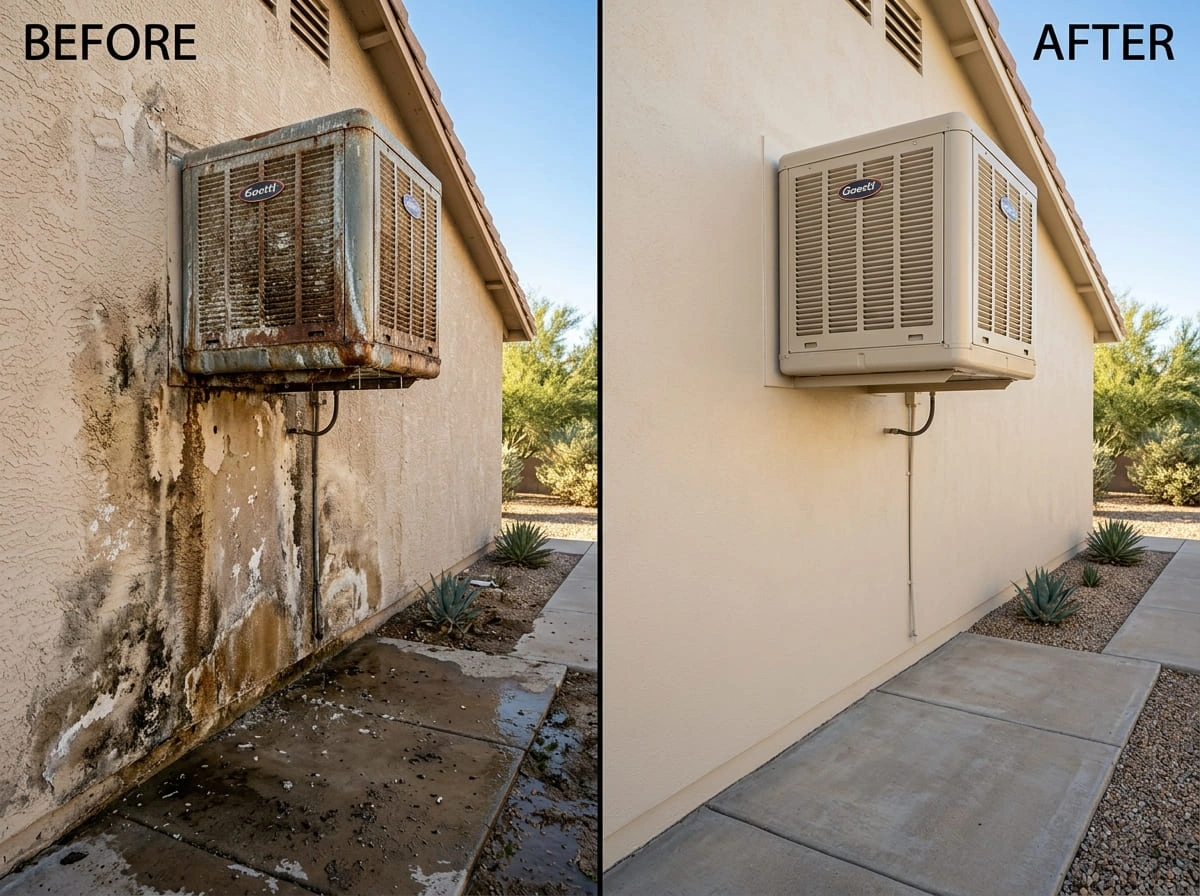
Many property owners call after discovering a ceiling stain, a dripping vent, wet attic insulation, or a soft ceiling beneath a rooftop cooler. They are often unsure whether they need a plumber, HVAC technician, roofer, or water-damage restoration company. The answer can involve more than one professional, but the restoration objective is consistent: stop the source, identify where water traveled, dry affected materials, and plan repairs based on documented conditions.
Water is visibly dripping or staining a ceiling.
The source status is clarified, affected materials are inspected, and a drying plan is underway.
Insulation, drywall, flooring, or wall cavities may hold hidden moisture.
Accessible moisture is mapped, drying is monitored, and materials are evaluated for repair or replacement.
The property owner has little documentation for a claim or repair decision.
Photos, moisture findings, mitigation records & restoration recommendations provide a clearer record.
A leak creates uncertainty about whether the issue is the cooler, roof, or an attic water line.
The water-damage portion is addressed while the appropriate source-repair trade is identified.
How We Dry Ceilings, Attics, Walls, Flooring & Other Affected Materials
Measured Structural Drying for Water Damage From a Leaking Swamp Cooler
Professional water-damage restoration is not simply placing fans in a room. The appropriate method depends on the water source, safety conditions, affected materials, how long moisture has been present, the amount of water migration, and access to the damaged area.
Creek Auro Restoration uses water-damage mitigation methods designed to support controlled drying, evaluation, and documentation in accordance with the IICRC S500 standard for water-damage restoration.
Moisture Meters
Moisture-detection tools for accurate readings.
Thermal / Visual
Thermal or visual assessment techniques where appropriate.
Water Extraction
Equipment for standing water or wet materials.
Air Movers & Dehumidifiers
Commercial air movement & dehumidification resources.
Containment Measures
Protective measures where conditions require them.
Material Removal
Controlled removal of unsalvageable materials.
Progress Documentation
Drying conditions, equipment placement & progress records.
Final Verification
Final moisture checks to support repair decisions.
Should You Dry, Repair, or Replace Materials After a Swamp Cooler Leak?
Helping Aurora Property Owners Make Practical Decisions After Ceiling, Attic & Floor Water Damage
Whether a material can be dried and saved depends on its condition, moisture level, construction type, water source, time exposed, contamination concerns, and response timing. Creek Auro Restoration evaluates conditions on-site rather than promising that every ceiling, wall, floor, or insulation area can be restored.
| Scenario | Dry or Repair May Be Possible | Replacement May Be Recommended |
|---|---|---|
| Small ceiling stain with limited moisture | When drywall remains stable & drying is successful | When drywall sags, crumbles, separates, or remains moisture-damaged |
| Wet attic insulation | When material type, location & conditions allow effective drying | When insulation is saturated, compressed, contaminated, or cannot be dried |
| Damp carpet or flooring | When water source & material condition support prompt drying | When materials buckle, delaminate, retain odor, or stay saturated |
| Moist wall cavity | When access & conditions support in-place drying | When materials cannot be effectively dried or show deterioration |
| Water-damaged ceiling structure | When framing & surrounding materials can be evaluated & dried | When damage creates safety, structural, or reconstruction concerns |
When Replacement May Be the Better Option
Drywall is sagging, collapsing, soft, crumbling, or structurally compromised
Insulation is saturated or unable to dry effectively
Flooring has warped, buckled, delaminated, or detached
Materials hold persistent moisture, odor, contamination, or deterioration
Repairs are required to safely return the area to a usable condition
What Does Swamp Cooler Leak Water Damage Cleanup Cost in Aurora?
Clear Scope, Upfront Discussion & Cost Factors That Affect Your Restoration Plan
The cost of water-damage restoration varies because no two leaks affect the same materials or spaces. A small, quickly discovered leak may require a limited inspection and drying plan. A leak that travels through attic insulation, ceiling cavities, walls, flooring, multiple rooms, or commercial materials may require more extensive mitigation and reconstruction. Creek Auro Restoration discusses the scope of work and cost drivers before proceeding whenever conditions allow.
Main Cost Drivers
How long the leak has been active
Whether the cooler, water line, roof penetration, or storm event allowed continued water entry
Amount of standing water & extent of water migration
Areas affected: attic, ceiling, walls, carpet, flooring, crawl space, or contents
Accessibility of the roof, attic, ceiling cavity, or commercial space
Type & condition of damaged materials
Drying duration, equipment needs, monitoring, demolition, or reconstruction requirements
Emergency timing vs a scheduled assessment
Claim requirements & insurer documentation needs
| Service Type | Typical Cost Considerations |
|---|---|
| Emergency moisture inspection | Leak location, access, visible damage & number of affected areas |
| Water extraction | Amount of water, floor type, room size & contents protection needs |
| Structural drying | Materials affected, air volume, drying duration, equipment & monitoring |
| Ceiling / drywall restoration | Extent of removal, repair, texture, paint & related material replacement |
| Attic insulation work | Insulation type, saturation, access, removal needs & replacement scope |
| Reconstruction | Size of affected area, finishes, flooring, cabinets, walls, ceilings & labor |
Cost note: Insurance coverage is never automatic. Your policy, deductible, cause of loss, exclusions, prior conditions, and insurer's claim decision all affect coverage. Creek Auro Restoration can provide documentation to support the claim process but cannot determine or guarantee coverage.
Which Aurora Properties Need Help After a Swamp Cooler Leak?
If Water Reached Building Materials, a Prompt Assessment Can Prevent More Extensive Damage
You may need professional water-damage restoration when water has moved beyond the cooler itself and entered the property. The need is not limited to a dramatic flood. A slow drip over several days, a wet ceiling around a vent, or an attic water-line leak can leave moisture inside materials even after the visible leak stops.
Water dripping from ceiling drywall beneath a rooftop cooler
Water leaking from or around a swamp-cooler vent
Wet attic insulation, framing, duct surrounds, or roof-deck areas
Water running down walls or pooling on carpet, tile, wood, or laminate
A cooler water line leaking in the attic or ceiling cavity
A float valve, reservoir pan, overflow route, or supply line discharging water
Rain, snowmelt, wind-driven weather, or flashing issues at the cooler penetration
Persistent stains, bubbling paint, musty odor, warped materials, or recurring drips
Swamp Cooler Leak Water Damage for Commercial & Multi-Unit Properties
Protect Offices, Retail Spaces, Managed Communities, Facilities & Commercial Buildings Across Aurora
Commercial properties can have large roof areas, multiple rooftop units, complex ceiling systems, tenant spaces, shared mechanical areas, and business operations that cannot wait for a simple "watch and see" approach. Creek Auro Restoration works with commercial property owners, facility managers, landlords, HOAs, and maintenance teams to document conditions, limit disruption, and create practical water-mitigation plans. Learn more about our commercial water damage restoration services.
| Commercial Service | Description |
|---|---|
| Emergency Water-Damage Assessment | Identify affected areas, immediate risks, access needs & source-status information |
| Moisture Mapping | Evaluate ceilings, walls, flooring & mechanical-adjacent areas for migration |
| Water Extraction & Drying | Remove water & establish drying strategies based on materials and space |
| Documentation Support | Photos, records & scope information for management & insurance communication |
| Reconstruction Coordination | Repair planning after mitigation for ceilings, walls, finishes, insulation & flooring |
Commercial Properties We Support
Retail Centers
Offices & business parks
Multi-Unit Residential
HOA-managed communities
Hotels & Hospitality
Restaurants, cafes & hospitality
Schools & Facilities
Daycares, churches, recreation
Clinics & Medical
Professional offices & medical spaces
Warehouses & Logistics
Light-industrial & logistics properties
Benefits of Hiring Swamp Cooler Water-Damage Professionals in Aurora
Fast Assessment, Measured Drying & Better Information for Your Next Decision
When a swamp cooler leak reaches your building, the question is not only "How do I stop the drip?" It is also "Where did the water go?" A professional restoration response helps identify the moisture path, protect affected materials, and create a documented plan for drying and repair.
Protect People & Property
Occupants, tenants, staff & customers from active water risks.
Identify Hidden Moisture
Water that may be hidden beyond the visible ceiling stain.
Reduce Secondary Damage
Lower the chance of unnecessary damage from delayed drying.
Safer Material Decisions
Guidance around wet ceilings, electrical fixtures & attic materials.
Documentation Trail
Visible loss records for property files or insurance communication.
Trade Clarity
Distinguish restoration needs from plumbing, HVAC, or roofing work.
Is Ceiling Damage Dangerous? Do Not Ignore These Warning Signs
Protect Your Family, Tenants, Employees & Property Until Help Arrives
A water-stained ceiling may be stable, but a ceiling that is actively dripping, bulging, sagging, cracking, or close to electrical fixtures needs cautious attention. Do not assume a leak is harmless because the water looks clear or because the cooler has been shut off.
Stay away from sagging, bulging, or visibly weakened ceilings
Do not touch wet light fixtures, outlets, electrical equipment, or exposed wiring
Avoid roof access during storms, high wind, darkness, or unsafe conditions
Do not run the cooler if it is leaking through a ceiling, vent, wall, or roof area
Do not assume water near a vent is harmless condensation without assessment
Move children, pets, furniture, electronics & valuables away when safe
Call emergency services if structural conditions or electrical hazards create immediate danger
Answers to Common Swamp Cooler Leak Questions in Aurora, CO
Quick, Practical Guidance for Water Dripping From Ceilings, Vents, Attics & Rooftop Coolers
Why is my swamp cooler leaking through the ceiling?
A ceiling leak can result from a cooler overflow, stuck or misadjusted float valve, failed water-supply line, damaged pan, drain or bleed-off issue, roof-penetration problem, rain intrusion, or water traveling along ductwork or framing. Stop operating the cooler, shut off the dedicated water supply if safe, and arrange for the source to be addressed while water-damage restoration evaluates and dries affected materials.
What should I do if water is dripping from the ceiling under my swamp cooler?
Turn off the cooler, shut off its dedicated water supply if you can safely identify it, stay away from sagging ceiling areas and wet electrical fixtures, protect belongings, photograph visible damage, and call for professional water-damage help. Do not wait for a ceiling stain to "dry on its own" without checking for moisture above or around it.
How do I shut off water to a swamp cooler in Aurora, CO?
Many systems have a dedicated shutoff valve on the cooler's water feed line. Its location varies by property. If you are unsure, avoid forcing valves or climbing onto an unsafe roof. A qualified plumbing or evaporative-cooler professional can identify and address the source, while Creek Auro Restoration can assess the water damage inside the building.
Should I turn off the swamp cooler pump if it is leaking?
Yes, stop operating the cooler when water is leaking into the property or running where it should not. If it is safe, turn off the unit and its dedicated water supply. Do not continue running a cooler that is causing water damage.
Do I need to shut off the water supply or the whole house water?
Start with the dedicated swamp-cooler water supply if you can safely locate it and the leak is clearly related to that line or unit. If you cannot stop active water safely or the source is uncertain, contact a qualified professional. Shutting off the whole-house supply may be necessary in some situations but should be based on the actual water source.
Is a leaking swamp cooler an emergency?
It can be. A leak is urgent when water is entering the attic, dripping through a ceiling, reaching electrical fixtures, soaking insulation, running into walls or flooring, or continuing despite shutoff attempts. Fast action helps limit the amount of water that can migrate through the property. See our emergency water removal service.
Can a swamp cooler leak cause my ceiling to collapse?
A ceiling may become unsafe if drywall, insulation, and framing are heavily saturated. Warning signs include sagging, bulging, cracking, active dripping, or a visibly bowed ceiling. Stay clear of the area and seek professional help rather than puncturing or removing a weakened ceiling without proper safety precautions.
Why is water dripping from my swamp cooler vent?
Water may travel through or around ductwork after an attic leak, water-line failure, roof intrusion, cooler overflow, or condensation-related issue. Because water can move along a duct path before appearing at a vent, the visible drip location may not be the entry point.
Why does my swamp cooler leak only when it is running?
That pattern may point to the water-delivery side of the system, including the float, reservoir pan, water line, pump, overflow route, drain, or fittings. A qualified evaporative-cooler professional should inspect the source. Creek Auro Restoration can address the resulting water damage.
Why does my swamp cooler leak only when it rains?
If the cooler water supply is off and the leak appears during rain, snowmelt, or wind, the issue may involve roof flashing, the roof curb, a duct penetration, wind-driven rain, or the roof itself. A roofer may need to inspect the source, while our roof leak water damage repair service can address wet materials inside.
Is water coming out of the swamp cooler overflow pipe normal?
Some systems include a drain, purge, or bleed-off function, so the correct answer depends on the equipment. However, steady, unexpected, or excessive overflow may indicate a water-level, float, inlet, drainage, or component issue. A qualified cooler professional should assess the unit.
Can a swamp cooler leak soak attic insulation?
Yes. Water can enter an attic through a cooler water line, roof curb, penetration, overflow, or rain intrusion. Wet insulation may be hidden above a ceiling stain and should be evaluated for moisture, condition, drying potential, and replacement needs.
Does wet insulation need to be replaced after a cooler leak?
Not always, but it may need replacement if it is saturated, compressed, contaminated, deteriorated, or cannot be effectively dried. The decision depends on insulation type, extent of moisture, location, water source, and observed condition.
Can a swamp cooler leak cause mold in the attic?
Wet materials should be assessed and dried promptly because prolonged moisture can create conditions that support microbial growth. Do not rely on a fixed time rule; the right response depends on the materials, moisture conditions, temperature, ventilation, and how quickly drying begins.
Why is my ceiling leaking even though the swamp cooler is turned off?
Water may remain in insulation, ceiling cavities, duct paths, or framing and continue to drain after the source stops. The leak may also be from rain, snowmelt, roof flashing, a roof penetration, or another source unrelated to active cooler operation.
Can a frozen swamp-cooler line cause water damage?
Yes. Water left in exposed lines can freeze, damage components, and later leak when temperatures rise or the cooler is restarted. Our frozen pipe water damage service can help after a thaw-related leak.
Who repairs water damage from a swamp cooler leak?
A water-damage restoration company handles moisture assessment, extraction, structural drying, documentation, and restoration planning. A plumber or evaporative-cooler technician handles many water-line, valve, float, pan, pump, and unit-related repairs. A roofer handles roof, flashing, curb, and penetration issues. Some losses require coordination among more than one professional.
Will insurance cover swamp cooler water damage?
Coverage depends on your specific policy, cause of loss, exclusions, maintenance history, deductible, and insurer determination. Document visible damage, preserve records, and contact your insurer or agent promptly. Creek Auro Restoration can provide restoration documentation but cannot guarantee coverage or claim approval.
You're Supported From Emergency Moisture Assessment Through Drying & Restoration Planning
Local Aurora Help, Documented Work & Responsive Communication When a Swamp Cooler Leak Damages Your Property
Creek Auro Restoration approaches every water-damage event with the same goal: help protect people and property, identify affected materials, establish a practical drying plan, and communicate clearly about the next step. We provide water-damage mitigation and restoration support based on the conditions found on-site.
If additional moisture concerns are identified during the documented drying process, we explain the finding, discuss reasonable corrective options, and update the restoration plan as conditions require.
13901 E Quincy Ave
Aurora, CO 80015, United States
Phone: +1 (719) 715-6006
Email: creekaurorestoration@gmail.com
Water-Damage Restoration Certifications Supporting Swamp Cooler Leak Cleanup
Training That Matters When Moisture Reaches Ceilings, Attics, Walls, Floors & Contents
Swamp cooler leaks can create hidden moisture conditions that require more than visual inspection. Creek Auro Restoration's provided credentials support work involving water-loss assessment, structural drying, microbial-remediation awareness, and restoration planning.
AMRT
Applied Microbial Remediation Technician
ASD
Applied Structural Drying Technician
MWR
Master Water Restorer
WRT
Water Damage Restoration Technician
WLS
Water Loss Specialist
These credentials support the water-damage restoration scope. They do not replace the role of a qualified plumber, evaporative-cooler technician, electrician, or roofer when the underlying source requires that trade's work.
Emergency Swamp Cooler Leak Water Damage in Aurora, CO
Help When Water Is Dripping From a Ceiling, Running Through a Vent, or Reaching Your Attic
A leaking rooftop evaporative cooler can become an urgent property-loss event when water reaches drywall, insulation, electrical areas, floor coverings, walls, or contents. Creek Auro Restoration is available 24 hours a day, seven days a week to help assess active water damage and begin mitigation after the leak source is shut off or is being addressed.
Our Emergency Process
Immediate Consultation
Understand active water, safety issues & visible damage.
Safe-Action Guidance
Stop cooler operation & protect belongings.
Dispatch Planning
Inspection, moisture assessment, extraction & drying.
Photo & Moisture Records
Documentation of all accessible affected areas.
Mitigation & Coordination
Water-mitigation plan & source-repair guidance.
Reconstruction Path
Documented path to final repairs & reconstruction.
Emergency Scenarios We Respond To
Water dripping through a ceiling below a rooftop cooler
Water leaking from a swamp-cooler vent or duct area
Active cooler overflow or water running down the roof
Wet insulation, attic water, bubbling drywall, or sagging ceiling
Suspected cooler water-line failure after freezing or startup
Storm or rain intrusion around a cooler curb, penetration, or flashing
Insurance Claim Assistance for Swamp Cooler Leak Water Damage
Photos, Moisture Findings & Restoration Records That Help You Understand the Loss
A water-damage claim may require documentation of what happened, where water traveled, what materials were affected, what mitigation work was performed, and what repairs may be needed. Creek Auro Restoration helps create organized water-damage records for your property file and insurer communication.
Initial Photos & Video
Visual records of visible water damage from the start.
Condition Notes
Written observations describing conditions & affected areas.
Moisture Readings
Documented drying progress & measurement records.
Equipment Records
Extraction & equipment-placement documentation.
Scope & Repair Info
Mitigation & reconstruction scope documentation.
Invoices & Records
Records related to completed restoration work.
Direct Billing
Coordination support for direct insurance billing.
Policy note: Insurance coverage depends on your policy terms, cause of loss, exclusions, deductible, insurer investigation, and claim decision. Review your policy and speak with your insurance agent or carrier to understand available protection. Colorado insurance guidance emphasizes documenting damage with photos and videos.
Warranty Information for Water-Damage Restoration & Reconstruction
Understand the Scope, Materials & Workmanship Associated With Your Project
Water-damage restoration can involve emergency mitigation, controlled drying, demolition, repairs, material replacement, and reconstruction. The scope of any workmanship or manufacturer warranty depends on the specific work performed, materials installed, and written terms provided for the project.
| Coverage Area | What It May Address |
|---|---|
| Mitigation Documentation | Records of inspection, moisture findings, drying work & restoration activities |
| Reconstruction Workmanship | Written workmanship terms for eligible completed repair or reconstruction work |
| New Materials | Manufacturer warranty information for eligible products or materials installed |
| Ongoing Maintenance | Recommendations for protecting repaired areas & addressing the original source |
Important note: Warranty terms vary by scope of work, product, manufacturer, and project conditions. Creek Auro Restoration provides applicable written information for the services and materials included in your individual project.
10 Equipped Service Vans Supporting Emergency Water-Damage Restoration
People, Drying Equipment & Restoration Resources for Aurora and the Denver Metro
Creek Auro Restoration operates with 10 fully equipped service vans and a team of 40 skilled professionals to support emergency water-damage response across Aurora and surrounding communities. Our service capacity helps us mobilize the equipment and personnel needed for active water events, moisture assessment, extraction, structural drying, and restoration planning.
Extraction Equipment
Water-extraction & mitigation equipment for applicable losses.
Moisture Detection
Assessment tools for accurate moisture readings.
Air Movers & Dehumidifiers
Drying resources for structural materials.
Contents Protection
Supplies & controlled work-area materials.
Coordinated Dispatch
Across Aurora & nearby Denver metro communities.
Documentation Tools
Photos, readings & restoration planning records.
Flexible Payment Discussions for Major Restoration & Reconstruction Work
Helping Aurora Property Owners Plan for Repairs After Emergency Drying
Some swamp cooler water-damage losses are limited to drying and minor ceiling repair. Others involve attic insulation, multiple rooms, flooring, walls, commercial ceiling systems, or reconstruction after mitigation. When a project is larger, Creek Auro Restoration can discuss available payment and project-planning options for eligible restoration work.
Phased Restoration
Discussion of phased restoration or reconstruction when appropriate.
Insurance Coordination
Insurance documentation & deductible-related questions.
Clear Scope
Materials & work sequence explained before reconstruction begins.
Larger Projects
Planning for multi-unit, commercial, or larger affected areas.
Important note: Available payment or financing options, if any, depend on current program terms, project scope, eligibility, and written agreement. Ask the Creek Auro Restoration team about current options for your specific project.
Creek Auro Restoration: A Water-Damage Team Focused on Reliable Service
A Commitment to Clear Communication, Emergency Readiness & Property Protection
When a swamp cooler leak damages a ceiling, attic, wall, floor, or commercial space, property owners need capable help — not vague promises. Creek Auro Restoration focuses on responsive communication, documented mitigation, controlled structural drying, and practical restoration planning for Aurora and Denver metro properties.
Angi Super Service Award
BBB Torch Award for Ethics
City of Aurora Business Recognition
Expertise.com Best Restoration
Yelp Top Rated / Yelper's Choice
Professional Service Commitments
24/7 emergency water-damage availability
Clear explanation of observed moisture conditions & next steps
Documented drying, mitigation & restoration planning
Coordination guidance when plumbing, HVAC, or roofing is needed
Support for homeowners, commercial clients, HOAs, landlords & property managers
Respectful service during stressful, time-sensitive water events
Senior & Military Discount Options for Water-Damage Restoration Services
Supporting Aurora Seniors, Active-Duty Service Members & Veterans During Property Emergencies
A water-damage emergency can be stressful and financially disruptive. Creek Auro Restoration offers discussions around available special offers and qualifying discounts for eligible customers, including senior citizens and military or veteran households, subject to current program terms and project eligibility.
Senior Discount
Discount opportunities on eligible restoration services for seniors.
Military & Veteran
Discount opportunities for qualifying active-duty & veteran households.
Seasonal Offers
Seasonal service offers available throughout the year.
Deductible Assistance
Program discussions for eligible insurance claim projects.
Bundle Discounts
Savings on specialized sanitization services where applicable.
Free Assessments
Emergency visual inspections at no cost.
Discount note: Availability, eligibility, exclusions, service limits, and discount amounts may vary. Contact Creek Auro Restoration before service to confirm current offer terms.
Swamp Cooler Water-Damage Restoration Hours in Aurora, CO
24/7 Emergency Availability for Extraction, Drying & Water-Damage Response
A leak does not wait for regular office hours. Creek Auro Restoration provides emergency water-damage response 24 hours a day, seven days a week for Aurora properties affected by leaking rooftop coolers, ceiling water damage, attic moisture, burst pipes, appliance leaks, roof leaks, and other water events.
Creek Auro Restoration vs. Limited-Scope Swamp Cooler Leak Help in Aurora
Why Full Water-Damage Mitigation Matters After a Cooler Leak Reaches the Structure
Not every company that can look at a swamp cooler also performs water extraction, moisture mapping, structural drying, documentation, ceiling restoration, and reconstruction planning. Conversely, a water-damage restoration provider should not claim to repair every evaporative-cooler, plumbing, roofing, or electrical source issue. The strongest response is coordinated: source repair by the appropriate trade and measured restoration of the damage inside the property.
| Feature | Creek Auro Restoration | Limited-Scope Response |
|---|---|---|
| Primary Focus | Water-damage assessment, mitigation, drying, documentation & restoration planning | May address only the cooler unit or only visible cleanup |
| Hidden Moisture Assessment | Evaluates ceilings, walls, floors, attic materials & affected areas | May focus only on the visible drip or source component |
| Emergency Availability | 24/7 water-damage response | Availability may vary |
| Structural Drying | Extraction, dehumidification, air movement & monitoring | May not include documented drying |
| Source-Repair Coordination | Helps clarify plumbing, HVAC, cooler, or roofing work needed | May not address damage-restoration needs |
| Restoration Planning | Supports repairs, reconstruction & insurance documentation | May end after source repair or limited cleanup |
| Local Capacity | 40 skilled professionals & 10 equipped service vans | Resources vary by provider |
Contact Creek Auro Restoration for Swamp Cooler Leak Water Damage in Aurora, CO
Speak With a Water-Damage Restoration Professional Any Time, Day or Night
If water is dripping from a ceiling, leaking through a vent, soaking attic insulation, running down a wall, or pooling on your floor after a rooftop evaporative cooler problem, Creek Auro Restoration is ready to help. We provide emergency assessment, moisture mapping, water extraction, structural drying, documentation, and restoration planning for residential and commercial properties throughout Aurora and the Denver metro.
Contact Creek Auro Restoration
(719) 715-6006
creekaurorestoration@gmail.com
Swamp Cooler Leak Water Damage
13901 E Quincy Ave
Aurora, CO 80015, United States
24/7 Emergency Service Available
Current Special Offers
- Bundle Discounts on Specialized Sanitization
- Complimentary Post-Drying Mold Checks
- Deductible Assistance Programs
- Direct Insurance Billing Coordination
- Free Emergency Assessments & Visual Inspections
Protect your home, business, ceiling, attic, and contents with professional swamp cooler water damage Aurora CO restoration from Creek Auro Restoration.