Roof Leak Water Damage Restoration Aurora CO — Fast, Professional Help 24/7
Aurora roof leak water damage repair to protect your property, limit hidden moisture, and help prevent costly secondary damage.
When you need roof leak repair Aurora CO homeowners and property managers can depend on, Creek Auro Restoration responds with a focused plan for the water damage inside your property. A roof leak can leave water coming through the ceiling, soaking attic insulation, staining drywall, warping floors, or spreading behind walls—even when the exterior entry point appears small.
Creek Auro Restoration has served Aurora and nearby Denver-metro communities since 2010. With 40 skilled professionals, 10 fully equipped service vans, and genuine 24/7 emergency availability, our team helps homeowners, HOAs, property managers, and commercial facilities handle roof-leak cleanup, water extraction, moisture mapping, structural drying, and repair planning. We address the indoor water-damage side of the loss while helping you document conditions for a roofer, property manager, or insurer as appropriate.
- Emergency roof-leak water extraction, drying, and moisture inspection for homes and businesses
- Certified restoration professionals for ceilings, drywall, insulation, floors, and structural materials
- Clear documentation to support roof-repair coordination and insurance communication
- Available 24/7 for active roof leaks, ceiling water damage, storm intrusion, and urgent drying needs across Aurora and the Denver metro area
Call +1 (719) 715-6006 for same-day emergency assessment, water removal, and structural drying in Aurora.
Request Emergency Roof Leak Water Damage Service
Fill out the form and we'll contact you immediately!
Roof Leak Water Damage Repair Backed by 16+ Years of Local Experience
Work with a responsive restoration team that treats water intrusion, structural drying, and property protection as urgent priorities.
A roof leak is not simply a stain on the ceiling. Water can travel along roof decking, framing, insulation, wiring pathways, and wall cavities before it becomes visible inside. That is why an interior drip is not always directly below the exterior roof failure. Creek Auro Restoration combines emergency water mitigation, moisture detection, extraction, controlled drying, and reconstruction planning to help Aurora property owners understand the actual scope of damage.
Our team works methodically: protect the affected area, identify moisture migration, remove standing water where present, install drying equipment, monitor materials, and document findings. Where roof repair, tarping, or replacement is needed, we help clarify the interior-damage scope so the appropriate licensed roofing professional can address the exterior source.
Roof Leak Water Damage Repair Near Aurora Neighborhoods, Landmarks & Business Hubs
Serving properties near Southlands, Aurora Reservoir, Anschutz Medical Campus, Buckley Space Force Base, and throughout Aurora's growing residential and commercial areas.
Roof leaks can affect a family home in Saddle Rock, a townhome near Southshore, a business close to Town Center at Aurora, or a managed property near the Anschutz Medical Campus. Creek Auro Restoration provides emergency water-damage response for properties throughout Aurora, with practical attention to the local conditions that can drive roof leaks: hail, high winds, wind-driven rain, freeze-thaw shifts, snowmelt, ice dams, aging sealant, and ultraviolet exposure.
After a hailstorm near Saddle Rock, Southlands, or Murphy Creek, a roof inspection may reveal damaged shingles, flashing, vents, or other entry points before a small attic leak becomes major ceiling or insulation damage. The restoration response should not wait for a roofing decision when materials inside are actively wet.
Aurora Neighborhoods
Aurora Highlands, Aurora Hills, Aurora Knolls–Hutchinson Heights, Saddle Rock, Tallyn's Reach, Southshore, The Conservatory, Copperleaf, Blackstone, Mission Viejo, Meadow Hills, Heather Ridge, Seven Hills, Pheasant Run, Murphy Creek, Tollgate Crossing, Sterling Hills, Traditions, Del Mar Parkway, Hoffman Heights, Centretech, City Center, Fitzsimons, Montview, Meadowood, Sable Ridge, Sable Altura Chambers, Village East, and Willow Park
Nearby Cities
Centennial, Parker, Denver, Commerce City, Highlands Ranch, Castle Rock, Lakewood, Arvada, Westminster, Broomfield, Thornton, Boulder, Longmont, Greeley, and Loveland
Regional Hubs & Landmarks
Aurora Reservoir, Cherry Creek State Park, Southlands, Town Center at Aurora, Anschutz Medical Campus, UCHealth University of Colorado Hospital, Children's Hospital Colorado, Buckley Space Force Base, Gaylord Rockies Resort & Convention Center, Havana Street Corridor, Aurora Cultural Arts District, and Aurora Sports Park
Specialized Roof Leak Water Damage Restoration for Aurora Properties
Aurora, CO specialists focused on extraction, moisture mapping, structural drying, and recovery planning—not just visible water removal.
A bucket under a drip may protect the floor for the moment, but it does not show what is happening above the ceiling, inside attic insulation, behind drywall, or beneath flooring. Roof leak water damage restoration requires a systematic assessment of where water entered, where it traveled, which materials can be dried, and which materials may need removal or repair.
Creek Auro Restoration is focused on the property-restoration side of roof-leak events. We do not treat a visible ceiling stain as proof that moisture has stopped. Our technicians use professional inspection methods to identify affected areas, support drying decisions, and help prevent a manageable leak from becoming a larger reconstruction issue.
- Moisture mapping for ceilings, walls, floors, insulation areas, and concealed building materials
- Restoration planning for roof leaks, storm intrusion, ice dams, attic moisture, and water-stained ceilings
- Experience supporting homeowners, commercial property managers, HOAs, and multifamily communities
- Clear findings, documented drying progress, and repair recommendations based on the affected materials
- Coordination-ready documentation for roofing contractors, property managers, and insurance claims
What Happens When a Roof Leak Causes Water Damage in Aurora?
Ceiling stains, wet insulation, sagging drywall, and hidden moisture can become more serious when the water source or drying need is delayed.
A roof leak can begin at a damaged shingle, roof valley, flashing detail, vent boot, chimney, skylight, roof penetration, or ice-dam area. Water may then move along framing or roof decking before entering attic insulation, ceiling cavities, interior walls, flooring, or electrical areas. This is why a homeowner may see water dripping from a ceiling several feet away from the actual roof entry point.
For Aurora properties, hail, wind-driven rain, rapid temperature changes, snowmelt, and ice-dam conditions can expose roofing weaknesses. The right response is to stop or stabilize the exterior source through the appropriate roofing professional, then assess and dry the indoor materials before moisture spreads further.
- Wet ceiling drywall can soften, sag, crack, or lose structural integrity
- Insulation can hold moisture and reduce thermal performance
- Water can travel into wall cavities, trim, flooring, and subfloor materials
- Moist conditions can contribute to microbial growth if materials remain wet
- Water near lights, outlets, electrical panels, or appliances can create a safety concern
- Delayed documentation may make it harder to explain the loss to an insurer, HOA, or property manager
EPA Drying Guidance
The U.S. Environmental Protection Agency advises drying water-damaged areas and materials within 24 to 48 hours when possible to help reduce mold-growth risk. The exact response depends on the material, the duration of wetness, and whether the water source is clean or contaminated.
Prevent Secondary Damage with Fast Roof Leak Water Restoration
What your Aurora property needs after water enters through a roof, skylight, flashing detail, vent, chimney, or ice-dam area.
Roof leaks are not an annual certification service; they are a property-protection issue that requires a response plan tailored to the active conditions. Creek Auro Restoration begins by identifying the visible and concealed impact of the water intrusion, helping protect materials while the exterior source is being repaired or temporarily secured by an appropriate roofing professional.
Our team can assess the affected space, check ceilings and wall areas for moisture, recommend water extraction or structural drying, establish monitoring targets, and document the restoration scope. When materials cannot be safely dried or have been compromised, we can outline a repair or reconstruction path.
| Response Task | What It Involves | Typical Timing | Why It Matters |
|---|---|---|---|
| Emergency assessment | Review the active leak, visible damage, affected rooms, and immediate safety concerns | As soon as possible after discovery | Helps determine urgency and containment needs |
| Moisture inspection | Check ceilings, walls, insulation areas, floors, and other nearby materials | During initial visit and monitoring visits | Identifies moisture beyond the visible stain |
| Water extraction | Remove standing water from carpets, floors, or other accessible areas | Immediately when water is present | Limits absorption and secondary damage |
| Structural drying | Place air movement and dehumidification equipment as needed | Begins after assessment | Helps dry affected building materials |
| Monitoring and documentation | Recheck moisture conditions and record drying progress | During the drying period | Supports informed repair decisions |
| Repair planning | Identify drying, removal, repair, or reconstruction needs | After conditions are evaluated | Restores affected interior areas appropriately |
Seasonal Planning Considerations
- Arrange a roof inspection after hail, wind, or heavy rain if you notice interior staining, lifted shingles, damaged flashing, or attic moisture
- Address ice-dam and snowmelt water intrusion quickly before ceiling, insulation, and wall materials remain wet
- Check attic spaces, skylights, vents, and roof penetrations during seasonal transitions when freeze-thaw changes can reveal vulnerabilities
- Keep emergency contact information available before severe-weather periods across the Denver metro area
Response-Frequency Note
A property may need more than one drying visit. The number of monitoring checks depends on moisture readings, materials affected, access conditions, the source of water, and whether the roof leak has been stopped.
Cost Note
Roof leak water-damage costs vary based on the size of the affected area, water migration, wet materials, emergency timing, required equipment, drying duration, and reconstruction needs. Creek Auro Restoration provides a clear scope after assessing the loss.
Who Needs Roof Leak Water Damage Repair in Aurora, CO?
From a single-family ceiling leak to a multi-unit commercial or HOA water-loss event, fast drying and accurate documentation matter.
Roof leaks affect more than detached homes. A small failure at a roof penetration can damage tenant spaces, hallways, offices, top-floor units, inventory areas, mechanical rooms, shared ceilings, and finished interiors. Creek Auro Restoration helps property owners and managers respond to the indoor damage after roof-related water intrusion.
- Homeowners dealing with active leaks, water-stained ceilings, wet carpets, or attic moisture
- Condo owners, townhome residents, and HOAs managing roof and interior-damage responsibilities
- Apartment communities and multifamily property managers responding to top-floor water intrusion
- Office buildings, retail centers, restaurants, hotels, and mixed-use properties
- Medical offices, clinics, dental practices, schools, churches, and community facilities
- Warehouses, industrial spaces, storage facilities, and commercial properties with roof leaks above operations or inventory
HOA/Condo Responsibility Note
For a condo or townhome roof leak, responsibility can depend on the association's governing documents, the unit boundaries, maintenance obligations, and applicable insurance policies. Creek Auro Restoration can document the water-damage conditions, but an HOA, property manager, insurer, or qualified legal professional should determine responsibility.
How Aurora Weather Can Lead to Roof Leaks and Interior Water Damage
Hail, wind-driven rain, sun exposure, snowmelt, and freeze-thaw cycles can expose weak points in roof coverings and flashing.
Aurora properties experience changing weather conditions that can place stress on shingles, flashing, vents, sealant, skylights, gutters, and roof-edge details. A roof may appear intact from the ground while a small gap at a penetration, a lifted shingle, damaged flashing, or an ice-related drainage problem allows water to travel into attic or ceiling areas.
Spring & Summer
Hail, strong winds, and sudden heavy rain can damage shingles, vents, flashing, and roof penetrations. Wind-driven rain may reveal a leak only during storms coming from a specific direction
Fall
Debris, clogged gutters, worn sealant, and changing temperatures can expose slow leaks before winter weather arrives
Winter
Snow accumulation, freeze-thaw changes, ice dams, and blocked drainage paths can push water beneath roofing materials
Year-Round
High-altitude sun exposure and dry conditions can contribute to aging sealants and roofing components over time
If You Notice a Pattern
If your ceiling leaks only during hard rain, your roof leaks around a chimney, or water appears near a vent pipe or skylight, an exterior roofing evaluation and an interior moisture assessment may both be needed.
Common Roof Leak Sources Found in Aurora Homes and Commercial Buildings
Understanding the exterior weak point helps guide the indoor drying and restoration plan.
Different roof systems and building layouts create different water-entry risks. Creek Auro Restoration focuses on determining the extent of the resulting interior moisture and water damage. A licensed roofing professional should evaluate and repair the roof system, flashing, shingles, or other exterior source as needed.
| Common Leak Source | Typical Symptom Inside | Relative Risk | Recommended Next Step |
|---|---|---|---|
| Missing, cracked, or lifted shingles | Ceiling stain or drip after rain or hail | Moderate to high | Roofing inspection and interior moisture assessment |
| Damaged flashing | Water near chimney, wall transition, dormer, or roof valley | High during wind-driven rain | Repair exterior flashing; inspect concealed materials |
| Vent boot or roof penetration failure | Leak near bathroom, laundry, kitchen, or attic ceiling | Moderate | Evaluate vent pipe, sealant, and nearby insulation |
| Skylight leak | Staining or dripping around skylight frame | Moderate to high | Inspect flashing, glazing, curb, and ceiling cavity |
| Ice dam or snowmelt backup | Wet ceiling edges, exterior-wall staining, attic moisture | High during cold conditions | Address drainage/roof conditions and dry interior materials |
| Clogged or damaged gutters | Water intrusion near eaves, fascia, soffit, or exterior walls | Moderate | Correct drainage issue and inspect affected materials |
| Roof valley or transition failure | Drips after heavy rain, often away from visible roof damage | High | Roofing diagnosis plus moisture mapping |
Reliability and Inspection Note
A roof can leak even when damage is not obvious from indoors or from the ground. The visible stain may be the last place water reaches, not the first place it entered. A proper response evaluates both the exterior source and the interior path of water migration.
Our 6-Step Roof Leak Water Damage Repair Process
Know what to expect when Creek Auro Restoration responds to your Aurora property.
Emergency Call & Initial Safety Guidance
We discuss the active leak, affected rooms, ceiling condition, electrical concerns, standing water, recent storm activity, and whether the source has been temporarily controlled.
On-Site Assessment & Moisture Mapping
Our team inspects accessible areas to identify visible water damage and check nearby materials for moisture. This may include ceilings, walls, floors, carpets, baseboards, attic-access areas, and other affected spaces.
Water Extraction & Property Protection
When standing water or saturated materials are present, we begin appropriate extraction and take reasonable steps to protect affected contents and surfaces.
Structural Drying & Dehumidification
We install drying equipment as needed to promote controlled evaporation and reduce moisture in affected building materials. Equipment placement depends on the room layout, material type, moisture level, and access.
Monitoring, Documentation & Material Decisions
Technicians monitor drying conditions and document findings. If materials cannot be effectively dried or have been significantly damaged, we explain recommended removal, repair, or reconstruction steps.
Repair Coordination & Recovery Plan
We provide documentation for the interior water-damage scope and can plan reconstruction work where appropriate. Roof repair or replacement should be performed by the suitable qualified roofing professional.
What's Included in Our Roof Leak Water Damage Repair Service
Clear, practical deliverables for homeowners, HOAs, property managers, and commercial facilities.
Every roof-leak water-damage response from Creek Auro Restoration begins with the conditions at your property—not a one-size-fits-all cleanup package. We explain what we find, what needs immediate attention, what materials may be dryable, and what restoration steps are appropriate for the observed damage.
- Initial emergency assessment of visible water intrusion and safety concerns
- Moisture inspection and mapping of accessible affected materials
- Water extraction from affected floors, carpet, or other reachable surfaces when needed
- Strategic placement of drying and dehumidification equipment where appropriate
- Monitoring visits and documented drying progress
- Evaluation of wet ceiling drywall, insulation, wall materials, flooring, and contents
- Clear recommendations for repair, reconstruction, or material removal when needed
- Photo and written documentation to support insurance, HOA, property-management, or roofing coordination
- Referral-ready information for exterior roof-source correction when a roofer is needed
Key Advantages of Working with Creek Auro Restoration
Commercial-grade drying capability, clear communication, and emergency support for Aurora water-loss events.
A roof leak can disrupt your home or business quickly. Creek Auro Restoration is structured to help stabilize the loss, assess moisture beyond what you can see, and create a practical recovery plan.
24/7 emergency response for active roof leaks and water coming through ceilings
40 skilled professionals and 10 fully equipped response vehicles
Moisture mapping, water extraction, structural drying, and dehumidification services
Ceiling, drywall, carpet, hardwood-floor, crawl-space, basement, and reconstruction support
Documentation designed to help with insurance communication and property-management records
Commercial and multi-unit response planning to help reduce downtime and protect occupied spaces
Roof Leak Water Damage Transformations for Aurora Properties
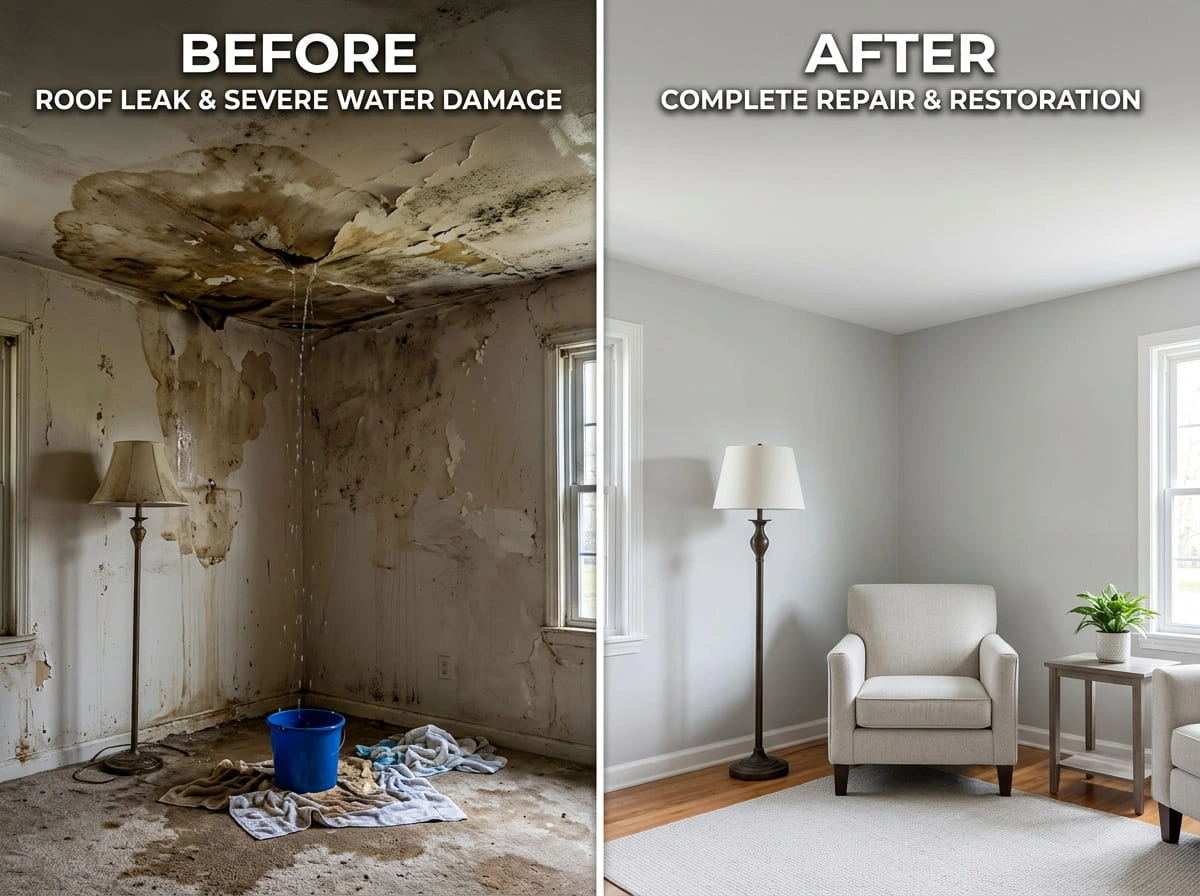
What changes once water intrusion is assessed, controlled, dried, and documented.
Many property owners call after seeing a ceiling stain, hearing dripping above a ceiling, finding wet insulation, or discovering that recent rain or hail caused water to enter a finished room. The initial uncertainty is often the hardest part: Is the roof still leaking? Is the drywall safe? Did water enter the attic? Is mold likely? Will the insurer need evidence?
- Before: Water dripping, stained ceilings, damp insulation, wet carpet, or uncertainty about how far moisture traveled. After: A documented moisture assessment, emergency water removal where needed, drying equipment, and a clear next-step plan.
- Before: An active leak creates stress about ceiling damage, flooring, furnishings, and electrical safety. After: The affected area is evaluated, protected, monitored, and prepared for appropriate repairs or reconstruction.
- Before: Homeowners, HOAs, and property managers lack records for a roofer or insurance claim. After: Photos, moisture findings, drying records, and restoration documentation support informed decisions.
How We Dry, Protect, and Restore Materials After a Roof Leak
Professional equipment and material-specific methods support a safer, more complete recovery.
Creek Auro Restoration evaluates the affected materials rather than treating every roof leak the same way. Drywall, insulation, hardwood, carpet, padding, trim, framing, and ceiling materials respond differently to moisture. The right method depends on water source conditions, duration of wetness, material type, moisture readings, access, and whether the source has been corrected.
- Moisture meters and inspection tools to locate water beyond visible stains
- Water-extraction equipment for standing water and saturated floor coverings
- Air-moving equipment and commercial dehumidification for controlled drying
- Containment and cleaning practices when the condition or material requires them
- Selective removal of compromised drywall, insulation, carpet pad, or other materials when drying is not appropriate
- Documentation of moisture conditions, equipment placement, and drying progress
- Reconstruction planning for ceilings, drywall, trim, paint, flooring, and related interior finishes
EPA Guidance
The EPA notes that drying water-damaged materials promptly is important for reducing mold-growth risk. Whether a material can be saved depends on how long it was wet, the extent of saturation, material composition, and contamination concerns.
Should You Repair Water-Damaged Materials or Replace Them?
Helping Aurora property owners choose a practical path after roof-related water intrusion.
Not every roof leak requires major demolition, and not every wet material can be saved. The decision depends on the source of water, the length of exposure, the material involved, the level of saturation, structural condition, and whether drying targets can be reached. Creek Auro Restoration provides recommendations based on the actual conditions found—not a blanket assumption that every ceiling stain needs full replacement.
| Scenario | Repair or Drying May Be Appropriate | Replacement May Be Recommended |
|---|---|---|
| Small, recent ceiling stain with low moisture readings | Drying and cosmetic repair may be possible | If drywall has softened, sagged, or deteriorated |
| Wet insulation in a limited, accessible area | Possible if promptly addressed and effectively dried | Often needed when insulation is saturated, contaminated, or cannot be dried reliably |
| Damp drywall with intact structure | Controlled drying may be considered based on moisture findings | Removal may be needed when swollen, delaminated, crumbling, or mold-affected |
| Water-damaged carpet | Extraction and drying may be possible for clean-water events caught quickly | Replacement may be needed when padding, backing, or contamination issues are present |
| Hardwood or engineered flooring exposure | Drying may preserve some materials if addressed quickly | Replacement or repairs may be necessary for cupping, buckling, delamination, or lasting damage |
| Repeated roof leaks in the same area | Repair can address the interior after the source is fixed | Larger replacement may be needed if repeated wetting compromised materials |
When Replacement May Be the Safer Option
- Ceiling drywall is sagging, cracking, soft, detached, or structurally weakened
- Insulation remains saturated or cannot be accessed and dried effectively
- Water has affected multiple layers of building materials for an extended period
- Materials show significant deterioration, microbial growth, or contamination concerns
- The same location has experienced repeated roof leaks or ongoing water intrusion
Roof Leak Water Damage Repair Costs in Aurora, CO
Clear cost drivers and a property-specific estimate after the affected area is assessed.
The cost of roof leak water damage restoration varies widely because a small ceiling stain and an active leak affecting multiple rooms are not the same type of loss. Creek Auro Restoration evaluates the area, materials, moisture migration, and drying requirements before presenting the recommended scope.
Main Cost Drivers Include:
- Size of the affected room or number of rooms
- Whether water is actively dripping or has spread into hidden spaces
- Ceiling, wall, insulation, flooring, carpet, and content damage
- Water extraction needs and amount of standing water
- Drying equipment requirements and monitoring duration
- Accessibility of attic, roof-adjacent, crawl-space, or wall-cavity areas
- Emergency or after-hours response needs
- Material removal, repair, and reconstruction requirements
- Whether roofing-source repair has already been completed or temporary protection is in place
| Service Type | Typical Pricing Consideration |
|---|---|
| Emergency roof-leak assessment | Scope, time of day, active water conditions, and property access |
| Moisture inspection and mapping | Number of rooms, materials, and concealed areas requiring evaluation |
| Water extraction | Amount of standing water, floor type, carpet/pad involvement, and access |
| Structural drying | Equipment needs, drying duration, material moisture levels, and monitoring visits |
| Ceiling or drywall repair | Area size, material condition, texture, paint, insulation, and reconstruction scope |
| Full reconstruction | Damage extent, affected systems, finish materials, and project complexity |
Insurance Note
Insurance coverage depends on your specific policy, cause of loss, deductible, prior conditions, exclusions, and insurer determination. We can provide documentation and coordinate direct insurance billing where available, but Creek Auro Restoration cannot guarantee coverage or claim approval.
When Should Aurora Property Owners Call for Roof Leak Water Damage Help?
Fast assessment is especially important when moisture is active, hidden, or affecting finished building materials.
Call Creek Auro Restoration if you notice any condition suggesting roof-related water intrusion. Even when the water appears to have stopped, concealed moisture may remain in ceiling cavities, insulation, walls, or flooring.
- Water dripping from the ceiling during or after rain
- A ceiling bulge, sagging drywall, cracking paint, or softened ceiling material
- Brown or yellow ceiling stains after a hailstorm, wind event, rainstorm, or snowmelt
- Wet attic insulation, damp roof decking, or moisture around an attic hatch
- A roof leak near a light fixture, outlet, ceiling fan, or other electrical area
- Wet carpet, warped flooring, damp baseboards, or water spreading beneath a ceiling stain
- Musty odors after a roof leak or recurring stain
- A leak around a chimney, skylight, bathroom vent, plumbing vent, or HVAC roof penetration
- Condo, townhome, or HOA roof damage affecting a top-floor ceiling or shared building area
- A roof that has been repaired but interior materials remain wet, stained, damaged, or uncertain
Safety First
If water is near electrical equipment, a ceiling is visibly bulging, or materials appear unstable, keep people away from the area and seek immediate professional guidance.
Roof Leak Water Damage Repair for Aurora Commercial & Multi-Unit Properties
Protect occupied spaces, inventory, operations, tenant areas, and building materials with a coordinated response.
Commercial roof leaks can affect far more than a single ceiling. Water may enter offices, retail areas, hallways, classrooms, medical spaces, restaurants, storage rooms, mechanical areas, common spaces, and top-floor units. Creek Auro Restoration works with facility managers, property owners, HOAs, maintenance teams, and commercial tenants to assess the water intrusion, stabilize affected areas, document conditions, and build a drying and recovery plan.
| Commercial Service | Description |
|---|---|
| Emergency water assessment | Evaluate visible water damage, safety issues, affected rooms, and immediate mitigation needs |
| Water extraction and drying | Remove standing water and deploy drying equipment for affected materials |
| Moisture mapping | Identify water migration in ceilings, walls, floors, and accessible building components |
| Documentation support | Provide photos, findings, drying records, and repair-scope information |
| Reconstruction planning | Coordinate repair needs for drywall, ceilings, flooring, trim, and interior finishes |
| Multi-unit response | Prioritize affected units, common areas, corridors, offices, and shared building systems |
Commercial Properties We Assist Include
- Shopping centers, retail suites, restaurants, and hospitality venues
- Office buildings, business parks, and mixed-use developments
- Apartment communities, townhome associations, condos, and HOAs
- Schools, churches, daycares, recreation facilities, and community buildings
- Medical offices, clinics, dental practices, laboratories, and care environments
- Warehouses, logistics facilities, industrial buildings, and storage areas
Why Commercial Property Teams Choose Professional Restoration Support
- Faster understanding of the indoor water-damage scope
- Clear documentation for ownership, insurers, tenants, and roofing coordination
- Equipment planning designed to reduce unnecessary disruption
- Scalable response for multiple affected rooms, suites, or units
- 24/7 availability for active water intrusion outside normal business hours
| Commercial Situation | Typical Response Consideration |
|---|---|
| Multi-unit property | Prioritize active leaks, shared ceilings, top-floor units, and moisture migration paths |
| Office or retail site | Protect occupants, merchandise, electronics, furnishings, and operational areas |
| Large campus or complex | Phase assessment and drying by building, zone, department, or tenant space |
| Industrial or warehouse facility | Address access, elevated work, inventory protection, safety protocols, and operational continuity |
Benefits of Hiring Roof Leak Water Damage Pros in Aurora
Protect materials, reduce uncertainty, and make decisions using documented moisture conditions instead of guesswork.
A roof leak can look minor from inside, especially when only a small stain or occasional drip is visible. Professional restoration helps identify whether water is limited to a surface or has moved into insulation, ceilings, walls, floors, or other building materials.
- Detect moisture that may not be visible from the room below
- Remove standing water and begin drying before secondary damage expands
- Reduce the chance of leaving wet insulation, drywall, carpet padding, or subfloor materials unaddressed
- Create documented findings for roofers, insurers, HOAs, property managers, and reconstruction planning
- Make material repair-versus-replacement decisions based on conditions and drying progress
- Help protect furnishings, equipment, flooring, and interior finishes
- Receive a clear plan rather than relying on a stain to "dry on its own"
Why DIY Roof Leak Cleanup Can Be Risky
An active roof leak can involve electrical hazards, unstable ceiling materials, slippery surfaces, and hidden moisture.
Do not climb onto a wet, icy, storm-damaged, or otherwise unsafe roof. A temporary bucket may contain a drip, but it cannot make damaged roof materials safe or confirm that concealed moisture has stopped spreading. Likewise, drying only the visible ceiling surface may not address water in insulation, wall cavities, or other hidden areas.
Critical Safety Warnings
- Keep people, pets, furniture, and electronics away from active leaks and sagging ceiling areas
- Avoid touching ceiling lights, fans, outlets, switches, or electrical equipment near water
- Do not puncture a bulging ceiling without professional safety guidance; water volume, electrical conditions, and ceiling stability matter
- Do not use household fans near wet electrical areas or on suspected mold growth without an appropriate plan
- Do not walk on a wet roof, attempt storm repairs during dangerous weather, or assume roof sealant is a permanent solution
- Take photographs from a safe location and document the date, time, weather event, and affected materials
Answers to Common Roof Leak Water Damage Questions in Aurora
Straight answers for homeowners, HOAs, and property managers facing ceiling leaks, storm damage, and drying concerns.
What should I do if water is coming through my ceiling?
Move people, valuables, and electronics away from the affected area. Catch active drips with a container if it is safe to do so, take photos, and avoid contact with wet electrical fixtures or sagging ceiling materials. Do not climb onto a wet or storm-damaged roof. Call a qualified roofer for the roof source and Creek Auro Restoration for interior water assessment, extraction, drying, and documentation.
Is a leaking roof an emergency?
An active leak is urgent when water is entering the home or business, a ceiling is bulging or sagging, moisture is near electrical fixtures, water is spreading across finishes or flooring, or a storm is continuing. An old, dry stain may not require an after-hours emergency response, but it should still be inspected to determine whether moisture remains or the roof source needs attention.
Why is my ceiling leaking only when it rains hard?
Heavy rain, wind-driven rain, damaged flashing, lifted shingles, a compromised roof valley, skylight issues, chimney flashing, vent-boot failure, or drainage problems can allow water through only under certain weather conditions. The interior drip may not be directly below the exterior roof entry point because water can travel along roof decking, framing, or insulation.
Can hail damage cause a roof leak later?
Yes. Hail or wind may damage shingles, flashing, vents, or sealant in a way that allows water intrusion during a later rainstorm. A roofing professional can evaluate the exterior roof condition, while Creek Auro Restoration can assess any resulting ceiling, wall, insulation, floor, or content damage inside the property.
Does a roof leak require water damage restoration?
Not every leak needs extensive restoration. However, professional assessment is advisable when water reaches drywall, ceilings, insulation, carpet, flooring, wall cavities, furniture, or electrical-adjacent areas. The goal is to determine whether materials can be dried and preserved or whether they need repair or replacement.
How long does roof leak water damage take to dry?
Drying time depends on the amount of water, material type, humidity, airflow, temperature, whether the leak is stopped, and how far moisture traveled. Some small areas may dry quickly; others require multiple days of controlled drying and monitoring. Moisture readings—not appearance alone—help determine whether materials are drying appropriately.
Can wet ceiling drywall be saved?
Sometimes. Drywall may be dryable when the event is limited, the water source is appropriate, the material remains structurally sound, and drying begins quickly. Replacement may be needed if drywall is sagging, soft, swollen, crumbling, delaminated, repeatedly wet, or otherwise compromised.
Should wet insulation be replaced after a roof leak?
It depends on the insulation type, saturation level, accessibility, condition, and ability to dry it effectively. Saturated insulation can lose performance and retain moisture against building materials. An inspection can determine whether drying or replacement is the more appropriate option.
Can a roof leak cause mold?
Persistent moisture can support mold growth. Promptly correcting the water source and drying affected areas are important prevention steps. The EPA recommends drying water-damaged materials within 24 to 48 hours when possible, while recognizing that conditions, materials, and contamination levels affect the appropriate response.
Does homeowners insurance cover roof leak water damage?
Coverage depends on the policy language, cause of loss, exclusions, maintenance history, deductible, and the insurer's claim determination. Sudden storm-related damage may be treated differently from long-term wear, deferred maintenance, or gradual deterioration. Creek Auro Restoration can provide restoration documentation, photos, moisture findings, and invoices, but cannot guarantee coverage.
Who is responsible for a condo or townhome roof leak in Aurora?
Responsibility depends on the association's declaration, bylaws, maintenance obligations, unit boundaries, insurance policies, and the facts of the loss. Notify your HOA or property manager in writing as soon as possible, document visible damage, and retain copies of communications. A restoration team can document interior damage, but it cannot determine legal or insurance responsibility.
Do I need a permit to replace a roof in Aurora?
Aurora's published homeowner information indicates that roof replacement requires a building permit. Repair requirements can depend on the extent and classification of the work, so confirm substantial repair or replacement requirements with the City of Aurora Building Division or a properly licensed roofing contractor. Creek Auro Restoration addresses interior water damage and restoration; roofing permitting should be handled through the appropriate roofing professional and local authority.
Can you help if a roofer fixed the leak but the ceiling is still stained or wet?
Yes. Stopping the roof leak is the first step, but the interior should be evaluated for remaining moisture and material damage. We can inspect affected ceilings, walls, insulation, floors, and related materials, provide drying where appropriate, and develop a repair or reconstruction plan if needed.
You're Supported from Emergency Assessment to Drying and Recovery Planning
Local response, clear documentation, and practical guidance for your Aurora roof-leak water-damage event.
Creek Auro Restoration approaches roof leak water damage with urgency, transparency, and respect for your property. We explain the visible and concealed conditions we find, outline the recommended restoration scope, document drying progress, and help you understand what needs to happen next.
We do not promise that every roof leak requires replacement, that every material can be saved, or that insurance will approve a claim. Instead, we provide a professional assessment and a clear recovery plan based on the moisture conditions, materials affected, safety concerns, and scope of water intrusion.
If conditions change during the drying process or moisture remains in an affected material, we will explain the findings and outline appropriate corrective options before moving forward with additional restoration work.
Creek Auro Restoration
13901 E Quincy AveAurora, CO 80015
United States
Credentials That Support Roof Leak Water Damage Restoration
Specialized restoration knowledge matters when ceilings, insulation, drywall, flooring, and building materials are wet.
Roof leak water damage can involve more than visible cleanup. Drying affected structures requires material awareness, moisture evaluation, safe work practices, and a methodical recovery process. Creek Auro Restoration's team includes professionals with restoration-focused credentials for water losses, structural drying, and microbial-remediation considerations.
WRT
Water Damage Restoration Technician
ASD
Applied Structural Drying Technician
AMRT
Applied Microbial Remediation Technician
MWR
Master Water Restorer
WLS
Water Loss Specialist
Roofing Coordination
Where roof repair, exterior tarp work, roof replacement, or permit-related roofing scope is needed, Creek Auro Restoration coordinates the interior restoration plan with the appropriate qualified roofing professional. Aurora roofing work and permit requirements should be handled in accordance with applicable City of Aurora requirements.
Emergency Roof Leak Water Damage Repair in Aurora
Rapid response when water is entering through the roof, ceiling, attic, skylight, vent, chimney, or storm-damaged exterior.
An active roof leak can worsen quickly, especially during continuing rain, melting snow, hail conditions, or wind-driven weather. Creek Auro Restoration provides around-the-clock emergency water-damage response for Aurora homes, commercial properties, managed communities, and multi-unit buildings.
Emergency Response Process
- Immediate phone consultation to understand the active leak, affected area, and safety risks
- Dispatch planning for water extraction, moisture inspection, drying equipment, and property protection
- On-site assessment of ceilings, walls, floors, insulation areas, carpets, and other affected materials
- Water removal and drying measures where needed to limit secondary damage
- Documentation for roofing coordination, insurers, HOAs, property managers, or reconstruction planning
- Clear recommendations for the next stage of recovery after the immediate emergency is stabilized
Common Emergency Scenarios
- Water dripping through a ceiling during or after heavy rain
- Ceiling bulging, sagging, cracking, or visibly softened by water
- Roof leaks near lights, electrical fixtures, fans, outlets, or sensitive equipment
- Hail or wind damage followed by interior water intrusion
- Ice-dam or snowmelt water entering attic or ceiling spaces
- Water spreading into carpet, hardwood, drywall, insulation, wall cavities, or commercial interiors
- A roof repaired after a storm but interior materials still wet or damaged
Insurance Claim Assistance for Roof Leak Water Damage Incidents
Clear restoration records can help you communicate the loss to your insurer, HOA, or property manager.
Roof leak claims can involve questions about storm damage, hail, wind-driven rain, sudden water intrusion, prior maintenance, roof age, deductibles, and interior damage. Creek Auro Restoration does not determine insurance coverage, but we can document the indoor water-damage conditions and restoration work so you have organized information for your claim process.
- Photos of visible ceiling, wall, flooring, content, and moisture-related damage
- Initial assessment notes describing the observed water intrusion and affected areas
- Moisture inspection findings and drying-equipment documentation
- Water extraction, structural drying, demolition, repair, and reconstruction records as applicable
- Invoices and scope information for completed restoration work
- Direct insurance billing coordination where available and authorized
Policy Note
Coverage depends on your individual policy, endorsements, exclusions, claim history, cause of loss, deductible, and insurance carrier's decision. Sudden storm damage may be treated differently than gradual wear, neglected maintenance, or a pre-existing condition. Review your policy and consult your insurer or agent for coverage guidance.
Understanding Your Roof Leak Water Damage Repair Coverage
Clear records help you understand restoration work completed at your Aurora property.
Roof leak restoration may include emergency extraction, structural drying, material removal, water-damage repair, and reconstruction. The applicable workmanship terms, material warranties, and manufacturer coverage can vary based on the specific scope of work, materials installed, and any roofing work performed by separate contractors.
| Coverage Area | What It May Include |
|---|---|
| Restoration workmanship | Scope-specific terms for qualifying water-damage repair or reconstruction work |
| New materials | Manufacturer warranty information for eligible materials used in repair or rebuild work |
| Drying documentation | Records of assessed areas, equipment use, monitoring, and restoration findings |
| Roofing work | Warranty terms provided by the roofing contractor performing exterior repair or replacement |
Important Notes
Specific warranty terms should be reviewed in the written estimate, work authorization, or final project documentation. Water damage caused by a new, ongoing, or uncorrected roof leak may fall outside the scope of completed interior restoration work. Promptly report new moisture concerns so the source and affected materials can be assessed.
10 Fully Equipped Service Vehicles Serving Aurora & the Denver Metro Area
Tools, drying equipment, and trained professionals ready to respond when roof leaks affect your property.
Creek Auro Restoration maintains 10 fully equipped service vans to support rapid water-damage response throughout Aurora and surrounding communities. Our response capability helps us deploy personnel, moisture-inspection tools, water-extraction equipment, air-moving equipment, dehumidification systems, and property-protection materials based on the needs of the loss.
- Moisture-detection and inspection tools to assess visible and concealed water impact
- Water-extraction equipment for wet carpets, floors, and standing water
- Air movers and commercial dehumidification equipment for structural drying
- Protective materials and containment resources for affected areas as needed
- GPS-dispatched vehicles for responsive service across Aurora and nearby Denver-metro communities
- Restoration professionals prepared to assess ceilings, walls, flooring, insulation areas, contents, and interior finishes
Payment and Project Planning Options for Roof Leak Water Damage Recovery
Helping property owners understand repair priorities when a roof leak creates unplanned restoration needs.
A roof leak can create unexpected expenses, particularly when drying, ceiling repair, insulation replacement, flooring work, or reconstruction is needed after the emergency phase. Creek Auro Restoration can discuss the restoration scope, prioritize urgent work, and explain available billing or payment arrangements for qualifying projects.
- Separating emergency mitigation from later repair or reconstruction phases
- Coordinating with approved insurance billing processes where available
- Planning phased reconstruction for larger residential, commercial, or multi-unit losses
- Reviewing the written scope before authorizing non-emergency repair work
- Discussing timing and options for projects involving multiple rooms or affected units
Important Payment Note
Financing availability, terms, eligibility, interest, payment schedules, and approved providers vary. Ask our team for current options before relying on financing as part of a project decision.
Recognition for Service Excellence and Property Restoration Support
A service-focused team committed to responsive communication, restoration quality, and local property protection.
Creek Auro Restoration is associated with industry and local-recognition claims that reflect its commitment to serving Aurora property owners and the wider Denver metro area. Because awards, designations, platform recognition, and eligibility standards can change, current details should be reviewed directly with the relevant organization before publication or display.
Angi Super Service Award
BBB Torch Award for Ethics
City of Aurora Business Recognition
Expertise.com Best Water Damage Restoration
Yelp Top Rated / Yelper's Choice
Our Focus
Our focus remains on responsive emergency service, thorough water-damage assessment, controlled drying, clear documentation, and practical recovery planning for each property we serve.
Senior & Military Discounts for Roof Leak Water Damage Services
Supporting Aurora seniors, active-duty military personnel, veterans, and qualifying households facing unexpected water damage.
Roof leaks and water intrusion rarely happen at a convenient time. Creek Auro Restoration may offer special savings opportunities for senior citizens, active-duty military personnel, veterans, and eligible customers on qualifying restoration services.
Senior Savings
On qualifying water-damage assessments or services
Military & Veteran
Savings on eligible restoration work
Seasonal Offers
For emergency cleanup, drying, or reconstruction-related services
Bundled Savings
Where sanitization, drying, and restoration scopes are combined
Discount Note
Discount availability, scope, exclusions, proof requirements, and program terms may vary. Ask before authorizing work so our team can explain current qualifying options.
Roof Leak Water Damage Repair Hours in Aurora, CO
24/7 availability for emergency water removal, moisture assessment, drying, and recovery support.
Roof leaks do not wait for regular business hours. Creek Auro Restoration operates 24 hours a day, seven days a week to help Aurora homeowners, businesses, HOAs, and property managers respond when water enters through a roof, ceiling, attic, skylight, vent, chimney, or storm-damaged exterior.
| Day | Hours |
|---|---|
| Monday | 00:00–23:59 |
| Tuesday | 00:00–23:59 |
| Wednesday | 00:00–23:59 |
| Thursday | 00:00–23:59 |
| Friday | 00:00–23:59 |
| Saturday | 00:00–23:59 |
| Sunday | 00:00–23:59 |
Contact Creek Auro Restoration
Phone: +1 (719) 715-6006
Email: creekaurorestoration@gmail.com
Website: waterdamagerestorationaurora.com
Creek Auro Restoration vs. a Basic Water Cleanup Approach
Know what to look for when choosing a roof leak water-damage restoration provider in Aurora.
Not every provider handles an active roof leak and the resulting interior moisture in the same way. The right restoration team should look beyond the visible stain, explain what it is assessing, document the moisture conditions, provide a controlled drying plan where needed, and communicate clearly with homeowners, property managers, insurers, and roofing professionals.
| Feature to Compare | Creek Auro Restoration Approach | Basic Cleanup-Only Approach |
|---|---|---|
| Emergency availability | 24/7 emergency response for active roof-leak water damage | May be limited to regular business hours |
| Assessment scope | Visible damage plus accessible moisture inspection and mapping | May focus only on obvious surface water |
| Drying plan | Extraction, dehumidification, air movement, and monitoring as needed | May rely on basic fans or visible surface drying |
| Roof-source coordination | Documents interior impact and supports coordination with qualified roof professionals | May not explain the distinction between exterior source repair and interior restoration |
| Material decisions | Evaluates whether materials may be dried, repaired, or need removal | May overlook concealed moisture or compromised materials |
| Documentation | Photos, restoration findings, drying records, and scope information | Limited records or verbal recommendations only |
| Property types | Residential, commercial, HOA, multifamily, and managed-property support | May be limited to simple residential cleanup |
The Goal
The goal is not simply to make the stain disappear. It is to understand the source, protect occupants, dry affected materials appropriately, and create a clear path to repair and recovery.
Contact Creek Auro Restoration for Roof Leak Water Damage Repair in Aurora, CO
Speak with a restoration professional today about active ceiling leaks, storm intrusion, wet insulation, water-stained drywall, or drying concerns.
If water is coming through your ceiling, a recent hailstorm caused interior staining, your attic insulation is wet, or a repaired roof leak left behind damaged drywall or flooring, Creek Auro Restoration is ready to help. We provide 24/7 emergency assessment, water extraction, moisture mapping, structural drying, documentation, and repair planning for Aurora properties.
For roof-source repair, emergency tarping, or roof replacement, work with the appropriate qualified roofing professional. For the interior water damage, drying, repair, and reconstruction plan, Creek Auro Restoration provides a practical, documented path forward.
Contact Creek Auro Restoration
(719) 715-6006
creekaurorestoration@gmail.com
13901 E Quincy Ave
Aurora, CO 80015
24/7 Emergency Service Available
Protect your ceilings, insulation, walls, floors, contents, and indoor air quality with professional roof leak repair Aurora CO homeowners and property managers can rely on from Creek Auro Restoration.