Water Damaged Hardwood Floor Repair Aurora
Aurora, CO hardwood floor drying and water damage restoration when leaks, flooding, or overflows threaten your property.
Water under hardwood flooring can travel beneath boards, baseboards, cabinets, and thresholds long after the surface appears dry. If a dishwasher, refrigerator line, water heater, toilet, burst pipe, upstairs bathroom, roof leak, or flood has affected your flooring, Creek Auro Restoration provides hardwood floor water damage restoration Aurora CO homeowners, landlords, HOAs, and commercial property managers can call for urgent extraction, moisture mapping, structural drying, and restoration planning.
Our team responds 24/7 throughout Aurora and the Denver metro area to inspect affected flooring, measure moisture in the boards and subfloor, remove standing water, and determine whether your floor may be dried in place or requires repair, refinishing, selective board replacement, or reconstruction. We do not assume every wet floor must be removed—and we do not promise that every floor can be saved. Instead, we provide a documented, condition-based plan designed to limit secondary damage and protect salvageable materials where possible.
With 16 years serving Aurora-area properties, 40 skilled professionals, and 10 equipped service vans, Creek Auro Restoration is prepared to respond when water threatens hardwood, engineered wood, laminate, subfloors, baseboards, drywall, cabinetry, and adjoining rooms.
- Emergency water removal and extraction for wet wood floors
- Moisture mapping for hardwood, subfloors, walls, and baseboards
- Specialty drying methods, including hardwood floor drying mats when appropriate
- Documentation support for water-damage insurance claims
- Repair, reconstruction, and flooring-restoration planning after drying
Call now for 24/7 water extraction, moisture inspection, and hardwood floor drying in Aurora, CO.
Request Emergency Hardwood Floor Drying
Fill out the form and we'll contact you immediately!
Hardwood Floor Water Damage Restoration Backed by 16 Years of Experience
A practical, responsive Aurora team focused on drying, documentation, and informed restoration decisions.
Hardwood flooring can be one of the most expensive finishes in a home or commercial property. When it becomes wet, the right response is not simply to place a few fans in the room or sand visible cupping flat. Water may remain trapped beneath boards, inside the subfloor, behind baseboards, under cabinetry, and in nearby building materials.
Creek Auro Restoration helps Aurora property owners make clear decisions after a leak or flood. We inspect the affected area, identify where moisture has traveled, explain what drying can realistically accomplish, and outline the next steps based on actual conditions. Whether the issue is a small refrigerator supply-line leak or water spreading through an open-plan kitchen and living area, our priority is to reduce ongoing damage and give you useful information—not pressure you into unnecessary replacement.
Water Damage Help Near Aurora Neighborhoods, Landmarks, and Business Hubs
Serving homes and commercial properties near Southlands, Aurora Reservoir, Anschutz Medical Campus, and throughout the Denver metro.
Hardwood floor water damage can happen anywhere in Aurora: in an established home with a finished basement, a newer open-concept property near Southlands, a townhome in Saddle Rock, a condominium near City Center, or a commercial space near the Anschutz Medical Campus. A kitchen leak can spread beneath continuous flooring into dining rooms, halls, living rooms, offices, or adjacent suites before the full extent is visible.
Creek Auro Restoration provides emergency hardwood drying, water extraction, moisture inspection, and reconstruction planning for properties across Aurora, CO. We understand that local homeowners often need fast help after Front Range cold snaps, appliance failures, water-heater leaks, storm-driven roof intrusion, snowmelt, or basement water events.
Aurora Communities Served
Saddle Rock, Tallyn's Reach, Murphy Creek, Copperleaf, Southshore, Mission Viejo, Meadow Hills, Heather Ridge, Aurora Hills, Aurora Knolls, Seven Hills, The Conservatory, Blackstone, Pheasant Run, City Center, Del Mar Parkway, Centretech, Fitzsimons, Hoffman Heights, Aurora Highlands, Painted Prairie, Traditions, Tollgate Crossing, and Sterling Hills
Nearby Service Areas
Denver, Centennial, Parker, Highlands Ranch, Castle Rock, Lakewood, Arvada, Westminster, Broomfield, Thornton, Commerce City, Boulder, Longmont, Loveland, and Greeley
Aurora Landmarks & Hubs
Southlands, Town Center at Aurora, Havana Street Corridor, Aurora Reservoir, Cherry Creek State Park, Quincy Reservoir, Anschutz Medical Campus, Children's Hospital Colorado, UCHealth University of Colorado Hospital, Buckley Space Force Base, Gaylord Rockies Resort & Convention Center, and Aurora Sports Park
Specialized Hardwood Floor Water Damage Restoration for Aurora Properties
Water mitigation, moisture inspection, controlled drying, and restoration planning—not guesswork.
A wet wood floor is not automatically a flooring-replacement job, but it is also not a problem to ignore because the visible surface looks dry. Hardwood and engineered flooring can absorb moisture from below, causing edges to rise, planks to separate, finishes to fail, and boards to lift away from the subfloor. The same incident may also affect baseboards, cabinets, walls, insulation, and flooring in adjacent rooms.
Creek Auro Restoration approaches hardwood floor water damage as a building-material and moisture-control problem. Our team assesses the flooring type, the source of water, the duration of exposure, the affected area, subfloor conditions where accessible, and the possibility of contamination. We then recommend controlled drying, targeted removal, repair, refinishing, reconstruction, or replacement planning based on the actual loss—not a one-size-fits-all answer.
- Moisture inspection of affected flooring, baseboards, walls, and accessible subfloor areas
- Professional water extraction and structural drying for clean-water and water-damage incidents
- Specialty hardwood drying methods when in-place drying is appropriate
- Clear explanation of cupping, crowning, buckling, staining, delamination, and material failure
- Documented recommendations for homeowners, property managers, and insurance claims
What Happens When Water Gets Under a Hardwood Floor in Aurora?
Cupping, buckling, staining, odor, and hidden subfloor moisture can develop after the visible water is gone.
Water can enter hardwood flooring through seams, edges, transitions, unfinished cuts, floor vents, and gaps around cabinets or walls. Once moisture reaches the underside of a plank or the subfloor beneath it, the flooring can react unevenly. That is why an Aurora homeowner may first notice raised board edges, dark lines, soft areas, a musty odor, or boards that seem to move days after a dishwasher leak or burst pipe.
The most common visible signs are not all the same:
- Cupping: The edges of each board rise higher than the center, often because the underside holds more moisture.
- Crowning: The center of a board rises higher than its edges, which can occur when moisture conditions shift or when flooring is sanded before it has stabilized.
- Buckling: Boards lift, tent, detach, or push upward from the subfloor, often indicating more severe movement or moisture exposure.
- Staining: Dark marks, blackened areas, dull finish, or discoloration may develop after water exposure.
- Board separation: Gaps, lifting edges, loose planks, or movement at joints can appear as wood expands and contracts.
- Hidden moisture: A floor can look dry from above while moisture remains beneath it, in the subfloor, along walls, or under nearby cabinetry.
Prompt Action Matters
Waiting can allow moisture to continue affecting materials even after the source is repaired. That does not mean every affected floor must be removed; it means the condition should be assessed before sanding, refinishing, or making a replacement decision.
How Fast Should Wet Hardwood Floors Be Dried?
The first hours matter because water can move beneath boards and into the subfloor.
Hardwood floor water damage is not an annual-maintenance issue—it is an emergency response and moisture-control issue. The sooner the water source is stopped and the affected materials are inspected, extracted, and dried, the greater the opportunity to reduce damage. Response time is especially important after clean-water plumbing leaks, appliance failures, water-heater leaks, burst pipes, toilet overflows, and basement water events.
Creek Auro Restoration manages the on-site emergency process from initial inspection through monitoring and restoration planning. We assess the loss, determine whether water is still active, identify the likely source, check accessible materials for moisture, and deploy drying equipment appropriate to the conditions.
| Emergency Step | What We Do | Typical Timing | Why It Matters |
|---|---|---|---|
| Initial inspection | Identify source, affected rooms, flooring type, and visible damage | As soon as possible after the call | Helps determine the scope of the water loss |
| Water extraction | Remove standing water and surface moisture | Early in the mitigation process | Limits continued migration into materials |
| Moisture mapping | Measure moisture in flooring, subfloor, walls, and nearby materials where accessible | Initial visit and follow-up checks | Identifies moisture that may not be visible |
| Controlled drying | Use air movement, dehumidification, and specialty drying methods as appropriate | May continue over several days | Reduces trapped moisture and supports material recovery |
| Monitoring | Recheck moisture conditions and equipment performance | During the drying period | Confirms whether materials are progressing toward drying goals |
| Restoration planning | Recommend repair, refinishing, selective replacement, or reconstruction | After conditions are assessed and stabilized | Helps avoid premature cosmetic repairs or unnecessary demolition |
Emergency Timing Guidance
- Call for help promptly if water is visibly pooling, spreading, or reaching wood-floor seams
- Do not wait for floorboards to warp before arranging a moisture inspection
- Avoid sanding a cupped floor before the flooring and subfloor have been properly evaluated and dried
- If water is contaminated by sewage, toilet waste, or an unknown source, limit contact and arrange professional cleanup
Important Timing Note
No universal drying timeline applies to every wood floor. Drying duration depends on the water source, affected area, flooring type, installation method, subfloor materials, indoor conditions, and the amount of moisture trapped below the boards.
Cost Note
Emergency mitigation costs vary by the amount of water, affected square footage, moisture spread, equipment needs, accessibility, contamination concerns, and whether repair or reconstruction is required. Creek Auro Restoration explains the scope before major work proceeds.
Who Needs Hardwood Floor Water Damage Restoration in Aurora?
From single-family homes and condos to HOAs, retail spaces, and multi-unit properties.
Water damage can affect any property with hardwood, engineered wood, laminate, or wood-look flooring. Creek Auro Restoration serves property owners and managers who need prompt mitigation, clear moisture documentation, and a realistic path toward drying, repair, or replacement.
- Homeowners with kitchen, bathroom, laundry-room, basement, or water-heater leaks
- Condo and townhome residents dealing with upstairs or neighboring-unit water losses
- Landlords and tenants needing water extraction, drying, and property documentation
- HOAs and apartment managers coordinating water damage across multiple units
- Real-estate professionals addressing active water damage before a sale or occupancy
- Restaurants, offices, retail spaces, hospitality properties, and commercial facilities with affected flooring
- Schools, medical offices, community facilities, and commercial properties needing controlled drying and clear communication
How Aurora Weather, Plumbing Failures, and Storms Affect Wood Floors
Front Range freezes, appliance leaks, hail events, snowmelt, and heavy rain can create urgent drying needs.
Aurora properties experience a range of water-damage risks throughout the year. Winter cold snaps can contribute to frozen or burst plumbing. Spring snowmelt and heavy rain can expose drainage problems, basement seepage, sump-pump failures, or roof vulnerabilities. Summer hail and wind events can lead to roof or window intrusion. Year-round, appliance supply lines, water heaters, toilets, sinks, and washing machines can fail without warning.
For homes around Southlands, Saddle Rock, Tallyn's Reach, Murphy Creek, Mission Viejo, Heather Ridge, Meadow Hills, and other Aurora communities, a small kitchen or laundry leak can travel farther than expected beneath connected flooring. Creek Auro Restoration provides moisture inspection and hardwood floor drying mats Aurora property owners may need when water has reached beneath boards and in-place drying is appropriate.
Winter
Frozen pipes, burst supply lines, and water-heater problems can rapidly soak finished flooring
Spring
Snowmelt, rain, sump-pump failures, and groundwater-related issues can affect basements and lower-level rooms
Summer
Hail, wind-driven rain, roof leaks, and window intrusion can introduce moisture from above
Year-Round
Dishwashers, refrigerators, toilets, washing machines, sinks, and plumbing connections can leak silently over time
What Type of Water-Damaged Flooring Do You Have?
Solid hardwood, engineered wood, laminate, luxury vinyl, and subfloors respond differently to moisture.
Not every floor described as "wood" is constructed the same way. The type of flooring, how it was installed, the materials beneath it, and the duration of exposure all affect the drying and restoration decision. Creek Auro Restoration evaluates the visible flooring and the surrounding materials before recommending a plan.
| Flooring Type | Typical Use | Water-Damage Risk | Restoration Considerations |
|---|---|---|---|
| Solid hardwood | Homes, living areas, hallways, and high-end commercial interiors | Can cup, crown, stain, buckle, or separate | May be a candidate for controlled drying and later refinishing if boards and subfloor remain stable |
| Engineered hardwood | Open-plan homes, condos, kitchens, and living spaces | May cup, lift, or delaminate depending on the product and adhesive | Recovery depends on veneer condition, layer separation, adhesive performance, and moisture exposure |
| Laminate flooring | Kitchens, living areas, rentals, and budget-conscious remodels | Core may swell and break down after saturation | Replacement is often more likely when seams swell or the core becomes compromised |
| Luxury vinyl plank | Homes, rentals, offices, and commercial interiors | Surface may resist water, but moisture can still reach the subfloor | Inspection beneath the flooring may be needed to identify hidden moisture |
| Bamboo or specialty wood | Residential and specialty installations | Performance varies by product and installation | Requires material-specific evaluation before a repair or replacement decision |
| Plywood or OSB subfloor | Common structural layer beneath finished flooring | Can absorb moisture, swell, weaken, or retain moisture beneath flooring | Must be evaluated as part of the overall drying and repair plan |
Reliability Note
A floor may appear dry at the surface while moisture remains in the boards or subfloor. Moisture readings, visual inspection, drying progress, and material response guide the decision—not appearance alone.
Our 6-Step Hardwood Floor Water Damage Restoration Process
Know what to expect from the first emergency call through drying and restoration planning.
Emergency Call & Loss Assessment
We ask what happened, when it started, where the water came from, what flooring is affected, whether water is still active, and whether there are immediate safety concerns.
Source-Control Coordination
If a pipe, appliance, roof, toilet, or fixture is still leaking, the water source must be stopped. A qualified plumber, roofer, appliance technician, or other trade may be needed to repair the source. Creek Auro Restoration focuses on the water mitigation, extraction, drying, cleanup, and restoration side of the loss.
On-Site Inspection & Moisture Mapping
Our team inspects the affected hardwood or engineered flooring, nearby baseboards, walls, cabinets, thresholds, and accessible subfloor areas. We document visible conditions and moisture readings to identify where water has traveled.
Extraction & Controlled Drying
We remove standing water and deploy drying equipment based on the conditions. This can include extraction, air movement, dehumidification, and specialty floor-drying methods when they are appropriate for the flooring and moisture pattern.
Monitoring & Documentation
Drying is monitored through follow-up measurements and equipment checks. We document drying progress, affected materials, and the services performed to support informed repair planning and insurance communication.
Repair, Refinishing, or Replacement Planning
After moisture conditions are evaluated, we explain whether the flooring may be suitable for further drying, refinishing, selective board repair, reconstruction, or full replacement planning. We do not recommend cosmetic repairs before the assembly has stabilized.
What's Included in Our Hardwood Floor Water Damage Restoration Service
Clear water mitigation deliverables for Aurora homeowners, property managers, and commercial properties.
Every water loss is different, but Creek Auro Restoration provides a defined, condition-based service scope so you understand what is being inspected, dried, documented, and recommended. The exact work depends on the source of water, the affected materials, safety conditions, and the extent of hidden moisture.
- Initial loss assessment and visible damage inspection
- Water-source information gathering and source-control coordination guidance
- Standing-water extraction where needed
- Moisture mapping of affected flooring and adjacent materials where accessible
- Inspection of baseboards, walls, cabinetry edges, transitions, and accessible subfloors
- Air movers, dehumidifiers, and controlled drying equipment as appropriate
- Specialty floor-drying methods when in-place drying is suitable
- Progress monitoring and moisture documentation during the drying process
- Cleaning and sanitization recommendations based on water category and conditions
- Repair, refinishing, reconstruction, or flooring-replacement recommendations when warranted
- Insurance-ready documentation support, including photos and drying records when applicable
Key Advantages of Working with Creek Auro Restoration
Responsive water mitigation, practical communication, and documented restoration planning.
Creek Auro Restoration is built for Aurora-area property owners who need more than a quick surface cleanup. Our work focuses on the moisture that may remain beneath flooring and inside the surrounding building materials, along with the documentation and clear recommendations needed after an unexpected water loss.
24/7 emergency water-damage response throughout Aurora and nearby Denver metro communities
40 skilled professionals and 10 equipped service vans supporting emergency dispatch
Moisture inspection and structural drying for flooring, subfloors, walls, and related materials
Clear communication about what can be dried, what may need repair, and what requires further evaluation
Support for homeowners, landlords, HOAs, facility managers, and commercial property owners
Documentation that can help you communicate the loss to your insurer or property manager
Hardwood Floor Water Damage Transformations for Aurora Properties
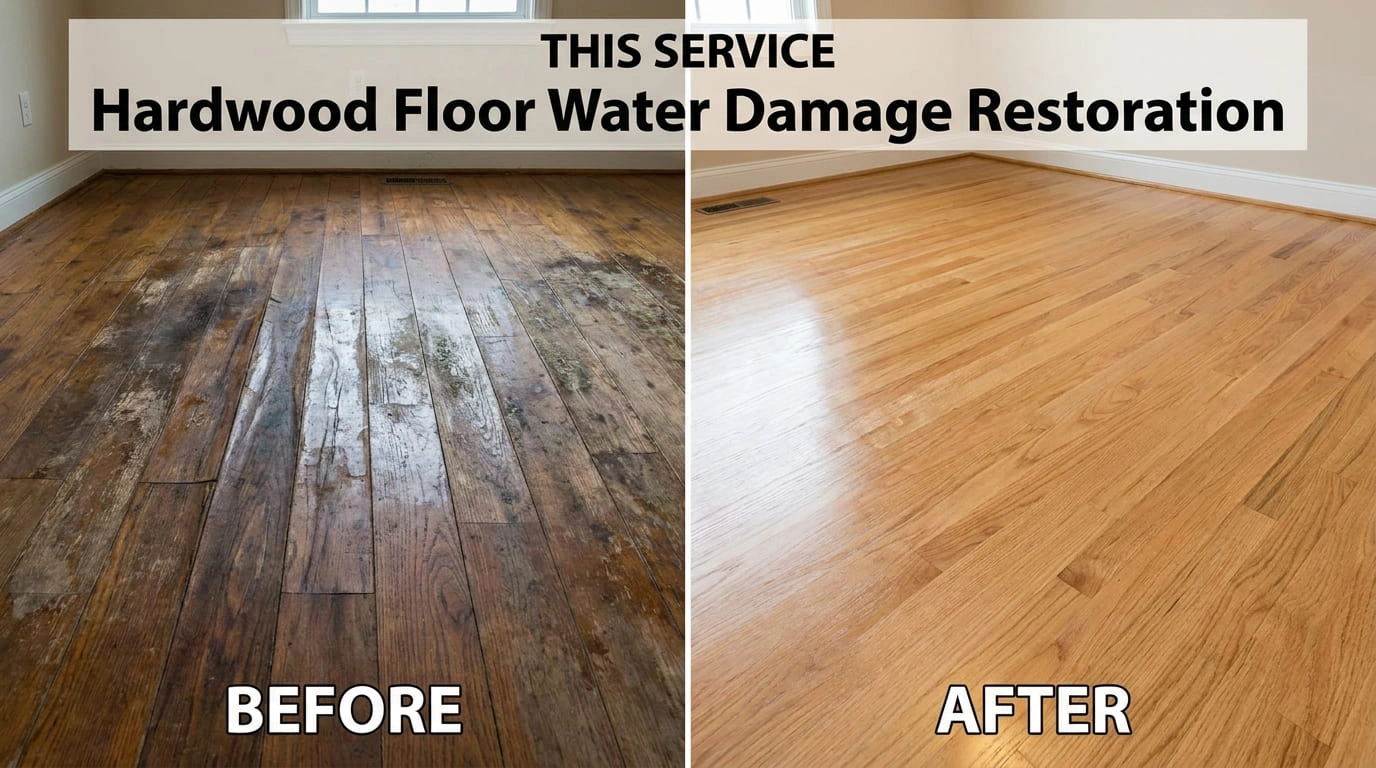
What changes after water-damaged flooring is inspected, dried, and evaluated correctly.
Many Aurora property owners call after noticing a cupped board, a dark stain near a refrigerator, a soft area by a dishwasher, or flooring that begins lifting days after the leak stopped. The visible problem often creates uncertainty: Is the floor still wet below the surface? Can it be saved? Should it be sanded? Does the subfloor need work? Is mold developing?
A professional inspection replaces guesswork with a documented plan.
- Before: Water may be trapped beneath boards, at floor edges, under baseboards, or in the subfloor. After: Affected areas are inspected, mapped, and monitored as part of the drying process.
- Before: Homeowners may be unsure whether cupping, crowning, or buckling can be repaired. After: The condition is evaluated to determine whether drying, refinishing, selective repair, or replacement is the more appropriate next step.
- Before: A water loss may have limited documentation for insurance or property-management communication. After: Photos, moisture notes, equipment records, and service documentation can provide a clearer account of the mitigation work.
- Before: The property owner may fear the entire floor must be removed. After: Decisions are based on material condition, moisture behavior, contamination concerns, and structural stability—not assumptions.
How We Dry Water Under Hardwood Flooring
Moisture measurement, extraction, controlled drying, and monitoring guide the restoration plan.
Drying a hardwood floor is not simply a matter of aiming heat at the surface. Rapid, uncontrolled heating can create additional stress in wood, while ordinary fans may not address moisture beneath boards or inside the subfloor. Creek Auro Restoration uses a measured approach designed to identify where moisture is present and apply drying methods appropriate to the materials and conditions.
Depending on the loss, the work may include:
- Moisture meters to compare affected materials with unaffected reference areas
- Water extraction to remove standing water before it spreads further
- Air movers and dehumidifiers to control evaporation and indoor humidity
- Specialty drying mats or negative-pressure floor-drying methods when appropriate
- Inspection around baseboards, cabinetry, thresholds, walls, and adjoining rooms
- Subfloor moisture checks where accessible and safe
- Removal recommendations when contaminated water, severe material failure, or inaccessible trapped moisture makes in-place drying unsuitable
- Drying-progress monitoring before repair, sanding, refinishing, or replacement decisions are made
Our Approach
We explain the benefit before the equipment: the goal is to identify and reduce moisture in the floor assembly while limiting unnecessary removal. Equipment selection depends on the flooring, water category, affected area, access, and safety requirements.
Should You Repair a Water-Damaged Hardwood Floor or Replace It?
The right choice depends on moisture, material condition, contamination, and subfloor stability.
A wet floor does not automatically require complete replacement. In some cases, prompt extraction, controlled drying, and monitoring can reduce moisture enough for a solid hardwood floor to stabilize before cosmetic work is considered. In other cases, severe buckling, loose boards, black staining, delamination, contamination, or compromised subfloor materials may make targeted or broader replacement the more reliable option.
| Condition | Drying, Repair, or Refinishing May Be Considered | Replacement May Be More Appropriate |
|---|---|---|
| Clean-water leak caught quickly | Water source is stopped, moisture is limited, and boards remain secure | Water remained for an extended period or migrated across a large area |
| Mild cupping | Boards are still attached and moisture can be reduced through controlled drying | Distortion is severe, boards are split, or flooring cannot stabilize |
| Staining or finish damage | Cosmetic repair or refinishing may be evaluated after complete drying | Deep staining, material deterioration, or finish failure is extensive |
| Engineered hardwood | Limited exposure with intact layers may allow further assessment | Veneer separation, delamination, swelling, or adhesive failure is present |
| Subfloor condition | Subfloor is stable and can be dried appropriately | Subfloor is swollen, compromised, contaminated, or unable to dry properly |
| Contaminated water | Limited non-porous surfaces may be cleanable depending on conditions | Porous flooring and subfloor materials may require removal for health and safety reasons |
When Replacement Is More Likely to Be Recommended
- Boards are buckled, lifting, loose, cracked, or structurally unstable
- Water has caused widespread swelling, separation, or delamination
- The subfloor is compromised or remains wet after appropriate mitigation efforts
- The loss involves sewage, contaminated water, or other health-sensitive conditions
- Staining, odor, finish failure, or material breakdown cannot be reasonably restored
- Matching materials, transitions, or adjacent flooring require a broader reconstruction plan
Condition-Based Evaluation
No photograph alone can determine the correct solution. Creek Auro Restoration evaluates the actual water loss, flooring construction, moisture conditions, and surrounding materials before recommending the next step.
What Does Hardwood Floor Water Damage Restoration Cost in Aurora?
Clear cost drivers and a written scope before major restoration decisions.
The cost of drying and restoring a water-damaged wood floor depends on the conditions of the individual loss. A small, clean-water appliance leak caught quickly may require a very different scope than a large burst-pipe event affecting hardwood, engineered flooring, walls, cabinetry, insulation, and subfloor materials.
Creek Auro Restoration explains the damage scope, recommended mitigation work, and cost factors before major restoration decisions are made.
Main Cost Drivers Include:
- Size of the affected room or connected flooring area
- Type of flooring: solid hardwood, engineered wood, laminate, luxury vinyl, or specialty materials
- Amount of standing water and how long materials were exposed
- Water source and contamination category
- Extent of moisture below flooring and inside the subfloor
- Damage to baseboards, cabinets, drywall, insulation, walls, and adjacent rooms
- Need for emergency dispatch, extraction, specialty drying equipment, or extended monitoring
- Accessibility of the affected area and whether contents must be moved
- Need for repair, refinishing, selective board replacement, reconstruction, or full flooring replacement
| Service Type | Typical Cost Considerations |
|---|---|
| Emergency inspection and moisture assessment | Affected areas, accessibility, visible and hidden moisture concerns |
| Water extraction | Amount of standing water, flooring surface, and extent of spread |
| Hardwood floor drying | Square footage, moisture depth, equipment needs, and monitoring duration |
| Subfloor and structural drying | Materials involved, access, moisture spread, and equipment placement |
| Repair or reconstruction | Flooring type, matching requirements, material availability, and related building repairs |
| Full flooring replacement planning | Scope of affected flooring, subfloor condition, transitions, and adjoining-area continuity |
Insurance Note
Insurance coverage, deductible obligations, and payment decisions depend on the cause of loss, policy wording, insurer, adjuster, and claim-specific facts. We can provide mitigation documentation and assist with communication where available, but we cannot guarantee coverage or payment.
When Should You Call for Hardwood Floor Water Damage Restoration?
If water has reached wood flooring, a prompt inspection can help clarify the next step.
You should contact a water-damage restoration company when water reaches hardwood, engineered wood, laminate, or the materials beneath the floor—especially if the source is unknown, water has pooled, boards are changing shape, or moisture may have traveled beyond the visible area.
Call Creek Auro Restoration if you notice:
- Water pooling near a dishwasher, refrigerator, sink, toilet, water heater, washing machine, or floor drain
- Hardwood floor cupping after a leak, with raised edges or uneven boards
- Buckled, lifted, warped, loose, or separating wood-floor planks
- Dark stains, black marks, dull finish, swelling, or a musty odor
- Water spreading beneath cabinets, walls, baseboards, thresholds, or connected rooms
- A burst or frozen pipe affecting finished flooring
- An upstairs bathroom, condo, apartment, or neighboring unit leak
- A roof leak, hail-related intrusion, ice dam, stormwater event, or basement flood
- Water damage in a commercial space, rental property, HOA community, or multi-unit building
- A sewage backup or contaminated water event requiring safety-focused cleanup
If Water Is Actively Leaking
If water is actively leaking, stop the source if it is safe to do so. For an active plumbing failure, contact a qualified plumber to repair the source and contact Creek Auro Restoration for extraction, drying, cleanup, moisture inspection, and restoration planning.
Hardwood Floor Water Damage Restoration for Commercial and Multi-Unit Properties
Protect flooring, operations, tenants, inventory areas, and property records after a water loss.
Commercial flooring losses can interrupt business activity, create slip hazards, affect tenant spaces, damage inventory, and complicate insurance communication. Creek Auro Restoration works with commercial property owners, facility managers, landlords, HOAs, and multi-unit property teams throughout Aurora, Arapahoe County, and the Denver metro area.
We coordinate mitigation work around building access, tenant communication, affected areas, safety considerations, and practical restoration planning.
| Commercial Service | Description |
|---|---|
| Emergency water extraction | Remove standing water and reduce spread across affected flooring and building materials |
| Moisture inspection and mapping | Identify moisture in flooring, subfloors, walls, baseboards, and nearby materials |
| Structural drying | Deploy controlled drying methods based on material conditions and access |
| Documentation support | Provide photos, moisture notes, equipment records, and service documentation |
| Repair and reconstruction planning | Outline flooring, subfloor, drywall, trim, and related repair needs after mitigation |
| Multi-unit coordination | Help organize access and communication for HOAs, apartments, condominiums, and managed properties |
Commercial Properties We Assist
- Retail centers, offices, restaurants, and hospitality properties
- Apartment communities, condominiums, townhomes, and HOA-managed buildings
- Medical offices, clinics, professional buildings, and community facilities
- Schools, churches, recreation facilities, and municipal-style spaces
- Warehouses, light-industrial sites, and mixed-use properties
- Property portfolios requiring clear mitigation documentation and restoration coordination
Why Commercial Property Teams Choose Creek Auro Restoration
- 24/7 emergency availability for active water losses
- Support for multiple rooms, units, floors, or affected tenant spaces
- Documented moisture and drying information for property records
- Coordination with property managers, owners, tenants, insurers, and qualified source-repair trades
- Repair and reconstruction planning after mitigation is complete
| Commercial Property Need | Typical Considerations |
|---|---|
| Multi-unit water loss | Unit access, tenant communication, moisture spread, common-area impact |
| Retail or office flooring loss | Business interruption, safety, equipment, furnishings, and customer access |
| Restaurant or hospitality leak | Kitchen equipment, sanitation, guest areas, and operating schedules |
| HOA or condo incident | Source ownership, neighboring units, common areas, documentation, and insurer coordination |
Benefits of Hiring Water Damage Restoration Professionals in Aurora
Informed drying decisions, safer cleanup, and clearer next steps after a leak or flood.
Water-damaged hardwood flooring often creates uncertainty because the visible surface does not show the full extent of the moisture. Professional mitigation helps property owners understand what happened, where water traveled, and what steps may reduce additional damage.
- Identify moisture that may remain beneath flooring, along walls, or in accessible subfloors
- Remove standing water quickly to reduce continued material absorption
- Use controlled drying methods rather than relying solely on household fans
- Determine whether cupping, crowning, buckling, staining, or delamination requires further action
- Reduce the chance of premature sanding, refinishing, or cosmetic work before drying is complete
- Document conditions, moisture readings, and drying progress for property records and insurance communication
- Coordinate the mitigation scope with plumbers, roofers, appliance technicians, property managers, or other qualified trades as needed
- Create a practical path toward repair, refinishing, selective replacement, or reconstruction
Why DIY Hardwood Floor Drying Can Create Bigger Problems
Water, electricity, contaminated materials, unstable finishes, and hidden moisture require careful handling.
A wet floor can become a safety issue before it becomes a flooring-repair issue. Standing water near outlets, appliances, electrical cords, or damaged building materials can create shock hazards. Water from a toilet overflow, sewer backup, or unknown source can involve contamination concerns. Water from an upstairs leak can also affect ceilings, walls, insulation, and structural materials beyond the floor itself.
Avoid relying on DIY methods alone when the loss is widespread, water has reached beneath flooring, boards are cupping or buckling, the source is unknown, or contamination may be present.
Critical Safety Warnings
- Do not enter standing water near electrical outlets, appliances, or damaged cords
- Do not use household electrical equipment around standing water
- Do not handle sewage-contaminated water without appropriate protective measures
- Do not sand a cupped or wet floor before moisture conditions are evaluated
- Do not use extreme heat in an attempt to force-dry hardwood flooring
- Do not assume that a dry-looking surface means the subfloor is dry
- Do not remove extensive flooring or building materials without understanding what is wet and what may be affected
Answers to Common Hardwood Floor Water Damage Questions in Aurora
Direct answers to the questions Aurora homeowners and property managers ask after a leak or flood.
Can hardwood floors be saved after water damage?
Sometimes. A hardwood floor may be a candidate for drying and later restoration when the water source is stopped quickly, standing water is removed, boards remain secure, moisture can be reduced, and the subfloor remains stable. Severe buckling, loose boards, deep staining, contaminated water, delamination, or a compromised subfloor may require partial or full replacement planning.
What should I do if water gets under my hardwood floor?
Stop the source if it is safe to do so, avoid electrical hazards, remove standing water only if you can do so safely, move contents away from the affected area, and call a water-damage restoration company. Do not assume the floor is dry because the surface looks dry, and do not sand or force-heat the flooring before it is assessed.
Why is my hardwood floor cupping after a leak?
Cupping occurs when the edges of a wood board rise higher than the center. It often happens when the underside of the flooring or the subfloor has more moisture than the top surface. Cupping may change as moisture conditions normalize, but severe or persistent cupping requires professional evaluation.
What is the difference between cupping, crowning, and buckling?
Cupping means the board edges rise above the center. Crowning means the board center rises above the edges. Buckling means boards lift, tent, detach, or push away from the subfloor. Each condition can indicate moisture-related movement, but the appropriate response depends on the flooring, moisture conditions, and subfloor.
Can a restoration company dry hardwood floors without removing them?
In some cases, yes. If conditions support in-place drying, a restoration company may use extraction, dehumidification, air movement, and specialty floor-drying methods to reduce moisture. Whether flooring can remain in place depends on the water source, exposure duration, floor construction, board stability, contamination, and subfloor condition.
How long does hardwood floor drying take?
There is no single answer. Drying can take several days of equipment operation and monitoring, and the floor may need additional time to stabilize before refinishing or final repair decisions are made. The timeline depends on the type of flooring, amount of moisture, water source, affected area, installation method, indoor conditions, and subfloor materials.
Should I sand a cupped hardwood floor immediately?
No. Sanding a floor before the flooring and subfloor have dried and stabilized can create a temporary appearance of flatness while causing problems later. The correct sequence is to stop the source, inspect moisture, dry the assembly, monitor progress, and then determine whether refinishing is appropriate.
Can a dishwasher or refrigerator leak damage more than the kitchen floor?
Yes. Water can travel beneath connected flooring, under cabinets, along walls, and into nearby dining rooms, halls, living rooms, or adjacent rooms. A moisture inspection helps identify the actual affected area.
Does homeowners insurance cover hardwood floor water damage?
Coverage depends on your policy, cause of loss, exclusions, deductible, insurer, adjuster, and claim-specific facts. Sudden and accidental water discharge may be treated differently from long-term leaks, maintenance issues, sewer backups, or flooding. Creek Auro Restoration can document visible conditions, moisture readings, equipment placement, and drying progress, but cannot guarantee coverage or payment.
Should I call a plumber or a water damage restoration company first?
If an active plumbing source is leaking, stop the water if it is safe and contact a qualified plumber to repair the source. Contact a water damage restoration company for extraction, moisture inspection, drying, cleanup, documentation, and restoration planning. In an Aurora sewer backup, coordinate with a plumber, Aurora Water, and your insurer as appropriate.
Can engineered hardwood be saved after water damage?
It depends on the product construction, amount of moisture, adhesive condition, veneer condition, and whether layers have separated. Some limited water exposure may allow drying and reassessment, but swelling or delamination often increases the likelihood of replacement.
Will water under hardwood cause mold?
Moisture that remains in flooring, subflooring, walls, or other building materials can create conditions that support microbial growth. Prompt extraction, controlled drying, and moisture monitoring are important for reducing that risk. The actual condition of materials must be evaluated on-site.
Clear Communication from Emergency Drying Through Restoration Planning
Practical Aurora guidance, documented drying work, and responsive support when your flooring is at risk.
Creek Auro Restoration approaches every hardwood floor water loss with a focus on prompt response, clear communication, moisture-based decisions, and responsible restoration planning. We explain what we find, what drying steps are recommended, what may be salvageable, and what may require further repair or replacement evaluation.
Our commitment is not to promise that every floor can be saved. It is to provide a professional inspection, appropriate mitigation work, documented drying progress, and a transparent explanation of the next steps for your property.
If conditions change during drying or additional affected materials are discovered, we will explain the findings and outline practical corrective options before proceeding with further restoration work.
Creek Auro Restoration
13901 E Quincy AveAurora, CO 80015
United States
Certifications Supporting Hardwood Floor Water Damage Restoration
Training that supports moisture control, structural drying, water mitigation, and restoration work.
Water damage involving hardwood floors often affects more than the visible wood surface. Proper mitigation requires attention to moisture movement, subfloor conditions, affected building materials, and health-sensitive situations. Creek Auro Restoration's supplied professional credentials support the company's water-restoration and structural-drying service capabilities.
AMRT
Applied Microbial Remediation Technician
ASD
Applied Structural Drying Technician
MWR
Master Water Restorer
WRT
Water Damage Restoration Technician
WLS
Water Loss Specialist
Credential Scope Note
These credentials support work involving water mitigation, structural drying, moisture management, and restoration planning. Specific technician assignments, service scope, and any required trade licensing depend on the nature of the loss and local requirements.
Emergency Hardwood Floor Drying in Aurora, CO
Rapid response when water is spreading, boards are cupping, or the source has affected finished flooring.
Water damage does not wait for business hours. A dishwasher line can fail overnight, a water heater can leak while you are away, a frozen pipe can burst during a Colorado cold snap, or an upstairs bathroom leak can reach hardwood flooring below. Creek Auro Restoration provides 24/7 emergency water mitigation throughout Aurora and the Denver metro area.
Emergency Response Process
- Immediate phone consultation to understand the source, affected rooms, safety concerns, and urgency
- Dispatch coordination for water extraction, moisture inspection, and drying services
- On-site assessment of affected hardwood flooring, walls, baseboards, cabinets, and accessible subfloor materials
- Extraction and drying-equipment setup based on the actual conditions
- Moisture monitoring and documentation during the mitigation process
- Repair, reconstruction, and flooring-restoration planning after drying conditions are evaluated
Emergency Hardwood Floor Water-Damage Scenarios
- Dishwasher, refrigerator, washing machine, sink, or appliance supply-line leaks
- Burst pipes, frozen pipes, and plumbing failures
- Water-heater leaks and failed expansion tanks or connections
- Toilet overflows, bathroom leaks, and upstairs-unit water losses
- Stormwater, roof leaks, ice dams, hail-related intrusion, and basement flooding
- Sump-pump failure and water entering lower-level finished spaces
- Sewage backup or contaminated-water events requiring safety-focused cleanup
Insurance Claim Assistance for Hardwood Floor Water Damage
Documentation that helps you communicate the water loss clearly to your insurer.
A water-damage claim may require proof of the source, photographs of affected areas, mitigation records, moisture readings, equipment documentation, invoices, and repair estimates. Creek Auro Restoration helps organize the water-mitigation information needed to support clear communication with your insurer, adjuster, landlord, HOA, or property manager.
- Initial inspection notes and photos of visible water damage
- Photos of affected hardwood, engineered flooring, baseboards, walls, cabinets, and related materials
- Moisture-mapping notes and drying progress records
- Equipment placement and monitoring documentation
- Water extraction, cleanup, structural drying, and mitigation invoices
- Repair, reconstruction, or flooring-restoration estimates when applicable
- Information identifying visible conditions and the mitigation measures taken
Policy Note
Coverage depends on your insurance policy, cause of loss, exclusions, deductible, insurer, adjuster, and the specific facts of the event. Creek Auro Restoration can provide documentation and may coordinate directly with insurers where available, but does not guarantee claim approval, coverage, payment, matching materials, or deductible outcomes.
Workmanship and Material Warranty Information
Clear information about restoration work, replacement materials, and applicable coverage.
Warranty terms can vary based on the type of work performed, the materials involved, manufacturer requirements, the source of damage, and whether the work includes mitigation, reconstruction, flooring installation, or component replacement. Creek Auro Restoration explains applicable service and material information before eligible work begins.
| Coverage Type | Description |
|---|---|
| Water mitigation services | Scope documentation for extraction, drying, moisture monitoring, and related emergency work |
| Reconstruction workmanship | Applicable workmanship terms for qualifying repair or reconstruction work, provided in writing when offered |
| Flooring materials | Manufacturer warranty information for new materials when supplied and installed as part of a project |
| Equipment and component replacements | Applicable manufacturer documentation for qualifying installed products |
| Service records | Documentation of water mitigation, drying, repairs, and recommended maintenance or follow-up |
Important Notes
Warranty coverage does not apply to pre-existing damage, unrelated future water events, improper maintenance, hidden conditions beyond the agreed scope, or failures caused by unrepaired sources of water. Manufacturer warranties vary by product and may require specific installation, care, humidity, or maintenance conditions. Creek Auro Restoration will outline applicable terms for the specific work performed rather than making a one-size-fits-all warranty promise.
10 Equipped Service Vans Supporting Hardwood Floor Drying
Water extraction equipment, moisture tools, and trained professionals ready to respond.
Creek Auro Restoration operates 10 equipped service vans to support emergency water-damage response across Aurora and surrounding Denver metro communities. Our 40-person team is prepared to coordinate water extraction, moisture inspection, structural drying, documentation, and restoration planning when a leak or flood affects wood flooring and related building materials.
- Moisture-measurement and inspection tools for affected materials
- Water extraction equipment for standing-water emergencies
- Air movers and dehumidification equipment for controlled drying
- Specialty floor-drying equipment when appropriate to the loss
- Equipment and materials for drying walls, baseboards, subfloors, and related assemblies
- GPS-supported dispatch coordination for Aurora and nearby service areas
Payment and Project Planning for Hardwood Floor Restoration
Clear project scopes and practical cost discussions after emergency mitigation.
After emergency water removal and drying, some properties may need additional repair, reconstruction, refinishing, or flooring replacement work. Creek Auro Restoration can discuss the project scope, expected phases, insurance documentation, deductible considerations, and available payment arrangements for qualifying restoration work.
- Separation of emergency mitigation work from repair or reconstruction work
- Written scopes for flooring, subfloor, drywall, trim, cabinetry, and related repairs
- Coordination with insurance documentation and direct billing options where available
- Discussion of deductible assistance programs where eligibility and terms apply
- Clear explanation of project phases, material decisions, and expected timelines
- Cost planning for larger multi-room, multi-unit, or commercial restoration projects
Important Payment Note
Payment options, deductible programs, and billing arrangements vary by project, eligibility, insurance policy, and service scope. Ask the Creek Auro Restoration team for current details before authorizing work.
Recognition for Water Damage Restoration Service
A reputation built on responsive service, practical communication, and property-focused restoration work.
Creek Auro Restoration is associated with the following recognition and service-award designations:
Angi Super Service Award
BBB Torch Award for Ethics
City of Aurora Business Recognition
Expertise.com Best Water Damage Restoration
Yelp Top Rated / Yelper's Choice
Important Note
Recognition, eligibility, status, platform criteria, program names, dates, and display requirements can change. Creek Auro Restoration should present only the awards and designations that are current, accurately attributed, and permitted for use on the website.
Ask About Current Water Damage Restoration Offers
Available support options may help eligible Aurora property owners after unexpected water damage.
A water loss can create urgent expenses, especially when emergency drying, repairs, flooring restoration, or reconstruction are needed. Creek Auro Restoration offers selected service-support options that may help qualifying customers manage eligible work.
Deductible Assistance
Programs for qualifying insurance-related restoration projects
Bundle Discounts
On specialized sanitization services where applicable
Complimentary Mold Checks
Post-drying mold inspection where applicable
Free Emergency Assessments
Free visual inspections, subject to service conditions
Direct Insurance Billing
Coordination where available
Discount Note
Offer availability, eligibility, limitations, service-area restrictions, insurance requirements, and terms can vary. Contact Creek Auro Restoration for current details before scheduling or authorizing work.
Hardwood Floor Water Damage Restoration Hours in Aurora, CO
24/7 emergency response for water extraction, hardwood floor drying, and restoration planning.
Water can reach hardwood flooring at any time—overnight, during a weekend, on a holiday, or while a property is vacant. Creek Auro Restoration operates 24 hours a day, seven days a week, for emergency water-damage response in Aurora and the Denver metro area.
| Day | Hours |
|---|---|
| Monday | 00:00–23:59 |
| Tuesday | 00:00–23:59 |
| Wednesday | 00:00–23:59 |
| Thursday | 00:00–23:59 |
| Friday | 00:00–23:59 |
| Saturday | 00:00–23:59 |
| Sunday | 00:00–23:59 |
Contact Creek Auro Restoration
Phone: +1 (719) 715-6006
Email: creekaurorestoration@gmail.com
Website: waterdamagerestorationaurora.com
Creek Auro Restoration vs. Typical Water Damage Providers in Aurora
A local emergency response model focused on moisture assessment, drying, documentation, and restoration planning.
Not all companies approach wet hardwood flooring the same way. Some providers may focus only on visible water removal, while others may offer flooring replacement without assessing moisture in the overall floor assembly. Creek Auro Restoration focuses on understanding where water traveled, applying appropriate drying methods, monitoring the result, and explaining realistic repair or replacement options.
| Feature | Creek Auro Restoration | Typical Limited-Scope Provider |
|---|---|---|
| Aurora-area experience | 16 years serving Aurora and surrounding communities | Varies by provider |
| Emergency availability | 24/7 emergency water-damage response | May be limited to standard business hours |
| Team and fleet capacity | 40 skilled professionals and 10 equipped vans | Varies by provider |
| Moisture inspection | Flooring, adjacent materials, and accessible subfloor areas assessed as conditions allow | May focus only on visible surface water |
| Service scope | Extraction, moisture mapping, structural drying, cleanup, documentation, repair, and reconstruction planning | May provide only extraction, cleaning, or flooring installation |
| Hardwood-floor decision support | Explains drying, refinishing, repair, and replacement considerations | May recommend a narrower solution without full moisture evaluation |
| Documentation | Photos, moisture notes, drying records, and mitigation documentation when applicable | Documentation level varies |
| Insurance communication | Documentation support and billing coordination where available | Support varies by provider |
Choose the Right Provider
The appropriate service provider depends on the property, the source of water, contamination concerns, flooring type, subfloor condition, and the work required. Ask any provider what moisture inspection, drying monitoring, documentation, and restoration planning they include before authorizing work.
Contact Creek Auro Restoration for Hardwood Floor Water Damage Help in Aurora, CO
Talk with a water-damage restoration professional about extraction, drying, moisture inspection, and the next step for your flooring.
If your wood floor is cupping after a dishwasher leak, lifting after a burst pipe, stained after a water-heater failure, or wet after an overflow or flood, do not make a sanding or replacement decision based only on what you can see. Water may remain below the boards, inside the subfloor, or in the surrounding materials.
Creek Auro Restoration provides 24/7 emergency response for Aurora homeowners, landlords, HOAs, property managers, and commercial property owners. We inspect the affected area, explain the findings, remove water, deploy controlled drying when appropriate, document the work, and help you understand the path toward repair, refinishing, reconstruction, or replacement.
Contact Creek Auro Restoration
(719) 715-6006
creekaurorestoration@gmail.com
13901 E Quincy Ave
Aurora, CO 80015
24/7 Emergency Service Available
Protect your flooring, subfloor, and surrounding property with prompt hardwood floor water damage restoration Aurora CO homeowners and property managers can rely on from Creek Auro Restoration.