Water Damage Restoration Aurora, CO — 24/7 Extraction, Structural Drying & Rebuild
Burst pipe at 2 a.m.? Sewage rising through a basement floor drain? Creek Auro Restoration delivers water damage restoration Aurora, CO homeowners, renters and property managers can reach — 24/7 live dispatch, 10 fully equipped vans and a 40-person team working out of 13901 E Quincy Ave since 2010.
We handle water and everything it leaves behind: emergency extraction, structural drying, sewage cleanup, mold remediation and the rebuild. Every job is moisture-mapped, photo-documented and billed directly to your insurer when you're covered — from Saddle Rock finished basements to East Colfax apartments, Tallyn's Reach to Fitzsimons.
Our crews know the details that decide whether an Aurora basement dries right the first time: floating walls, structural floors, window wells and the bentonite clay under your slab.
- 24/7 Live Dispatch · 10 Equipped Vans
- IICRC-Certified Crews (WRT · ASD · AMRT)
- Moisture-Mapped, Photo-Documented Drying
- Direct Insurance Billing Coordination
Request Emergency Water Damage Service
Fill out the form and we'll contact you immediately!
Why Act Within the First 24 to 48 Hours of Water Damage in Aurora?
The first two days decide most water losses. The EPA's cleanup guidance targets drying wet carpet, padding and building materials within 24 to 48 hours, because mold can take hold after that window. In Aurora's dry air, a slow leak can also hide behind drywall for weeks — so by the time a stain shows, the clock may already be running.
Speed protects your claim, too. Homeowners' policies expect you to take reasonable steps to prevent further damage, and documented extraction plus daily moisture readings is how you prove you did. That's why Aurora, CO water damage restoration should start with a live dispatcher, not a voicemail.
Call (719) 715-6006 → Free Emergency Assessment, Crews Rolling 24/7
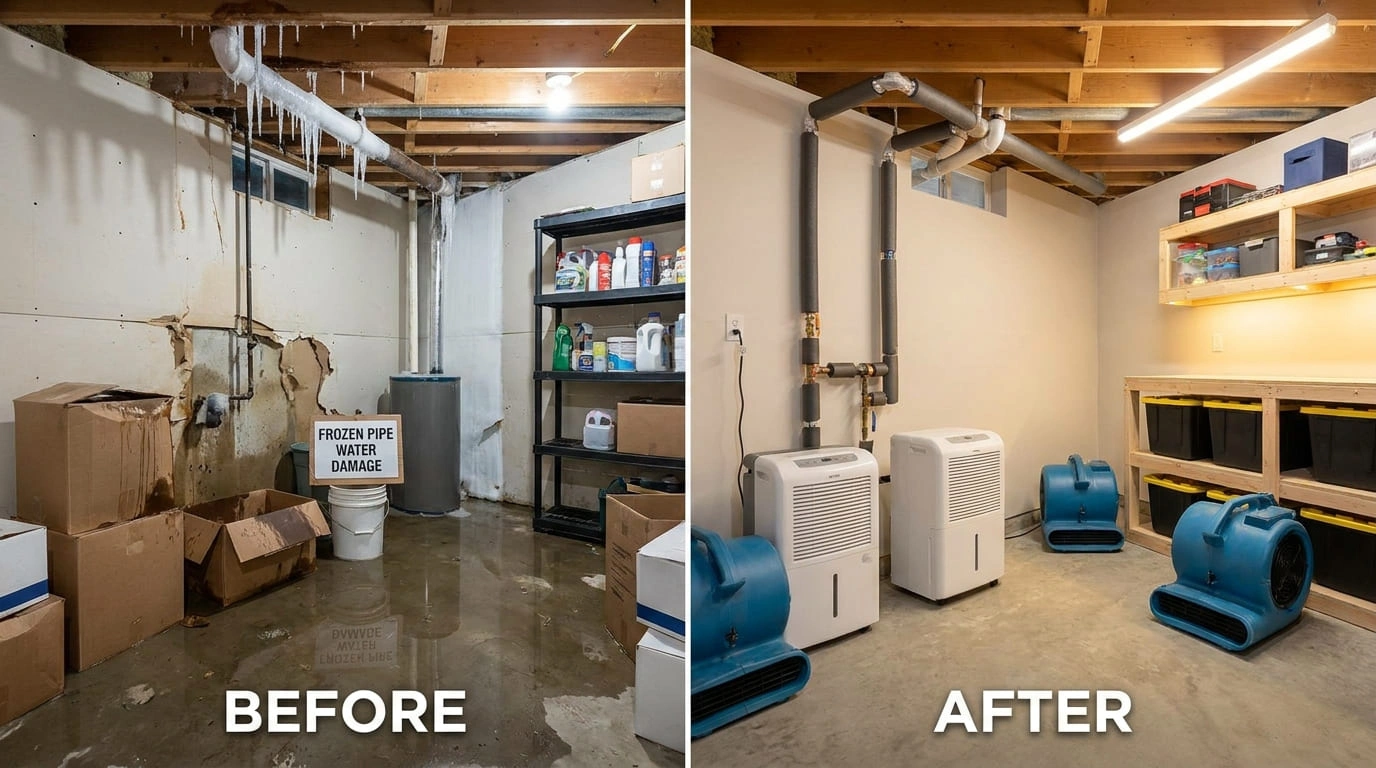
Why Do Pipes Burst in Aurora Homes After a Hard Freeze?
Most frozen pipes don't flood a home until the thaw. During the January 2024 polar vortex, Denver spent 93 straight hours below freezing — 33.5 of them below zero — and emergency calls spiked again once temperatures climbed back into the 30s. Ice splits the pipe; the water waits for the melt.
Aurora's weak spots are predictable: supply lines in garages and crawl spaces, pipes in exterior walls, frost-free spigots left with a hose attached, and sprinkler backflow preventers that never got blown out. Newer homes plumbed in PEX resist bursting better than copper, but frozen PEX has to thaw slowly. Frozen ground adds stress too, pressing on buried service lines until they crack.
That's why most water damage cleanup Aurora calls arrive the day the cold breaks, not the night it hits. If it happens to you, shut the main valve first, then call for frozen pipe water damage cleanup or burst pipe water damage cleanup.
How Long Does Water Damage Restoration Take in Aurora?
Here's the realistic timeline for water damage restoration Aurora, CO families should plan around: extraction the same day we arrive, three to five days of structural drying for most clean-water losses, then repairs. Drying time depends on how much water soaked in and what it soaked into. Carpet over a concrete slab dries faster than hardwood over a structural floor or saturated drywall on a floating wall.
Sewage and other Category 3 losses add containment, removal of porous materials and antimicrobial treatment before drying starts. Rebuilds usually take one to three weeks, depending on materials, insurance approval and whether the work needs an Aurora Building Division permit and inspection.
Our standard workflow: live 24/7 dispatch, extraction the moment we arrive, daily moisture readings until every material reaches its dry standard, then a written rebuild schedule you can share with your adjuster.
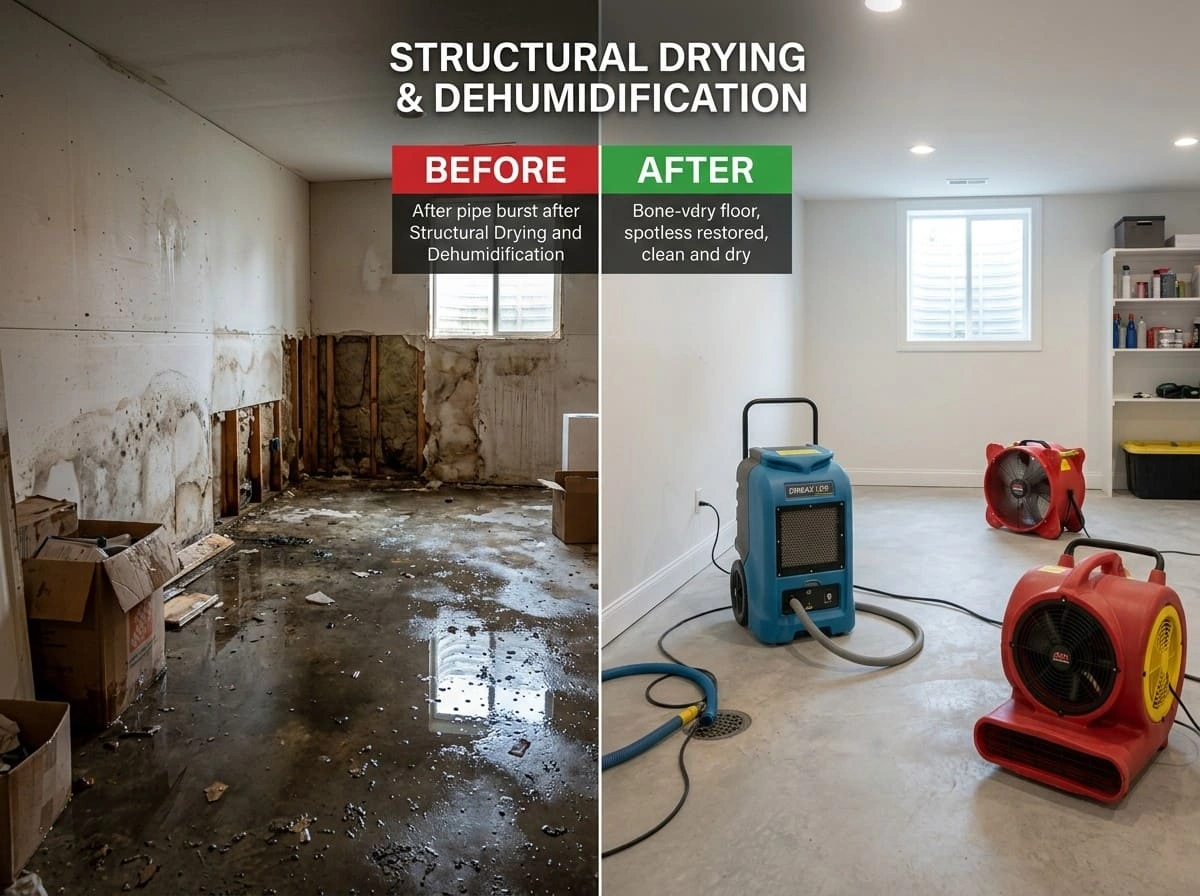
What's the Most Effective Water Damage Restoration Method for Aurora Homes?
The most effective approach is a three-part system: stop and extract, dry to a measured standard, then restore. Extraction removes the bulk water. Structural drying and dehumidification — guided by moisture meters and thermal imaging — brings materials back to normal readings, so we only tear out what truly can't be saved.
In Aurora, success depends on local building details. Bentonite clay under the slab means a sub-slab leak can lift floors. Floating basement walls need their slip gap kept intact during rebuild, and structural floors hide a crawl space that must be dried, not just the carpet above it.
Water category matters as much as volume. The EPA warns against running fans until you know the water is clean, because air movers can spread sewage contaminants through the house. Getting the sequence right is the difference between water damage repair Aurora homeowners pay for once — and repairs they pay for twice.
Why Aurora Homes Need a Local Water Damage Restoration Specialist
Why Creek Auro Wins — Water-Focused, Aurora-Tuned
Many contractors list water damage as one service among dozens and copy the same page into every city. Aurora is different: three counties, bentonite soils, floating basement walls, swamp coolers, window wells and a 1985 dividing line the city uses between older sewer laterals and more durable PVC — all change how a loss should be handled.
Creek Auro Restoration is built around one question: how do we get water out of Aurora buildings and keep it from coming back? That focus is why we've become the restoration specialists Aurora landlords and homeowners keep on speed dial.
Water Category Expertise — Clean, Gray and Black Water
Not all water is equal, and the IICRC S500 standard sorts it into three categories. Category 1 comes from clean sources like a burst supply line; Category 2 carries contaminants, like a washing machine overflow; Category 3 is grossly contaminated — sewage backups and floodwater from outside. Clean water can also degrade toward Category 2 or 3 the longer it sits.
That's why a water restoration company Aurora families trust should identify the category before it dries anything.
- Category-specific protocols for every loss — dry in place where it's safe, remove and treat where it isn't.
- Extraction and containment matched to the water's source and the materials it touched, so contamination never spreads into dry rooms.
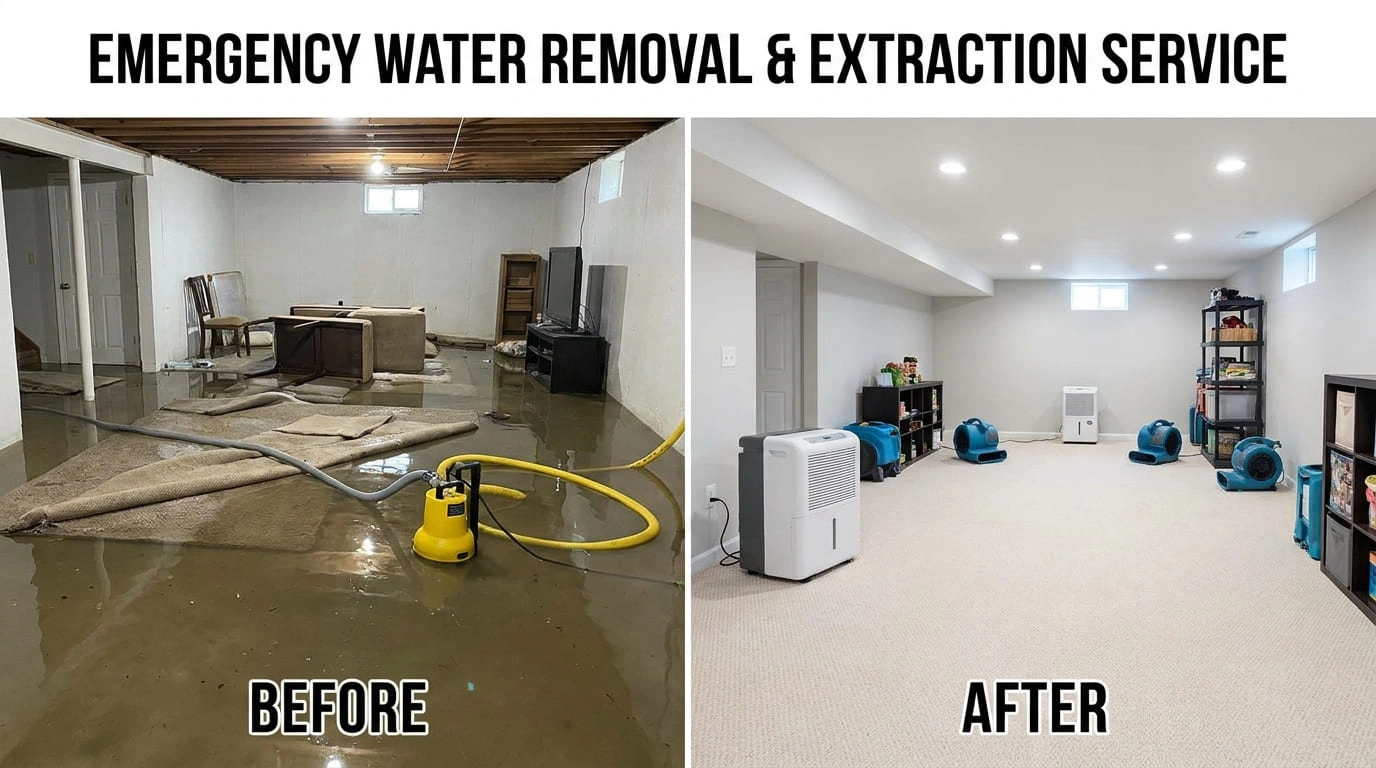
Colorado-Tuned Structural Drying
Front Range air is dry, which speeds evaporation once the source is stopped — but it also hides wet wall cavities behind dry-looking paint. We dry to measured targets, not to how a wall feels, because Aurora water restoration done right ends with numbers, not guesses.
- Low-grain refrigerant (LGR) dehumidifiers and air movers sized to the class of water loss in each room.
- Injection drying for wall cavities, cabinets and hardwood floors, plus crawl space drying beneath structural floors.
- Daily readings with pin and pinless moisture meters and thermal imaging, logged for you and your adjuster.

Away-From-Home & Remote-Owner Workflows
Many Aurora losses are found late: a pipe bursts during a holiday trip, a rental sits empty between tenants, or the owner lives out of state. Our workflows make us the restoration experts Aurora owners can manage from a phone, wherever they are.
- Timestamped photo and moisture reports after every visit, initialed by the lead technician.
- Remote access coordination: lockbox and smart-lock codes, HOA gate access, building managers and your preferred contact channel.
- Shutoff and stabilization first, then a call with you before any tear-out beyond what safety requires.
Renter & Rental-Unit Rescue
For renters, a leaking ceiling or a moldy wall isn't just damage — it's a habitability problem. Under Colorado's 2024 update, landlords must start remedial action within 24 hours for conditions that threaten life, health or safety, and within 72 hours for other uninhabitable conditions, including mold that affects health.
Our water damage restoration services in Aurora help landlords meet those clocks — and help tenants see exactly what's being done.
- Fast, neutral documentation both sides can rely on: source, water category, affected materials and photos.
- Containment, source-repair coordination and HEPA air filtration whenever mold is involved.
- Written updates for both landlord and tenant, so nobody is left guessing about timelines.
See our commercial and multifamily water damage restoration →
Health Risk Anchor — Sewage, Mold and Asbestos in Aurora Water Losses
Three hidden hazards turn an ordinary water loss into a health problem: sewage, mold and asbestos. Sewage from a floor-drain backup is Category 3 water, and the EPA notes that OSHA requires protective equipment and containment whenever water is contaminated. Aurora Water also points out that a backup surfacing at a floor drain, lower-level shower or toilet is usually part of the homeowner's own system — the lateral line from the house to the city main.
Asbestos is the hazard most homeowners don't expect. Colorado's Regulation 8 requires a certified asbestos inspection before disturbing more than 32 square feet of wall or ceiling material, 50 linear feet of pipe insulation, or a 55-gallon drum's volume in a single-family home — and the state warns that buildings of any age can contain it. That's why tear-out in an older Aurora home may pause for a lab result, and why we plan sampling into day one instead of discovering it on day three.
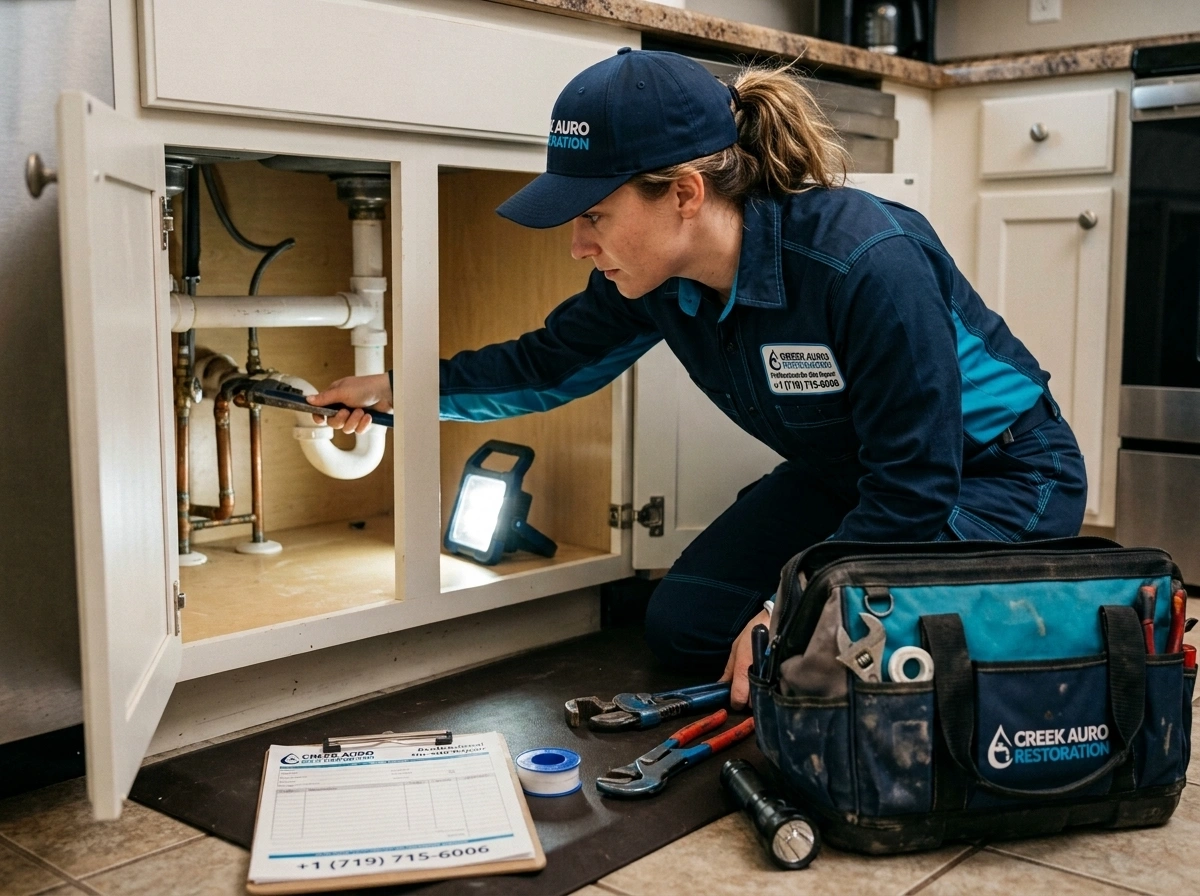
Safety Guidance Summary
- Don't wade into standing water near outlets or appliances; shut power at the breaker only if you can reach it while standing on a dry floor.
- Don't run fans or your furnace blower across sewage-contaminated water — air movement spreads contaminants into clean rooms.
- Don't cut, sand or tear out popcorn ceilings, joint compound or old pipe wrap yourself; test first, because disturbing enough friable asbestos during a water loss can count as a reportable "major spill" in Colorado.
Insurance-Smart, Law-Aligned Water Damage Restoration in Colorado
Colorado gives policyholders real protections, but only a well-documented claim can use them. Every replacement-cost homeowners policy in the state must include additional living expense coverage, and insurers must provide a certified copy of your policy within 30 days of a request. If an insurer unreasonably delays or denies a covered benefit, C.R.S. 10-3-1116 lets the policyholder sue for two times the covered benefit plus attorney fees.
Coverage still turns on where the water came from. Sudden pipe bursts are typically covered; sewer backups usually require a water backup endorsement; groundwater and surface flooding require flood insurance, and NFIP policies carry a 30-day waiting period and only limited basement coverage.
We work inside those rules. We document the loss, coordinate scope with your adjuster and bill your insurer directly — but we don't interpret your policy or negotiate coverage, which in Colorado is work for you, your agent or a licensed public adjuster. We also never waive or rebate deductibles: state law bars it on insurance-funded roofing work, and our deductible payment plans keep every claim clean. That's what an insurance-smart water damage restoration service in Aurora should look like.
What Is the Most Effective Way to Dry a Flooded Basement in Aurora?
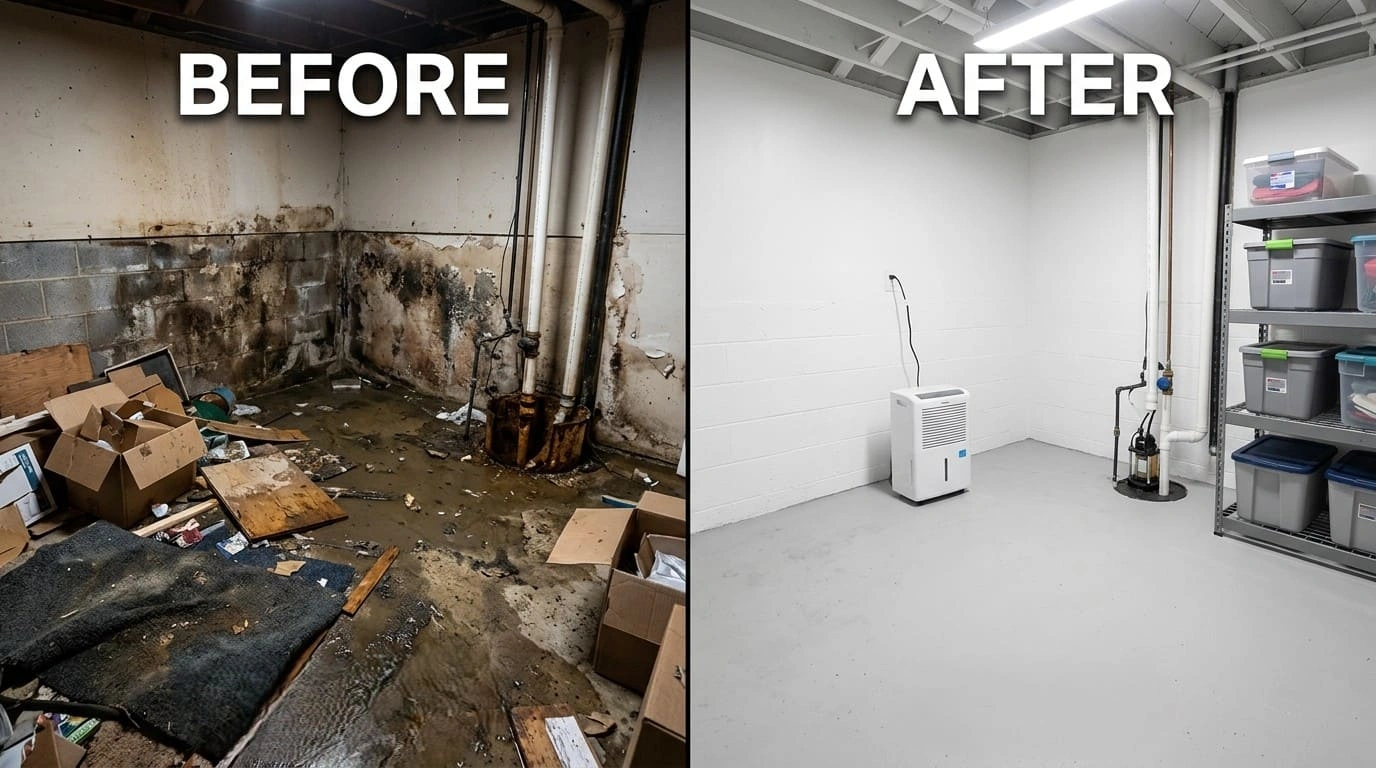
The most effective basement plan starts by finding every path the water took, not just the puddle. In Aurora, that means checking window wells, sump pits, floor drains and slab cracks before extraction ends, then drying the slab, the bottom plates and every wall cavity the water wicked into. It's the step-by-step discipline behind our basement water damage cleanup — and the difference careful water damage restoration in Aurora makes.
- Flood cuts and wall drying that respect floating-wall construction, so the slip gap still works the next time the slab moves.
- Crawl space drying beneath structural floors, with the void space monitored, not just the carpet above it.
- Clearing window well drains and checking sump pump discharge, so the next storm doesn't undo the work.
How We Compare to Typical Water Damage Restoration Options in Aurora
Before you hire an Aurora, CO water damage restoration company, it helps to know the profiles you'll run into. Here's how a water-focused, Aurora-based crew compares with the typical alternatives: no names, just the patterns homeowners describe.
| Company Type | Water-Damage Focus | Colorado Building Know-How | Pricing Transparency | Renter, Landlord & HOA Support | Moisture & Photo Logs |
|---|---|---|---|---|---|
| Typical handyman or general remodeler | Water is one job among many | Rarely plans for floating walls, structural floors or Regulation 8 | Price set after tear-out | Ad hoc | Before-and-after photos at best |
| Typical national call-center referral | Depends on whoever gets dispatched | Depends on the local crew | "We'll call you back" pricing | Generic scripts | Inconsistent from job to job |
| Creek Auro Restoration (Us) ⭐ | Water, sewage, mold and rebuild only | Built around bentonite soils, floating walls and Regulation 8 | Free emergency assessment and a written scope before rebuild | Workflows built around habitability clocks and HOA master policies | Daily moisture maps and photo logs on every job |
What Makes Creek Auro Restoration Different
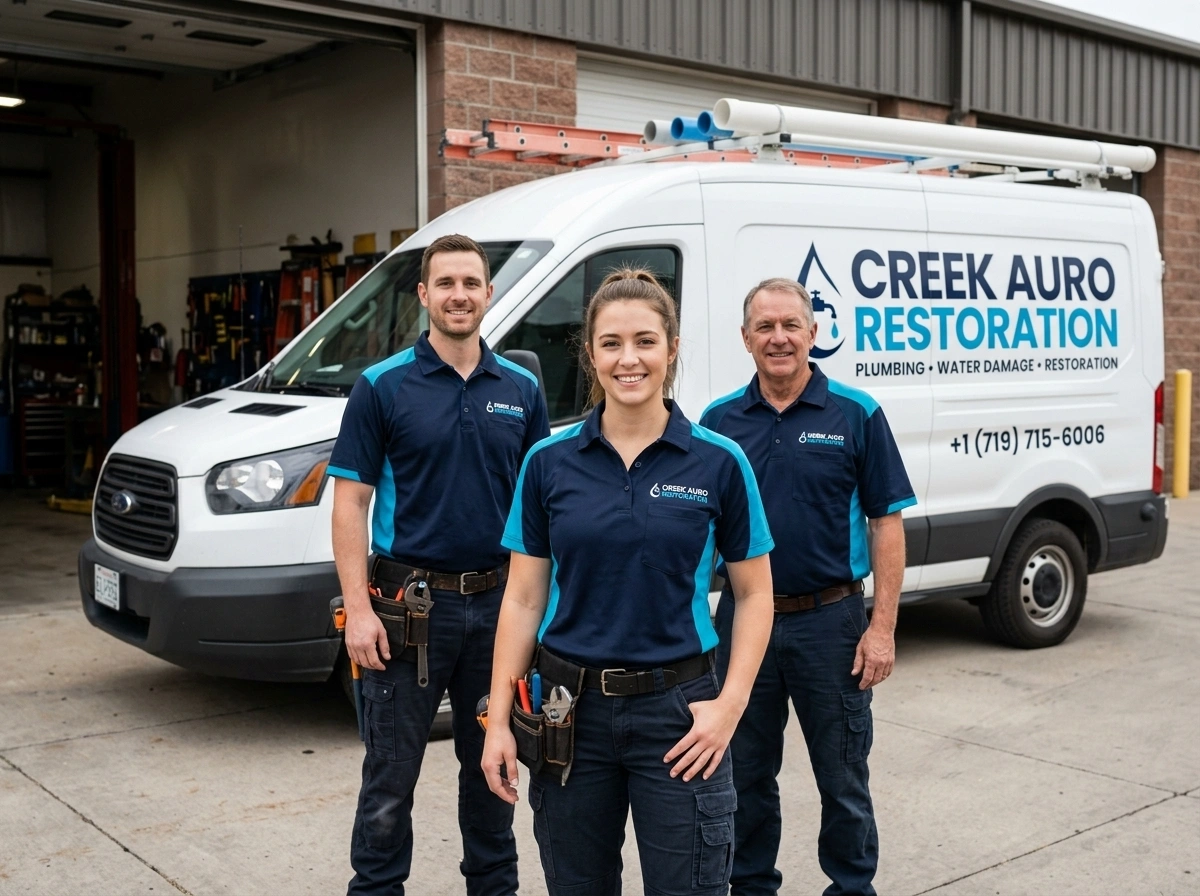
Our focus is simple: water, and everything it leaves behind. Every certification, process and piece of equipment we carry is chosen for Aurora's soils, climate and housing stock. It's why we're the restoration contractor Aurora property managers call when a loss can't wait until Monday.
- Water-only specialization — extraction, structural drying, sewage cleanup, mold remediation and the rebuild, under one accountable team.
- Certified crews — IICRC Water Damage Restoration Technician, Applied Structural Drying and Applied Microbial Remediation Technician certifications, an IICRC Master Water Restorer designation and RIA's Water Loss Specialist credential.
- 24/7 dispatch — 10 fully equipped vans and a 40-person team based on E Quincy Ave.
- Direct insurance billing coordination — we document and bill; you stay in control of your claim.
- Free emergency assessments and visual inspections — before you commit to anything.
- Complimentary post-drying mold checks — so dry really means dry.
- Fair-pay options — deductible payment plans and bundle discounts on specialized sanitization.
Is Professional Water Damage Restoration Worth It in Aurora?
Usually, yes — because water is one of the costliest things that can happen to a home. Insurance industry data show about 1 in 60 insured homes files a water damage or freezing claim each year, and the average claim from 2018 to 2022 ran $13,954. Box fans dry the surface; they don't reach the wall cavity, the subfloor or the void under a structural floor.
Professional restoration replaces guesswork with measurements: moisture maps, daily readings, category-based cleaning and photo documentation an adjuster can accept. When it comes to water damage, Aurora, CO homeowners who call early almost always spend less than those who wait for a stain to spread.
Bottom line: General contractors fix what they can see. We measure what you can't — then fix it.
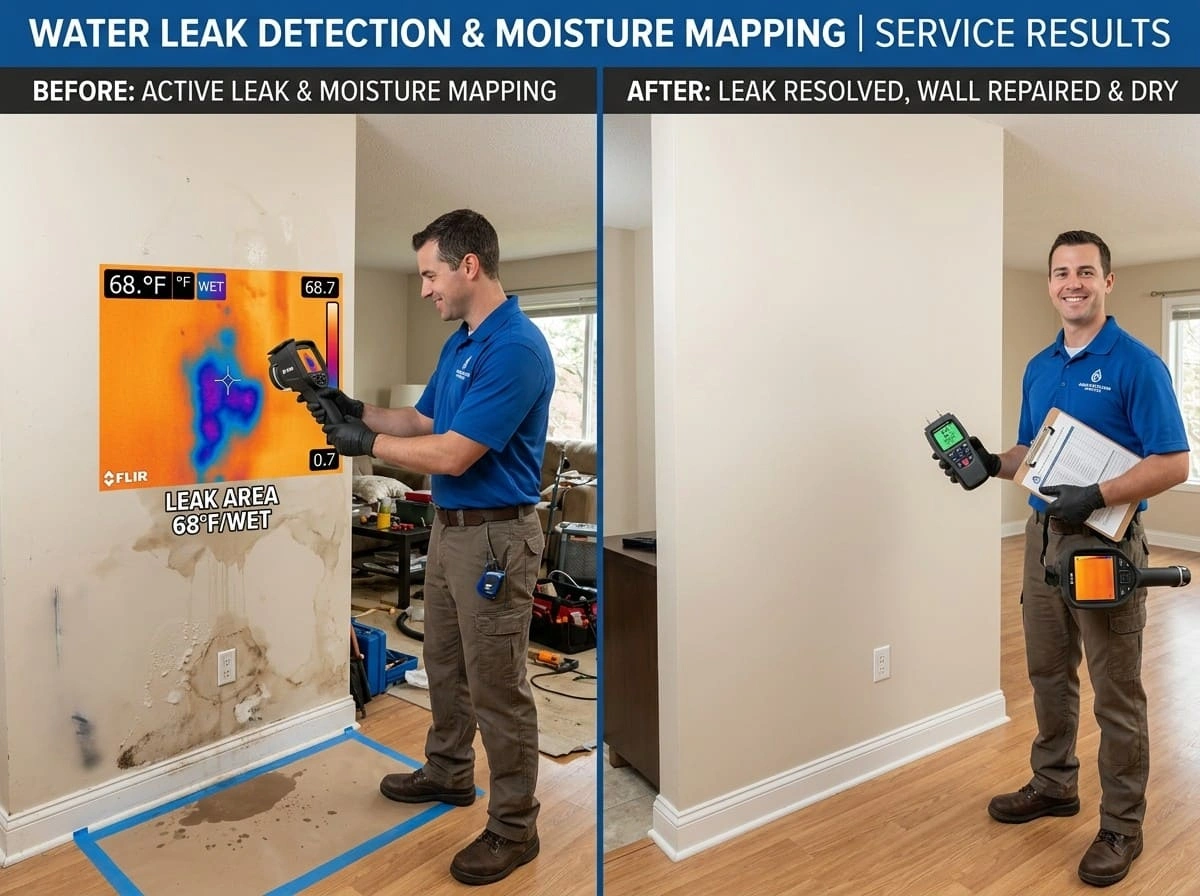
Water Damage Restoration Gallery — Aurora Before & After
See how we extract water, dry structures to standard and rebuild Aurora homes room by room. Each image shows documented moisture readings, flood cuts, drying setups and finished repairs — always tied to time-stamped logs, never stock imagery.
Basement Water Damage Cleanup
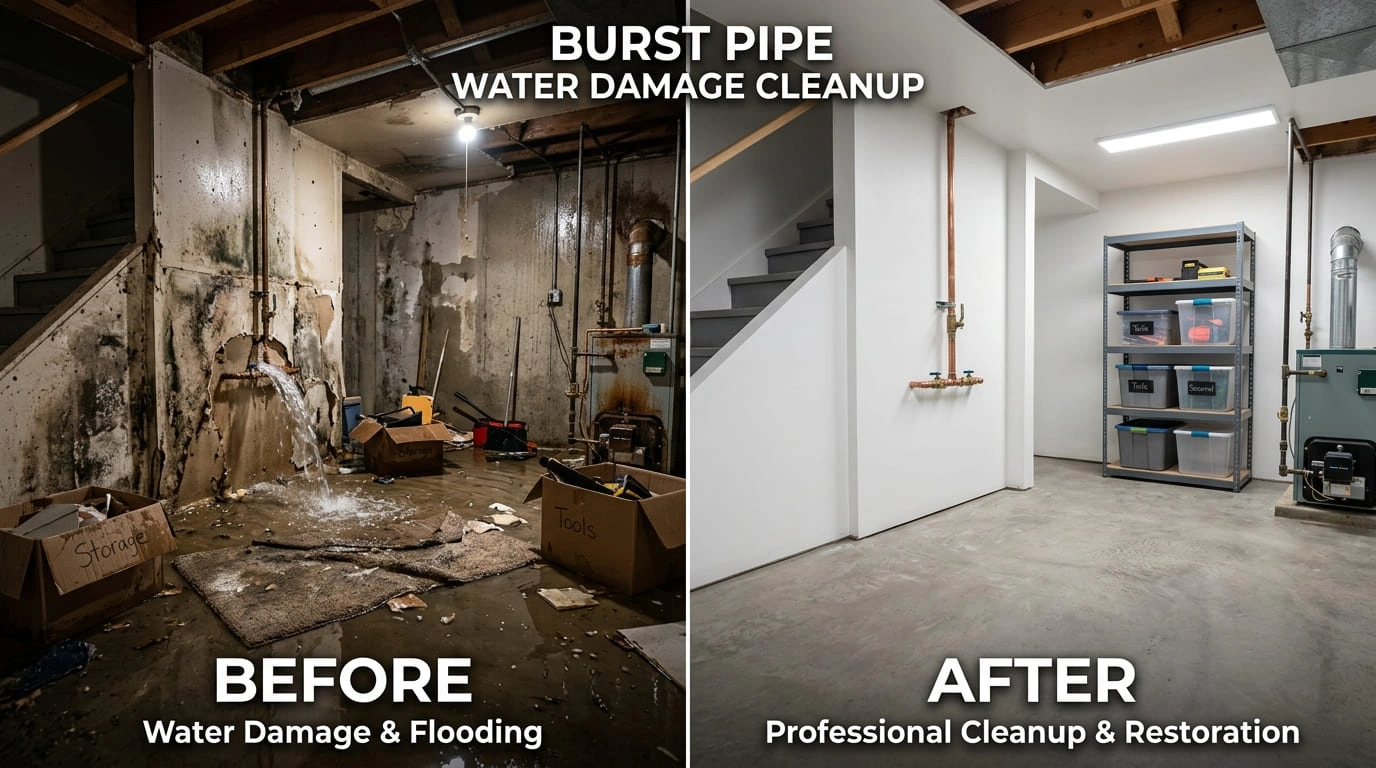 Burst Pipe Cleanup
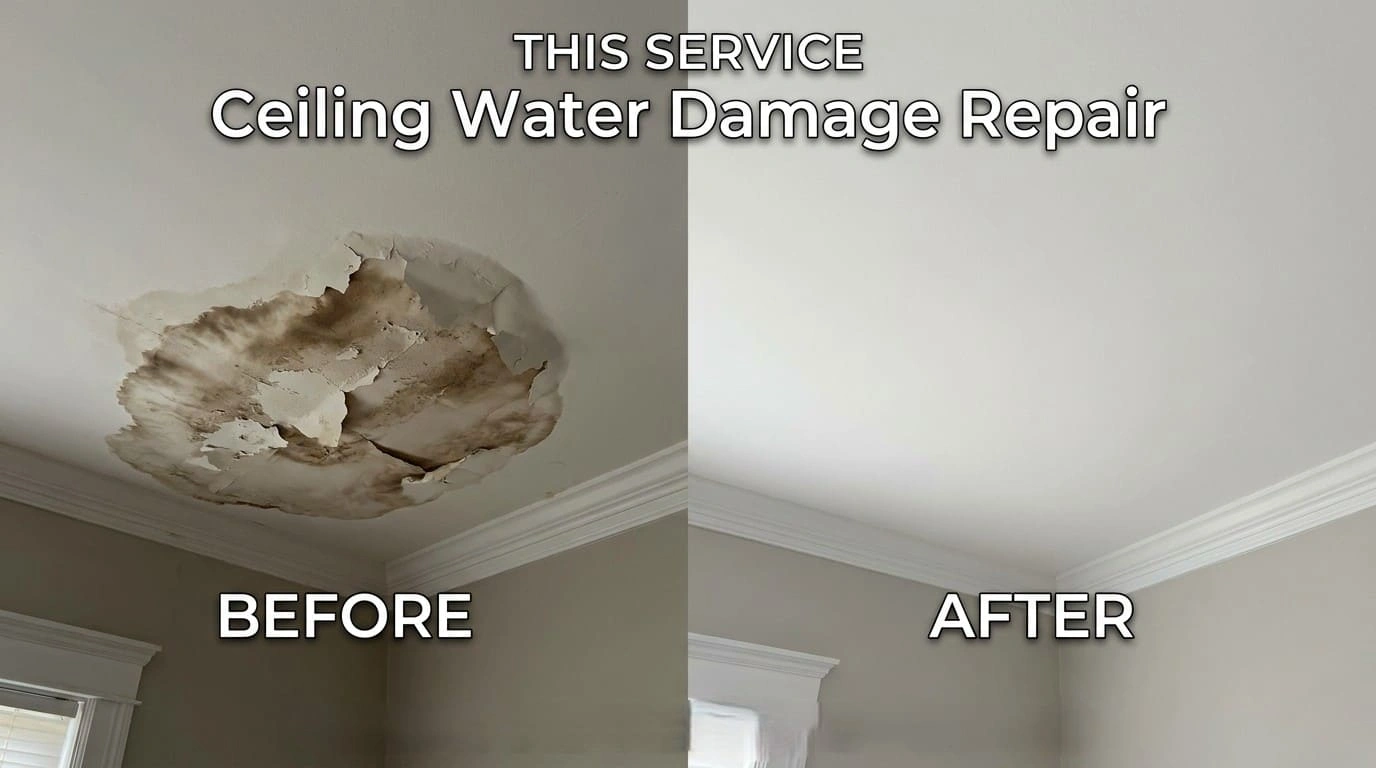 Ceiling Water Damage Repair
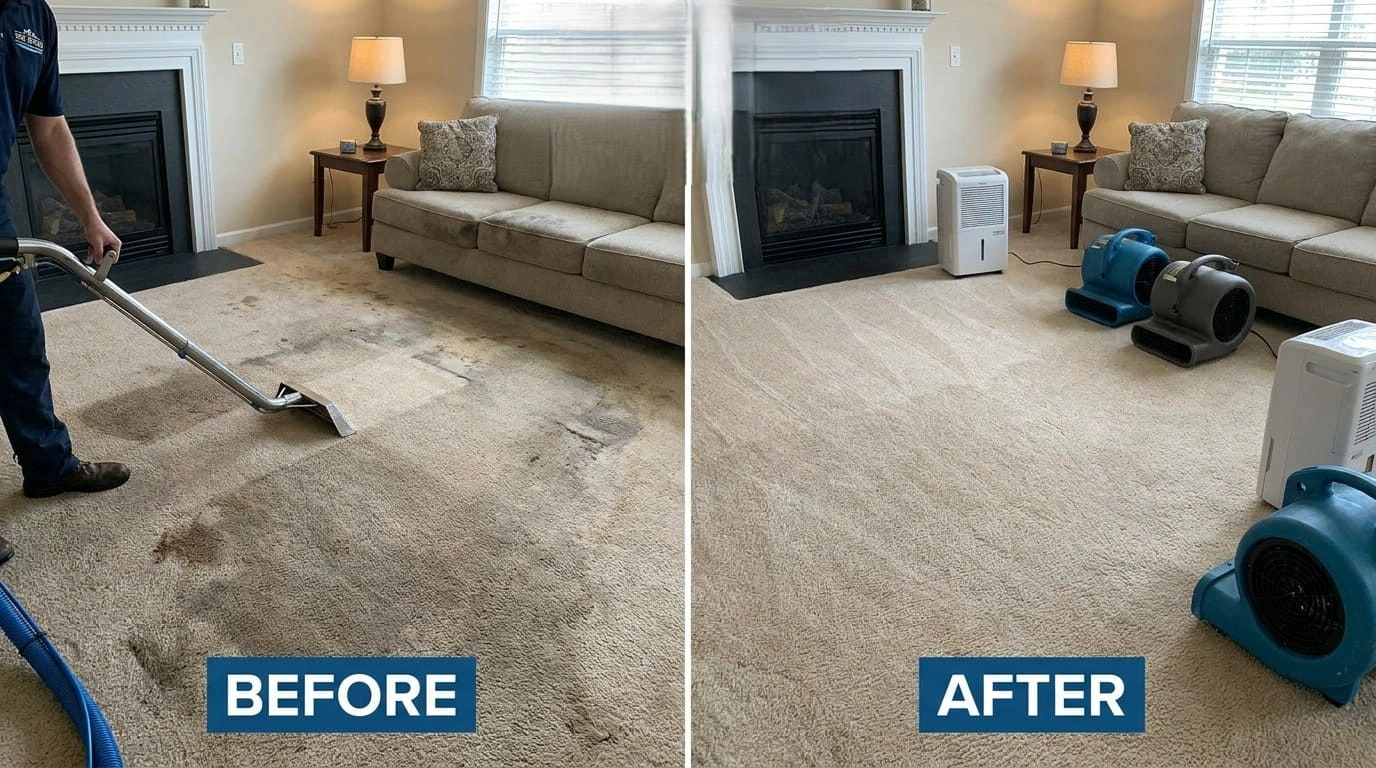 Carpet Water Extraction
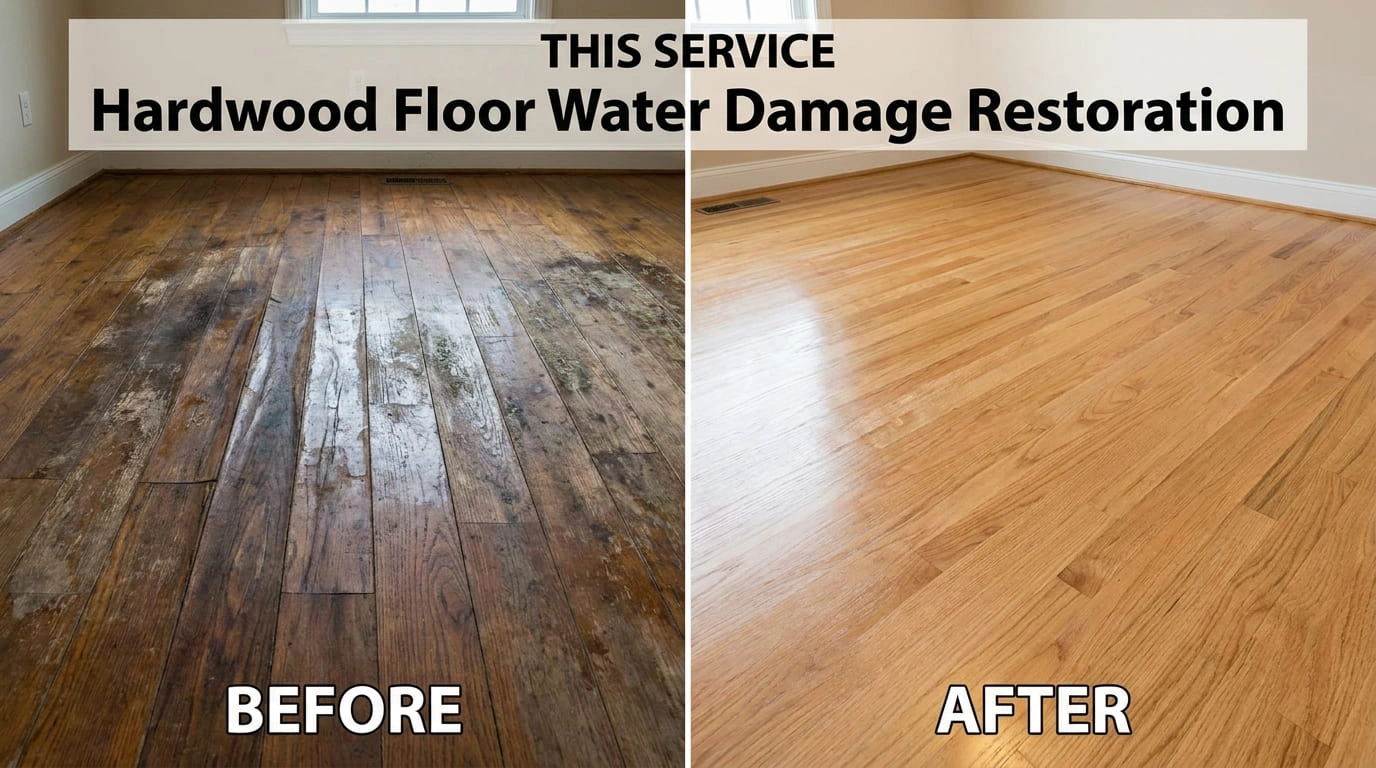 Hardwood Floor Restoration
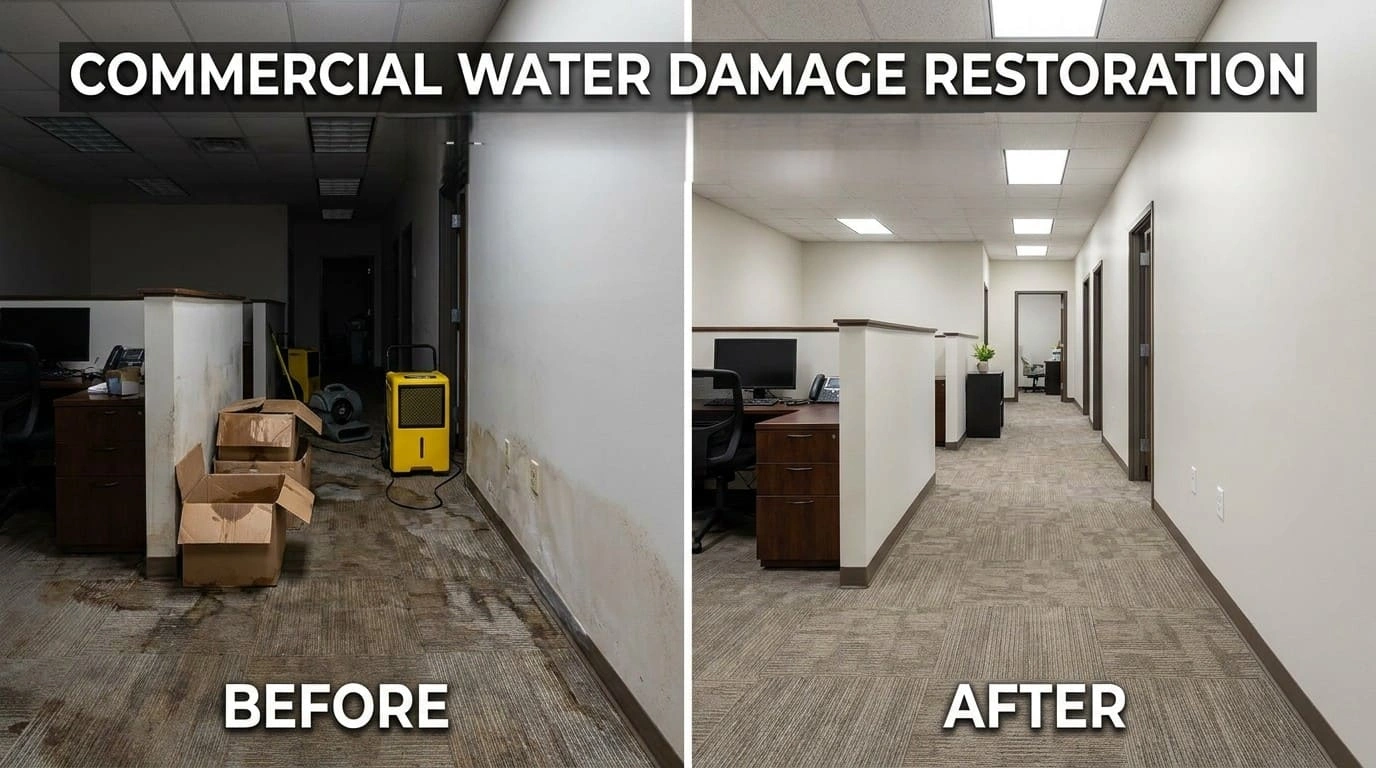 Commercial Restoration
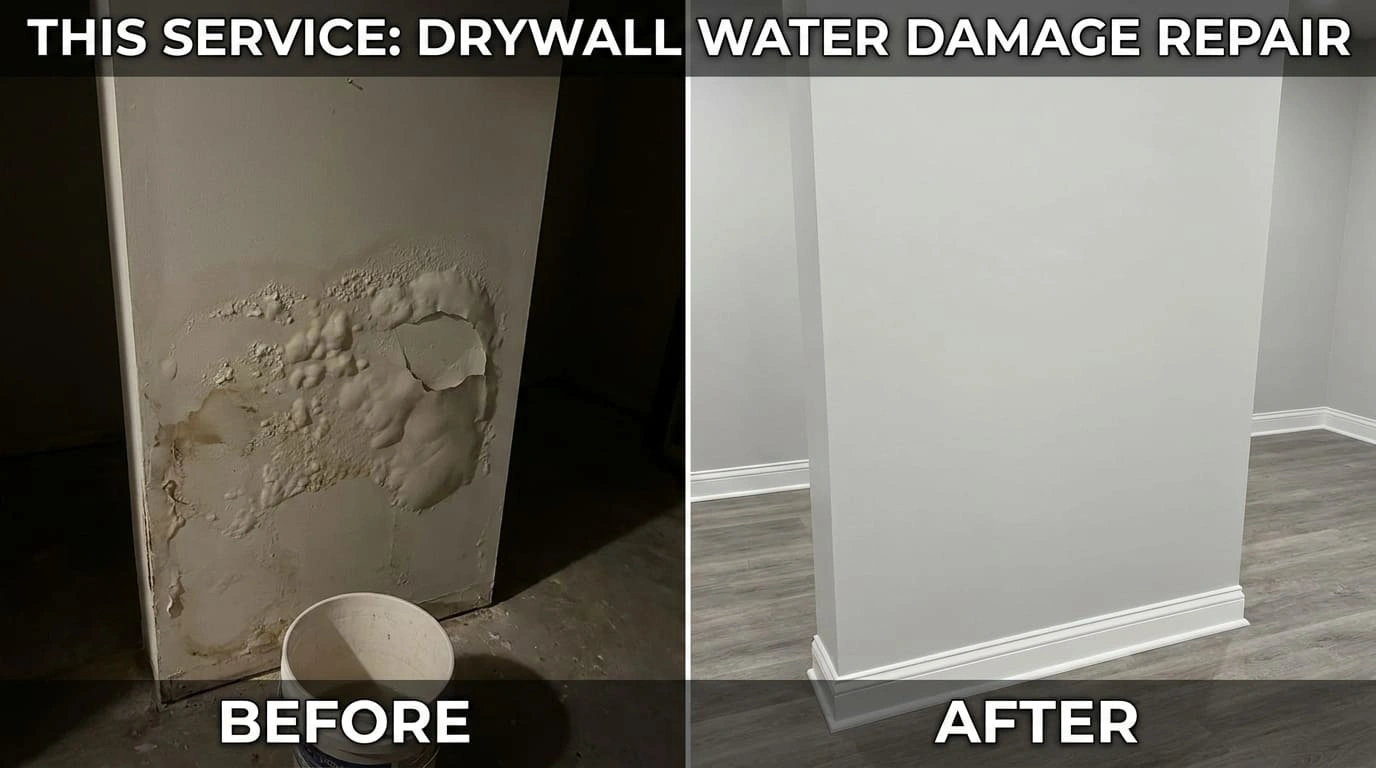 Drywall Water Damage Repair
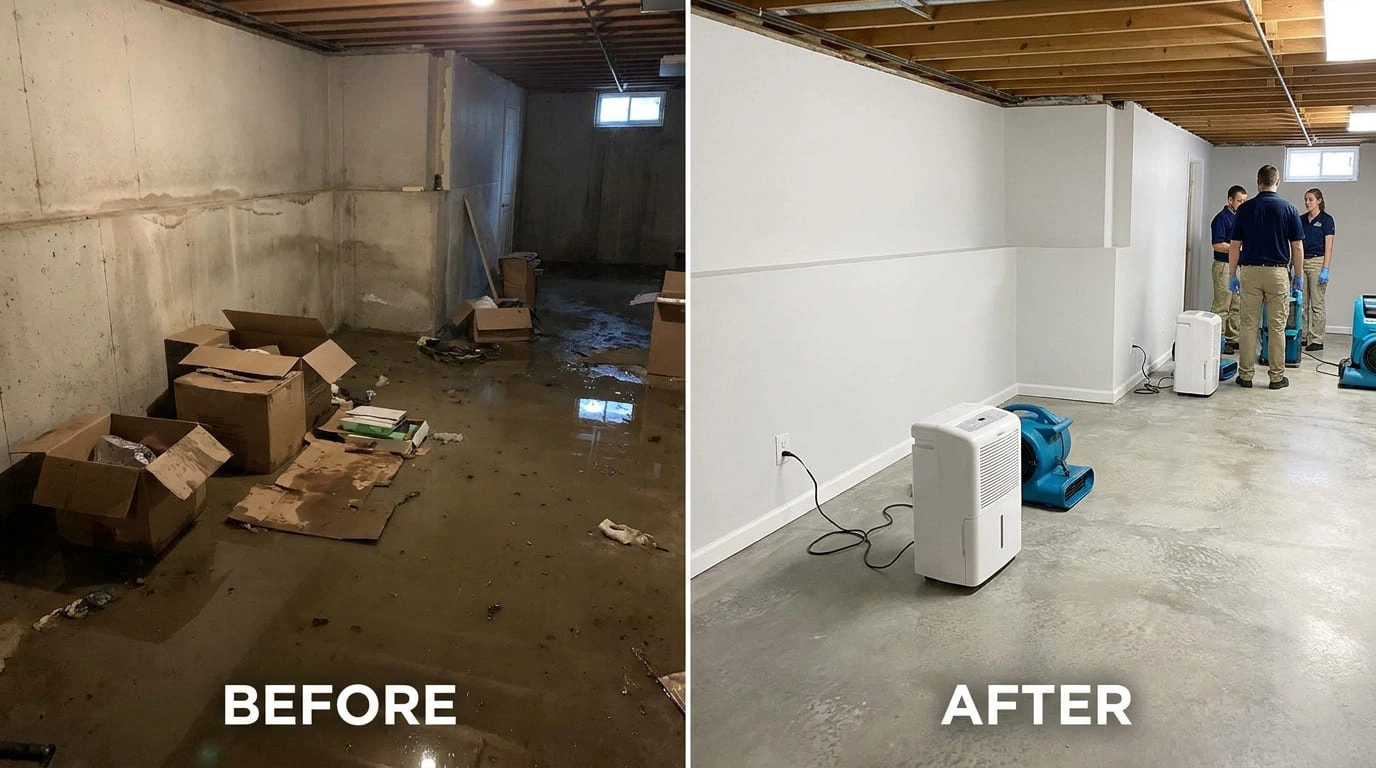 Flood Damage Cleanup
How Water Damage Strikes Aurora Through the Year (Seasonal Calendar & Risks)
In water damage and restoration, Aurora, CO runs on a predictable calendar. Knowing the season tells you what to check — and what to do first when something fails.
October–November: Blowout Season & First Hard Freeze
October is blowout season on the Front Range, and the goal is to clear sprinkler lines before overnight lows slip below about 28°F. Systems left charged can crack backflow preventers and buried lines, while a frost-free spigot with a hose still attached can split inside the wall — a leak you may not find until spring.
- Blow out sprinklers and drain the backflow preventer before the first hard freeze.
- Disconnect hoses so frost-free spigots can drain properly.
- Check garage and crawl space plumbing before the first single-digit night — and if a line splits anyway, our water damage repair Aurora crews dispatch around the clock.
December–February: Arctic Outbreaks & Ice Dams
Deep cold freezes pipes; the thaw floods homes. In January 2024, Denver spent 93 straight hours below freezing, and when temperatures rose into the mid-to-high 30s, Denver Fire logged 780 calls in a single day — mostly flooding and broken pipes, more than double its 2023 daily average. Snow on Aurora roofs also builds ice dams that push meltwater under shingles and into ceilings along exterior walls.
- Keep the thermostat steady — even a few degrees higher during a cold snap — and open sink cabinets on exterior walls.
- Know where your main shutoff is before the thaw, not after.
- Watch ceilings along exterior walls for stains after snow has sat on the roof.
March–April: Wet Spring Snow & Snowmelt
Spring storms can drop heavy, wet snow that melts fast under Colorado sun, filling window wells and soaking the soil against basement walls. A clogged or missing window well drain is the most common reason those wells overflow into finished basements.
- Clear leaves and debris from window well drains, and add well covers.
- Test the sump pump before the first big melt.
- Hold off on irrigation: Aurora Water warns early start-ups can freeze and crack backflow devices, and Denver's average last freeze is May 4.
May–September: Hail, Flash Floods & Swamp-Cooler Season
Summer brings Aurora's fastest-moving losses. On June 1, 2026, the National Weather Service logged hail up to 1.25 inches in parts of Aurora, and melting hail sent runoff rushing across parking lots. On August 15, 2026, flash flooding hit Expo Park, flooding Highline Elementary and filling underground garages near Havana Street and Alameda Avenue.
- Hail can bruise shingles and open slow roof leaks that surface weeks later.
- Flash floods overwhelm storm drains and push water through garage ramps, window wells and floor drains — peak season for water damage cleanup Aurora calls.
- Swamp coolers with a leaking pad or supply line can push indoor humidity high enough to grow mold.
Scheduling Intelligence — Getting Crews Across Aurora Fast
Aurora spans parts of three counties, so we plan dispatch around real routes, not map pins. From our E Quincy Ave base, crews run I-225, E-470, Parker Road, Quincy Avenue and Colfax, keep equipment staged for after-hours calls, and plan around rush-hour bottlenecks, HOA gate codes, condo loading docks and underground garages. It's what makes a water damage restoration service Aurora, CO families can count on at 3 a.m.
When a storm triggers restoration services Aurora-wide — a polar-vortex thaw or a flash-flood Saturday — we triage by safety and water category first, so sewage, ceiling collapses and electrical hazards get the first trucks. That discipline is why property managers treat us as their Arapahoe County water damage restoration partner, while we cover the Adams and Douglas County sides of Aurora just as closely.
How Can I Prevent Water Damage From Coming Back?
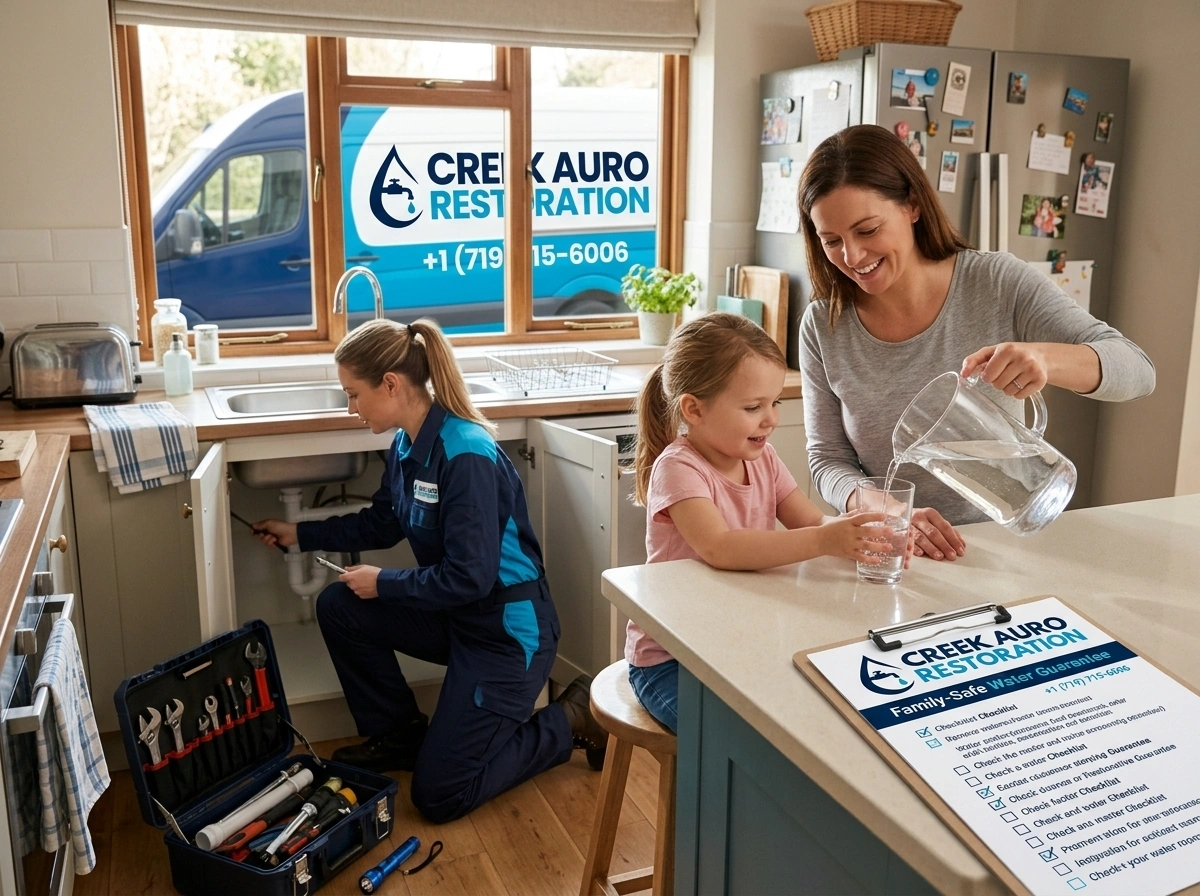
Prevention is the only permanent fix. Once your home is dry, a few Aurora-specific habits keep the next loss from happening — or keep it small.
- Blow out sprinklers in early-to-mid October, insulate the backflow preventer and disconnect garden hoses.
- Keep the window well drains clear and covered, and test the sump pump every spring.
- Have your sewer lateral camera-inspected — Aurora Water will even review the video for free as a second opinion — and ask a plumber about a backwater valve if your basement has floor drains.
- Replace aging water heaters and washing machine hoses, and add leak sensors or an automatic shutoff valve.
- Drain and winterize swamp coolers each fall, and check ceilings and attic decking after every hailstorm.
Want a second set of eyes? Our post-restoration water damage services, Aurora-wide, include a leak detection and moisture mapping visit before winter sets in.
What We Fix — From Water Damage Symptoms to Targeted Repairs
You won't get vague marketing here. These are the signs Aurora homeowners actually call about — and the repair each one usually needs.
Ceiling Stains & Sagging
Brown rings or sagging drywall on a ceiling — often a bathroom leak above or a roof leak after hail.
→ Ceiling Water Damage RepairWet Basement Carpet
Wet basement carpet, a musty smell or water pooling in one corner.
→ Carpet Water Extraction & DryingCupping or Buckling Wood
Cupping or buckling hardwood floors from water infiltration.
→ Hardwood Floor Water Damage RestorationBubbling Paint or Soft Drywall
Bubbling paint, soft drywall or swollen baseboards.
→ Drywall Water Damage RepairSewage Odor or Backup
Sewage odor or water rising from a floor drain — Category 3 contamination.
→ Sewage & Toilet Overflow CleanupHidden Leaks
A jump in your water bill or hissing inside a wall.
→ Water Leak Detection & Moisture MappingEach repair is documented with moisture readings, photos and an A/B/C urgency rating, plus a short maintenance plan so you know what changed, what matters most and what to watch next. These six symptoms account for most of the restoration residential services Aurora households book with us.
How Much Does Water Damage Restoration Cost? Aurora, CO Price Ranges
Your water damage restoration cost, Aurora, CO or anywhere else, comes down to three things: the category of water, how far it spread, and what has to be rebuilt. National Angi and HomeAdvisor data put typical projects at $1,305 to $5,707, with an average of $3,455.
| Loss Type | Typical National Range | What Moves the Price in Aurora |
|---|---|---|
| Category 1 — Clean Water (supply line, water heater) |
$3–$4 per sq ft to extract and dry | Floating walls, structural floors, hardwood |
| Category 2 — Gray Water (washer or dishwasher overflow) |
$4–$6.50 per sq ft | Carpet pad replacement, cabinet removal |
| Category 3 — Black Water (sewage, outside floodwater) |
$7–$7.50 per sq ft, before rebuild | Containment, disposal, possible Regulation 8 asbestos testing |
| Basement with ~1 Inch of Clean Water | $500–$1,500 | Finished vs. unfinished space, carpet vs. vinyl plank |
| Mold Remediation | $1,100–$3,400 (about $2,200 average) | Size of the affected area and containment needed |
Source: Angi and HomeAdvisor national cost data, compiled by Bob Vila. Your written scope is what counts.
Instead of hidden "call for a quote" pricing, we start with a free emergency assessment and a written scope tied to documented moisture readings before any rebuild begins. That's how water damage restoration Aurora, CO homeowners can budget for should work: when you're covered, we bill your insurer directly; when you're not, deductible payment plans and bundle discounts on sanitization keep the project manageable.
Our Proven 6-Step Water Damage Restoration Process in Aurora
Every one of the water damage restoration services Aurora, CO customers book with us follows the same six steps, so you always know what happens next.
Live 24/7 Phone Triage (2–5 Minutes)
A real dispatcher answers. We'll walk you through shutting off the main water valve, cutting power to wet areas only if it's safe, and moving valuables up and out. We confirm the source, the rooms affected, kids, pets or medical needs, and access details like gate codes, HOA rules or lockboxes — and ask for a few phone photos so the crew arrives with the right equipment.
On-Site Assessment, Moisture Mapping & Thermal Imaging
Your technician confirms the source is stopped, identifies the water category and class, and maps moisture with pin and pinless meters and thermal imaging — walls, subfloors, cabinets and crawl spaces. Where Regulation 8 applies, we flag suspect materials and arrange asbestos sampling before any tear-out.
Written Scope & Claim File — Denver Metro Water Damage Restoration by the Book
Within hours, you receive a written scope with photos, moisture readings and a drying plan your adjuster can work from. We bill your insurer directly when you're covered and walk you through every line item when you're not. It's the paperwork a water damage restoration contractor Aurora, CO adjusters respect should hand you on day one.
Emergency Extraction & Containment (Day 1)
Truck-mounted and portable extractors pull standing water out of carpet, pad and slab. Category 3 losses get containment, negative air and protective equipment before work begins, and porous materials that can't be saved are bagged and removed.
Structural Drying & Dehumidification (Days 1–5)
LGR dehumidifiers, air movers and, where needed, injection drying go to work on wall cavities, cabinets and hardwood. We take readings every day and adjust equipment until every material reaches its dry standard, typically three to five days for clean-water losses.
Sanitize, Rebuild & Verify
Antimicrobial treatment goes wherever the water category calls for it, followed by drywall, flooring, cabinets and paint. Rebuild work that needs a permit — like restoring a finished basement — goes through Aurora's required inspections. Your complimentary post-drying mold check closes the job — the step that separates a water restoration company Aurora owners recommend from one they warn neighbors about.

What's Included in a Free Emergency Assessment From Creek Auro?
Need water damage restoration today? Of Aurora's three counties, we cover every corner — and every free emergency assessment includes the same six deliverables.
- Source check — confirmation the water is stopped and what failed.
- Category and class — the IICRC classification that drives cleaning and drying decisions.
- Moisture map — meter readings and thermal images for every affected room.
- Safety review — electrical hazards, sewage contamination and suspect asbestos materials.
- Photo report — timestamped images you can forward straight to your adjuster.
- Written plan — scope, timeline and cost range before any work begins.
Landlords, Property Managers & HOAs — Protect Tenants, Units and Your Master Policy
In multifamily buildings, one failed supply line can soak three units and the garage below — and every party needs answers on day one. During the August 15, 2026 storm, water poured into underground garages at a complex near Havana and Alameda and at the Eleven One Eleven condos, and one resident said it was the fourth flood in his five years there.
For landlords, Colorado's warranty of habitability sets the clock: 24 hours to start on conditions that threaten life, health or safety, 72 hours for other uninhabitable conditions, and when a tenant asks — for a comparable unit or hotel room within 24 hours for the most serious ones. For HOAs, CCIOA lets the association assess deductibles to the owner whose negligence caused a loss, or pro rata when several units are damaged, so clear documentation of the source matters. That's the kind of Aurora, CO water damage restoration a property manager can defend to owners and boards.
- Multi-unit moisture mapping, with a separate photo report for each unit, owner and insurer.
- Tenant notices, access coordination and daily updates for building managers and HOA boards.
- Garage and common-area extraction, plus commercial water damage restoration for clubhouses, offices and retail spaces.
Credentials & Accountability — Serving Aurora Since 2010
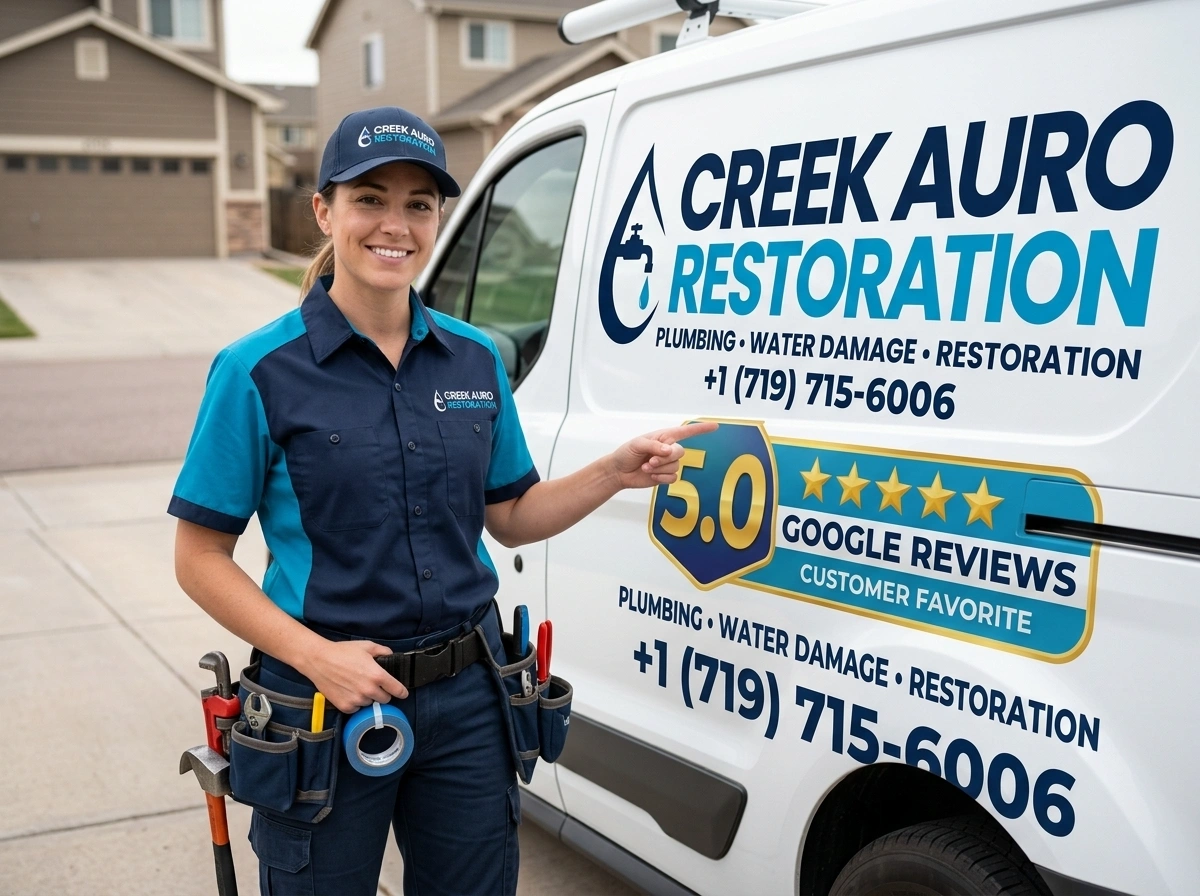
Every job log includes dated photos, moisture readings, technician initials and a clear scope, so you can verify exactly what was done and when. Your call reaches our own 24/7 dispatch at 13901 E Quincy Ave, and our own crews do the work. As an Aurora water damage restoration company founded in 2010, we've grown to 40 skilled professionals and 10 fully equipped vans. Learn more about Creek Auro Restoration.
Our team holds IICRC certifications in Water Damage Restoration (WRT), Applied Structural Drying (ASD) and Applied Microbial Remediation (AMRT), plus an IICRC Master Water Restorer designation and RIA's Water Loss Specialist credential. Recognition has followed, including the Angi Super Service Award, a BBB Torch Award for Ethics, a City of Aurora Business Recognition Award and an Expertise.com listing among the best water damage restoration services.
Colorado has no statewide general contractor license and no mold-specific license, so ask any restorer for its certifications, insurance and Aurora contractor licensing before you sign. We'll show you our certifications and insurance on request.
Our Aurora Water Damage Restoration Services
We don't just dry — we restore. This is the full Aurora water damage restoration menu, built for homes, rentals and businesses — from the first gallon extracted to the final coat of paint, with sewage cleanup, mold remediation and contents restoration added wherever a loss needs them.
Emergency Response
Source-Specific Cleanup
Drying & Detection
Repair & Rebuild
Commercial
- Commercial Water Damage Restoration — offices, retail, multifamily and medical-campus properties.
What Is the Safest Way to Handle Water Damage in an Older Aurora Home?
The safest approach is to test first, tear out second. Stop the water, make the electrical system safe, and leave suspect materials — popcorn ceilings, textured walls, old joint compound and pipe wrap — undisturbed until they're sampled, because Colorado's Regulation 8 applies to homes of any age once trigger levels are exceeded.
Then dry what can be dried in place, remove only what can't be saved, and use containment for sewage or mold. It's how water damage restoration Aurora, Colorado families can trust should work in every older home — safe for the people inside, the crew and the claim.
Got Questions About Water Damage Restoration in Aurora?
We're happy to help. If you can't find your answer below, call and we'll walk you through your options — even if you're not ready to book. You can also contact our 24/7 dispatch.
How much does water damage restoration cost in Aurora?
Most projects land between $1,305 and $5,707 based on national Angi and HomeAdvisor data, with an average of $3,455. Clean water typically runs $3–$4 per square foot to extract and dry; sewage runs $7–$7.50 before rebuild. Your exact price comes from a free emergency assessment and a written scope.
Does homeowners insurance cover water damage in Colorado?
Usually, when the water was sudden and accidental — a burst pipe or a failed water heater. Sewer backups typically need a water backup endorsement, and groundwater or surface flooding needs separate flood insurance, which carries a 30-day NFIP waiting period. Colorado insurers must provide a certified copy of your policy within 30 days of a request.
Will Aurora Water pay for sewer backup damage in my home?
Usually not. Aurora Water maintains only the public mains; the lateral from your house to the main — and any damage it causes — is the property owner's responsibility. Call a plumber, report the backup to Aurora Water at 303-326-8645, notify your insurer, and keep everyone away from contaminated areas.
How fast must a Colorado landlord respond to water damage or mold?
Landlords must start remedial action within 24 hours for conditions that threaten life, health or safety, and within 72 hours for other uninhabitable conditions, including mold that affects health. If a serious condition remains seven days after notice — 14 days for others — the law presumes the landlord failed to fix it.
Why does my restorer need an asbestos test before removing drywall?
Colorado's Regulation 8 requires a certified asbestos inspection before disturbing more than 32 square feet of material, 50 linear feet of pipe insulation or a 55-gallon drum's volume in a single-family home. The state says buildings of any age can contain asbestos, so testing protects your family, the crew and your claim.
Can mold grow in Colorado's dry climate?
Yes. Aurora's dry air keeps general humidity low, but mold grows wherever a leak, swamp cooler or flood keeps materials wet. The EPA's guidance is to dry water-damaged materials within 24 to 48 hours, which is why restoration experts Aurora homeowners trust map moisture before closing any wall.
How long does it take to dry a flooded basement in Aurora?
Most clean-water basement losses dry in three to five days once extraction is complete. Structural floors, saturated drywall on floating walls, hardwood or sewage contamination can add time. Daily moisture readings decide when drying is done, not the calendar — and rebuild typically follows in one to three weeks.
Can a contractor waive my insurance deductible in Colorado?
Not on insurance-funded roofing work: C.R.S. 6-22-105 bars contractors from paying, waiving or rebating the deductible, and the insurer doesn't have to consider that contractor's estimate. Deductible games put your claim at risk, so we offer deductible payment plans instead.
What's the difference between water mitigation and water restoration?
Water mitigation is the emergency phase: stopping the source, extracting water and drying the structure to prevent further damage. Water restoration is the repair phase: replacing drywall, flooring and cabinets to return the property to its pre-loss condition. Insurers often handle the two as separate estimates, and our Aurora water restoration crews handle both.
Do you provide 24/7 emergency water damage cleanup in Aurora?
Yes. A live dispatcher answers around the clock, and 10 equipped vans cover all three counties Aurora spans — Arapahoe, Adams and Douglas — plus nearby cities like Centennial, Denver and Parker. You'll get shutoff guidance on the phone and an arrival window before you hang up.
Contact Options:
- Call us 24/7: (719) 715-6006
- Book a free emergency assessment online
- Email: creekaurorestoration@gmail.com
- Visit: 13901 E Quincy Ave, Aurora, CO 80015
Whatever the source, one call gets you water damage restoration Aurora, CO homeowners trust — day or night.
Who Offers the Best Water Damage Restoration Near Me? Aurora Homeowners Ask
Still searching for water damage restoration near me? Aurora homeowners usually mean three things: a crew that answers now, knows how local homes are built and won't play games with the claim. Creek Auro Restoration handles all of it — extraction, structural drying, sewage cleanup, mold remediation and the rebuild.
Whether you're asking who handles burst pipes in Tallyn's Reach, sewer backups in Hoffman Heights or swamp cooler leaks in Village East, the answer is the same: one accountable, water-focused team with moisture-mapped, photo-documented work. That's the standard to hold any water damage restoration services in Aurora too.
Our crews cover every corner of Aurora — Expo Park, Fitzsimons, Del Mar Parkway, Meadow Hills, Mission Viejo, Saddle Rock, Murphy Creek, Southshore and Painted Prairie among them — plus nearby cities throughout the Denver Metropolitan Area.
Cities We Serve Around Aurora, CO
Booking a water damage restoration service in Aurora should be simple and transparent. Call (719) 715-6006 or book online, and you'll get a free emergency assessment, a moisture map and a written plan with cost ranges within hours.
For landlords, HOAs and out-of-town owners, we coordinate access, document every unit separately and send updates by text or email — the kind of restoration contractor Aurora owners can manage without being on site.
Choose Creek Auro Restoration for water damage restoration Aurora, CO homes and businesses rely on — fast, documented and built for the way Aurora is built.
Water Damage Restoration Aurora CO — Service Area Coverage Map
From our 13901 E Quincy Ave headquarters, our 10 fully equipped vans dispatch across Aurora and the Denver Metropolitan Area 24 hours a day.
Get Emergency Water Damage Restoration in Aurora CO Now
Need an emergency water damage company in Aurora CO? Our 40 skilled professionals are standing by 24/7. Reach out about our restoration services and we'll walk you through your options.
Contact Creek Auro Restoration
(719) 715-6006
creekaurorestoration@gmail.com
13901 E Quincy Ave
Aurora, CO 80015
24/7 Emergency Service Available
Current Special Offers
- Bundle Discounts on Specialized Sanitization
- Complimentary Post-Drying Mold Checks
- Deductible Assistance Programs
- Direct Insurance Billing Coordination
- Free Emergency Assessments & Visual Inspections