Frozen Pipe Water Damage Cleanup Aurora, CO
Aurora frozen-pipe cleanup for homes, rentals, HOAs, and commercial properties across the Denver Metro area.
A frozen water line can turn into a major property emergency when the pipe cracks, thaws, or bursts behind a wall, above a ceiling, under a sink, inside a garage, or near a basement utility area. Creek Auro Restoration provides frozen pipe water damage cleanup Aurora CO property owners can call when water is spreading, ceilings are dripping, flooring is soaked, or hidden moisture may be trapped inside building materials.
With 16 years serving Aurora and nearby communities, a team of 40 skilled professionals, 10 fully equipped service vans, and 24/7 emergency availability, Creek Auro Restoration helps homeowners, renters, landlords, HOAs, property managers, and businesses begin the recovery process after a frozen or burst pipe. Our work can include emergency water removal, water extraction, moisture mapping, structural drying, documentation support, and water-damage repair planning.
If water is actively flowing, turn off the main water supply first if it is safe to do so. If water is near outlets, appliances, electrical equipment, or a sagging ceiling, avoid the area and call for emergency help.
- Emergency water extraction after frozen pipes, burst pipes, and thaw-related leaks
- Moisture inspection for wet walls, ceilings, floors, cabinets, insulation, and basements
- Structural drying and dehumidification for residential, rental, HOA, and commercial properties
- Available 24/7 for Aurora water-damage emergencies, including cold-snap pipe failures
Call +1 (719) 715-6006 for 24/7 emergency water removal, moisture assessment, and structural drying in Aurora and the Denver Metro area.
Request Frozen Pipe Cleanup
Fill out the form and we'll contact you immediately!
Frozen Pipe Water Damage Cleanup Backed by 16+ Years of Experience
Work with a local emergency restoration team focused on fast mitigation, documented drying, and clear next steps.
Frozen-pipe water damage is not solved by surface mopping alone. A plumber can repair or isolate the broken line, but water may already have entered drywall cavities, insulation, flooring, cabinets, ceilings, subfloors, or lower levels of the property. Creek Auro Restoration helps address the damage that remains after the source is stopped.
Our team approaches each Aurora water loss with a practical process: assess immediate hazards, remove standing water, inspect affected materials, identify concealed moisture, place drying equipment when appropriate, monitor conditions, and provide clear documentation for the property owner. Professional water-damage restoration standards address procedures and precautions for residential, commercial, and institutional buildings, including the structure and contents affected by a water event.
16+ Years Local Experience
Serving Aurora, Arapahoe County, and the Denver Metro area since 2010.
40 Pros & 10 Service Vans
40 skilled professionals and 10 fully equipped service vans.
24/7 Emergency Availability
Rapid response for frozen pipe, burst pipe, and urgent water-damage losses.
All Property Types
Support for homes, rentals, apartments, HOAs, offices, retail spaces, and multi-unit properties.
Frozen Pipe Water Damage Help Near Aurora Neighborhoods, Business Hubs & Major Corridors
Serving properties from central Aurora and the Colfax corridor to southeast Aurora, Southlands, and the E-470 area.
A frozen pipe can affect nearly any Aurora property when a Colorado cold snap reaches exterior plumbing, attached garages, utility rooms, crawl spaces, unfinished basements, cabinets on exterior walls, hose-bib supply lines, or poorly insulated mechanical areas. Creek Auro Restoration provides emergency cleanup and structural drying for properties across the city, whether water damage begins in a single bathroom or travels from an upper floor through ceilings and lower-level rooms.
We serve homeowners and property teams near major Aurora destinations and corridors, including the Anschutz and Fitzsimons area, Buckley Space Force Base vicinity, Southlands, Town Center at Aurora, the Havana Street corridor, I-225, E-470, and surrounding Denver Metro communities.
Aurora Neighborhoods & Communities Served
Nearby Cities & Service Areas
Regional Hubs & Local Landmarks
Specialized Frozen Pipe Water Damage Restoration for Aurora Properties
Aurora restoration specialists focused on extraction, moisture detection, structural drying, and recovery planning.
A burst water line can leave moisture in places that are not visible from the room where the leak began. Water may migrate under flooring, behind cabinets, inside wall cavities, through ceiling insulation, around baseboards, and into lower levels. A basic cleanup may remove puddles, but it does not necessarily identify whether building materials remain wet.
Creek Auro Restoration provides burst pipe water damage restoration Aurora CO property owners can use after a frozen pipe thaws, leaks, or ruptures. We focus on the mitigation and drying phase after the water source has been shut off or repaired.
Our Specialized Focus Includes:
- Emergency water removal and extraction for standing water
- Moisture mapping for wet walls, ceilings, floors, cabinets, and concealed areas
- Structural drying using air movers, dehumidification equipment, and monitored drying methods
- Clear service documentation for owners, managers, and insurance communication
- Coordination with plumbers, maintenance teams, property managers, and reconstruction providers when needed
What Happens When a Frozen Pipe Bursts in Aurora?
A pipe may freeze during the coldest hours, then reveal a crack or full leak when temperatures rise and water pressure returns.
Frozen pipes can create a confusing sequence for Aurora property owners. One faucet may stop producing water, pressure may drop, or a pipe may make unusual sounds during a hard freeze. Then, after the line begins to thaw, water can escape through a crack that was not visible while the pipe was frozen. That is why people often search for “no water in one bathroom” in the morning and “water dripping through ceiling after freeze” later the same day.
Water can travel far beyond the point of the pipe break. A second-floor leak can affect the ceiling below, wall cavities, flooring, furniture, insulation, and finished basement spaces. A garage, crawl-space, or exterior-wall pipe break can spread water into adjacent rooms before it is discovered.
Common Frozen-Pipe Water-Damage Risks
- Wet drywall, insulation, cabinets, flooring, and subflooring
- Ceiling stains, dripping, sagging, or damaged drywall below an upper-floor leak
- Water migration into finished basements, crawl spaces, and utility areas
- Slip hazards and possible electrical hazards around outlets, appliances, or equipment
- Swollen laminate, damaged hardwood, wet carpet, saturated padding, and affected contents
- Secondary damage when moisture remains concealed inside building materials
- Documentation gaps if photos, affected rooms, and initial conditions are not recorded promptly
If your pipe thawed and now it is leaking, shut off the water source when safe, avoid electrical hazards, take photos before major cleanup if conditions allow, and contact a plumber plus a water-damage restoration provider when water has entered materials or multiple areas.
Prevent Frozen Pipe Water Damage with Aurora Winter Preparation
Prepare before sub-zero weather, not after water starts spreading through your property.
Frozen pipe cleanup is an emergency service, but prevention matters before the next Front Range cold snap. Aurora Water advises residents to know the location of the master water shutoff, maintain heat in vacant properties, disconnect exterior hoses, allow warmth to reach pipes in cabinets, and address cold-air gaps near exterior plumbing. Aurora Water specifically recommends keeping vacant buildings at least 55°F during winter conditions.
| Winter Preparation Task | What It Involves | Best Timing | Why It Matters |
|---|---|---|---|
| Locate the main water shutoff | Identify and label the main water valve or master shutoff | Before winter | Helps stop water flow quickly during an active leak |
| Insulate vulnerable piping | Protect exposed pipes in garages, crawl spaces, utility rooms, and unheated areas | Fall or before a freeze warning | Reduces direct cold exposure |
| Disconnect garden hoses | Remove and drain hoses connected to exterior hose bibs | Before sustained freezing weather | Helps protect outdoor connections and supply lines |
| Open cabinet doors | Allow warm indoor air around pipes beneath exterior-wall sinks | During freezing periods | Helps warm vulnerable kitchen and bathroom plumbing |
| Maintain indoor heat | Keep the home or vacant property adequately heated | Throughout winter | Helps reduce freeze risk in cold-prone areas |
| Inspect known weak points | Check prior freeze locations, drafty walls, garages, and mechanical spaces | Before winter | Supports targeted repairs and prevention |
Seasonal Timing Guidance:
- Schedule winter-readiness checks before prolonged freezing temperatures arrive.
- Inspect exterior-wall plumbing, garage lines, crawl spaces, basements, and hose-bib connections before a cold snap.
- Keep access clear around the main water shutoff so it can be reached quickly in an emergency.
- If leaving town, maintain safe indoor temperatures and arrange property checks when possible.
Most Aurora properties do not need “annual frozen-pipe certification,” but a proactive winter plan can reduce the likelihood and severity of a burst-pipe loss. If you suspect a pipe is frozen, Aurora Water recommends calling a plumber rather than taking unsafe thawing measures.
Who Needs Frozen Pipe Water Damage Cleanup in Aurora?
From single-family homes to multi-unit communities and commercial facilities across the Denver Metro area.
A frozen or burst pipe can affect any property with exposed or vulnerable plumbing. Creek Auro Restoration provides emergency water cleanup and drying support for owners, occupants, and managers who need to reduce damage after a pipe leak or thaw-related break.
Homeowners with frozen pipes, burst supply lines, wet ceilings, flooded rooms, or soaked basements
Renters dealing with apartment water damage, ceiling leaks, or an upstairs-unit pipe break
Landlords managing vacant homes, rental units, duplexes, and tenant-related water losses
HOAs and condominium associations handling shared-wall, common-area, or multi-unit water migration
Apartment communities that need emergency extraction, documentation, and drying coordination
Property managers overseeing residential portfolios, commercial properties, and mixed-use buildings
Offices, retail facilities, restaurants, hotels, warehouses, clinics, schools, churches, and community properties
Owners of second homes, vacant houses, and seasonal properties affected by a heating failure or cold-weather freeze
If you rent your property, notify your landlord, property manager, or emergency maintenance contact immediately. Do not wait to report an active leak if water is spreading, reaching another unit, or creating an electrical safety concern.
How Aurora Cold Snaps and Freeze-Thaw Conditions Affect Pipes
Sub-zero temperatures, sudden temperature changes, and vulnerable plumbing locations can turn a freeze into a water-damage emergency.
Aurora's Front Range climate can bring bitter cold, sub-zero conditions, and abrupt weather changes that stress plumbing in exposed or poorly insulated locations. City cold-weather notices have warned residents about arctic air and dangerously low temperatures—the same conditions that drive frozen-pipe calls across the area.
Water Pipes Are Especially Vulnerable When Located In:
- Exterior walls
- Attached garages
- Crawl spaces
- Unfinished basements
- Utility rooms
- Kitchen and bathroom cabinets on exterior walls
- Areas near drafty windows, foundations, or poorly sealed penetrations
- Hose-bib supply lines and exterior plumbing connections
Winter
Prolonged freezing temperatures can restrict or freeze water flow in vulnerable lines.
Freeze-Thaw Periods
A hidden crack may not become obvious until ice melts and normal water pressure returns.
Early Spring
Ceiling stains, wet baseboards, or a damp wall can reveal damage from a prior cold event.
Year-Round
Water heater leaks, appliance failures, and roof leaks create similar moisture conditions needing professional drying.
Which Frozen Pipe Locations Cause Water Damage in Aurora Homes and Buildings?
The source location often determines how quickly water spreads and what materials need inspection.
Not every frozen-pipe loss looks the same. A small leak under a sink may affect cabinets and flooring, while a pipe break inside a ceiling or exterior wall can spread water into insulation, drywall, lower rooms, and structural materials before the damage is visible.
| Frozen Pipe or Leak Location | Common Warning Signs | Materials Commonly Affected | Restoration Focus |
|---|---|---|---|
| Exterior-wall supply line | No water, low pressure, wet wall, discoloration | Drywall, insulation, trim, cabinets | Moisture inspection, cavity drying, repair planning |
| Garage or utility-room pipe | Pooled water, wet mechanical area, visible pipe leak | Drywall, stored contents, flooring | Extraction, safety review, drying |
| Under-sink supply line | Wet cabinet base, damp flooring, dripping connection | Cabinetry, toe kicks, flooring, subfloor | Extraction, moisture mapping, targeted drying |
| Ceiling pipe break | Dripping, ceiling stain, sagging drywall | Ceiling drywall, insulation, lower-level contents | Safety assessment, controlled drying or removal |
| Basement pipe rupture | Flooded carpet, wet walls, standing water | Carpet, padding, drywall, contents, subfloor | Water extraction, drying, material assessment |
| Vacant-property pipe loss | Large spread discovered after time away | Multiple rooms, ceilings, flooring, contents | Emergency mitigation, documentation, staged recovery |
A plumber addresses the failed pipe itself. A water-damage restoration team evaluates what the released water affected after the source is controlled.
Our 6-Step Frozen Pipe Water Damage Cleanup Process
What to expect when Creek Auro Restoration arrives at your Aurora property.
Emergency Call & Initial Assessment
We ask where the water is coming from, whether the main water supply has been turned off, what rooms are affected, whether a plumber has been contacted, and whether electrical or ceiling hazards are present.
On-Site Safety & Damage Review
Our team evaluates visible water, affected materials, access conditions, source status, and immediate hazards. If the pipe is still actively leaking, source control should be handled by a qualified plumber or the property's maintenance team.
Emergency Water Removal & Contents Protection
We remove standing water where appropriate and help protect affected belongings, furniture, flooring, and property contents from further exposure.
Moisture Mapping & Documentation
We inspect potentially affected walls, ceilings, floors, cabinets, insulation, and other building materials to identify visible and concealed moisture conditions.
Structural Drying & Monitoring
Air movers, dehumidification equipment, and other drying methods may be used based on the loss conditions, materials, and measured moisture levels. We monitor progress and adjust the drying plan as needed.
Repair & Insurance Documentation Support
After mitigation, we provide documentation and recommendations for repairs, reconstruction, or next steps. Coverage and claim decisions remain subject to the property owner's policy and insurer.
What's Included in Our Frozen Pipe Water Damage Cleanup Service
Clear deliverables for Aurora homeowners, renters, property managers, and commercial property teams.
Every frozen-pipe water-damage event is different. The scope depends on how long water flowed, where it traveled, the materials involved, whether the pipe was repaired, and whether contamination or safety concerns are present. Creek Auro Restoration explains what we observe, what work is recommended, and what comes next.
Our Service May Include:
- Emergency assessment of visible water damage and immediate safety concerns
- Standing-water removal and emergency water extraction
- Moisture inspection of affected walls, ceilings, floors, cabinetry, carpet, and other materials
- Moisture mapping to identify areas needing drying or further evaluation
- Placement of air movers and commercial dehumidification equipment when appropriate
- Drying monitoring and equipment adjustment based on moisture conditions
- Content protection and documentation support where feasible
- Cleaning or sanitization recommendations based on the source and site conditions
- Written notes, photos, readings, invoices, and records to support property-owner and insurance communication
- Recommendations for drywall, ceiling, flooring, cabinet, insulation, or reconstruction work if materials cannot be adequately dried or restored
Key Advantages of Working with Creek Auro Restoration
Emergency capacity, moisture-focused restoration methods, and straightforward communication for Aurora property owners.
Creek Auro Restoration is built to help property owners respond when a frozen pipe turns into a water-damage loss. We focus on clear emergency communication, practical mitigation steps, and the drying process needed to address water that may have moved beyond the visible puddle.
24/7 Response
Emergency water-damage response for Aurora and the Denver Metro area.
Extensive Fleet
40 skilled professionals and 10 fully equipped service vans.
Complete Mitigation
Emergency water removal, moisture mapping, structural drying, and dehumidification.
All Property Types
Support for homes, apartments, condominiums, HOAs, businesses, and multi-unit properties.
Insurance Support
Documentation support for property owners, managers, and insurance communication.
Full Service Scope
Service coordination after burst pipes, ceiling leaks, basement flooding, water heater leaks, and more.
Frozen Pipe Water-Damage Transformations for Aurora Properties
What changes after standing water is removed, hidden moisture is assessed, and a drying plan is in place.
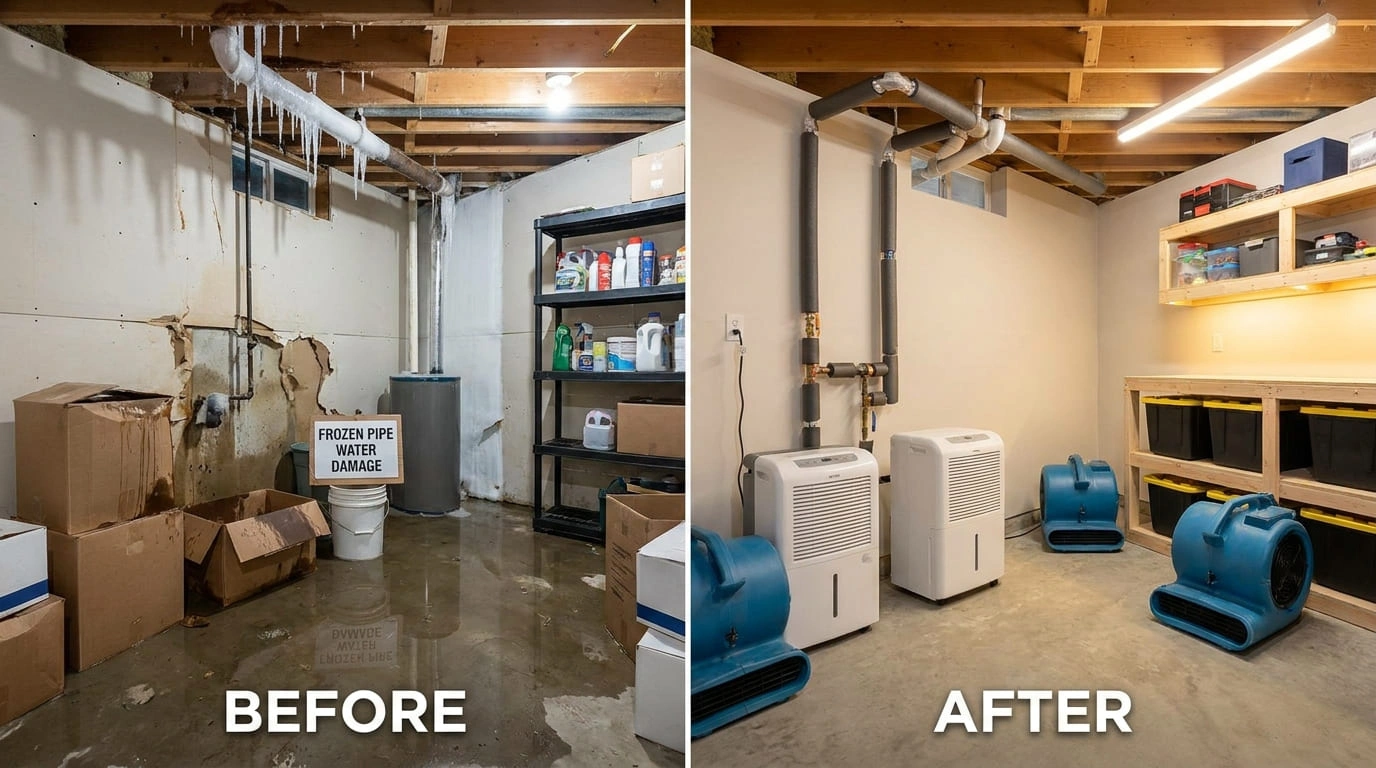
Many property owners call after finding water under a cabinet, a wet wall, soaked carpet, a leaking ceiling, or a basement floor covered in water. At that stage, the most important change is not simply "dry versus wet." It is moving from uncertainty to a documented plan for source control, extraction, moisture evaluation, drying, and repair decisions.
Water is spreading from a burst or thawing pipe.
The water source is isolated or repaired, standing water is addressed, and the affected area is assessed.
Wet walls, ceilings, flooring, or cabinets may contain hidden moisture.
Moisture conditions are documented, and drying or removal recommendations are based on the materials affected.
The owner is unsure what to photograph, save, report, or tell the insurance carrier.
The property owner has incident photos, service documentation, mitigation records, and next-step guidance.
A property manager or HOA is dealing with multiple residents, units, or shared-area concerns.
A coordinated response plan can help prioritize safety, access, drying, tenant communication, and recovery work.
How We Extract Water, Locate Moisture & Dry Frozen Pipe Damage
Industry-informed equipment and material-specific drying methods for Aurora homes and commercial properties.
Frozen-pipe water damage requires more than placing a household fan in a wet room. Depending on the source, duration, materials, and extent of water migration, professional mitigation may involve extraction, moisture assessment, controlled airflow, dehumidification, cleaning, removal of unsalvageable materials, and ongoing monitoring.
Creek Auro Restoration May Use:
- Professional water-extraction equipment for standing water
- Moisture meters to evaluate material moisture conditions
- Thermal imaging or other diagnostic tools where appropriate
- Air movers to support controlled airflow across wet materials
- Commercial dehumidifiers to remove moisture from the affected environment
- Containment and protective measures when conditions require controlled work areas
- Material-specific drying methods for carpet, flooring, drywall, ceilings, cabinetry, and subflooring
- Documentation procedures to record affected areas, initial conditions, drying progress, and recommendations
Water-damage restoration standards describe procedures and precautions for restoring water-damaged structures, systems, and contents in residential, commercial, and institutional settings.
Should You Dry, Repair, or Replace Materials After a Frozen Pipe Burst?
The right path depends on the material, water source, duration of exposure, measured moisture, and safety condition.
Not every wet material must be removed, and not every material can be saved. Creek Auro Restoration evaluates the condition of affected building materials and explains recommended next steps. A timely response can sometimes support drying and restoration, while swelling, delamination, contamination, deterioration, or prolonged saturation may require removal and replacement.
| Scenario or Material | Drying or Repair May Be Appropriate | Replacement May Be Recommended |
|---|---|---|
| Wet carpet from a clean-water pipe break | When addressed promptly and drying conditions are favorable | When saturated for too long, contaminated, deteriorated, or unable to dry properly |
| Drywall with limited moisture exposure | When material condition and measured moisture support drying | When swollen, crumbling, contaminated, or structurally compromised |
| Wet insulation | Depends on insulation type, exposure, and ability to dry | When saturated, damaged, or unable to be restored safely |
| Hardwood flooring | Timely extraction and controlled drying may help | When boards cup, buckle, separate, or sustain significant damage |
| Ceiling drywall | Minor moisture may be evaluated for drying | When sagging, damaged, unsafe, or unable to dry adequately |
| Cabinets, trim, and subfloor | Assessment depends on construction and moisture conditions | When swelling, delamination, rot, or structural compromise is present |
Replacement May Be Appropriate When:
- Materials are structurally compromised or unsafe
- Ceiling drywall is sagging or deteriorated
- Flooring has buckled, delaminated, or cannot be dried adequately
- Insulation is saturated or damaged
- Moisture remains trapped behind materials despite appropriate drying efforts
- The water source or site conditions create contamination concerns
Frozen Pipe Water Damage Cleanup Costs in Aurora, CO
Clear cost drivers and on-site assessments for property owners who need practical answers.
The cost of frozen pipe water-damage cleanup depends on the size and severity of the loss. A small under-sink leak may require a focused assessment and targeted drying, while a burst pipe in an exterior wall, ceiling, garage, or vacant home can affect multiple rooms, flooring systems, insulation, and contents.
Main Cost Drivers Include:
- How long water flowed before the source was stopped
- The amount of standing water and number of affected rooms
- Whether water reached drywall, ceilings, cabinets, flooring, insulation, or subflooring
- Accessibility of the damaged area
- Emergency or after-hours response needs
- The amount and duration of drying equipment required
- Whether material removal, repair, reconstruction, or content handling is needed
- Whether a plumber must repair the source separately or has already completed the repair
- Water category, contamination concerns, and cleaning requirements
| Service Type | Typical Pricing Consideration |
|---|---|
| Emergency assessment | Depends on timing, access, visible conditions, and scope |
| Water extraction | Varies by water volume, affected area, and material type |
| Structural drying | Depends on affected materials, equipment needs, and drying duration |
| Moisture mapping | Depends on the size and complexity of the impacted area |
| Material removal | Depends on drywall, insulation, flooring, cabinets, ceilings, or other materials involved |
| Repair or reconstruction | Varies by approved scope, materials, and building conditions |
Creek Auro Restoration provides an assessment and scope based on observed conditions. Insurance coverage, deductibles, exclusions, and claim payment decisions depend on the individual policy and insurer.
Which Aurora Properties Need Water Extraction and Structural Drying After a Pipe Burst?
If water entered building materials, affected multiple rooms, or created a safety concern, professional evaluation may be appropriate.
A small visible leak can hide a larger moisture problem. You may need professional water-damage cleanup if water entered wall cavities, ceilings, flooring, cabinets, insulation, a basement, crawl space, or another concealed area.
Call for Emergency Water-Damage Help When:
- A frozen or thawing pipe is actively leaking or has burst
- Water is dripping through a ceiling or pooling under a fixture
- A wall, ceiling, floor, cabinet, or baseboard is wet or visibly damaged
- Carpet, hardwood, laminate, vinyl plank, or subflooring is soaked
- Water has entered a finished basement or crawl space
- A pipe break occurred in a vacant home, rental property, or second home
- Water is near electrical outlets, appliances, panels, or equipment
- Multiple apartment, condominium, or commercial units may be affected
- You need incident photos, moisture readings, and documentation for an insurance claim
- You are unsure whether water is trapped behind drywall, cabinets, or flooring
Frozen Pipe Water Damage Cleanup for Aurora Commercial & Multi-Unit Properties
Protect tenants, operations, inventory, equipment, and building materials after a cold-weather pipe failure.
A frozen pipe can quickly disrupt offices, retail spaces, clinics, restaurants, apartment communities, schools, warehouses, and other commercial properties. Water may move through suites, tenant spaces, corridors, storage areas, ceiling cavities, mechanical rooms, and shared building systems. Creek Auro Restoration coordinates with property managers, facility teams, owners, and maintenance personnel to help contain damage and begin recovery.
| Commercial Service | Description |
|---|---|
| Emergency water removal | Extract standing water and help limit further material exposure |
| Moisture mapping | Identify affected walls, ceilings, floors, suites, rooms, or common areas |
| Structural drying | Use appropriate drying equipment and monitoring for affected materials |
| Documentation support | Provide photos, service notes, readings, invoices, and scope information |
| Contents coordination | Help prioritize affected furnishings, inventory, equipment, and recoverable items |
| Repair planning | Provide recommendations for reconstruction or material repair after mitigation |
Commercial Properties We Assist Include:
Apartment communities, HOAs, condominiums, and multi-family properties
Office buildings, professional suites, and mixed-use developments
Retail spaces, shopping centers, and commercial corridors
Restaurants, hotels, hospitality properties, and event venues
Schools, churches, recreation facilities, and community properties
Healthcare-adjacent offices, clinics, and medical facilities
Warehouses, logistics buildings, industrial sites, and storage facilities
Why Commercial Property Teams Contact Us
- 24/7 emergency availability for active water losses
- Capacity for multi-room, multi-unit, and larger drying projects
- Coordination with owners, managers, tenants, maintenance teams, and vendors
- Documentation to support business, property, and insurance communication
- A practical path from emergency extraction to drying and repair planning
| Commercial Service Situation | Key Consideration |
|---|---|
| Multi-unit property | Access coordination, tenant communication, shared-wall moisture migration |
| Office or retail space | Protecting operations, furnishings, inventory, and reopening plans |
| Large campus or facility | Phased assessment by building, suite, zone, or affected area |
| Industrial or warehouse setting | Safety protocols, equipment protection, access requirements, and operational impact |
Benefits of Hiring Frozen Pipe Cleanup Professionals in Aurora
Faster water removal, clearer moisture findings, safer drying, and more confident next steps.
A frozen pipe can cause visible flooding and hidden moisture at the same time. Professional water-damage mitigation helps property owners understand what was affected and what needs to happen next.
Faster removal of standing water from affected rooms and materials
Moisture inspection beyond visible puddles and surface wetness
Structural drying plans for walls, ceilings, floors, cabinets, and other building materials
Better protection for carpets, flooring, furniture, contents, and lower-level spaces
Clear records for property owners, managers, and insurance communication
Practical recommendations for materials that may need drying, repair, removal, or replacement
Support for homeowners, renters, HOAs, landlords, and commercial property teams
Reduced uncertainty after a pipe burst overnight, during travel, or in an inaccessible area
Why DIY Frozen Pipe Thawing and Cleanup Can Be Dangerous
Protect people first. Do not take unnecessary risks around water, electricity, unstable ceilings, or damaged plumbing.
A frozen pipe can become dangerous when a leak is active, water reaches electrical equipment, or a ceiling begins to sag. Improper thawing can also damage plumbing or create a fire risk.
Follow These Safety Precautions
- If water is actively flowing, shut off the main water supply if it is safe to do so
- Avoid standing water near outlets, appliances, breaker panels, cords, or electrical equipment
- Do not use torches, propane heaters, open flames, or uncontrolled heat to thaw pipes
- Do not climb under, touch, or puncture a sagging wet ceiling
- Do not turn water back on if a pipe may have cracked and the leak location is unknown
- Do not assume a wall, cabinet, or floor is dry just because surface water is gone
- Do not delay reporting an active leak in an apartment, condo, HOA, or commercial property
- Take photos when safe, but prioritize stopping water flow and protecting occupants
Aurora Water advises people who believe their pipes are frozen to call a plumber for help.
Answers to Common Frozen Pipe Water Damage Questions in Aurora
Straightforward answers for homeowners, renters, landlords, HOAs, and commercial property managers.
What should I do first if a frozen pipe bursts in Aurora?
If water is actively flowing, turn off the main water supply or the nearest safe shutoff valve. Avoid water near electrical outlets, appliances, panels, or equipment. Take photos if it is safe, contact a qualified plumber to repair the failed line, and call a water-damage restoration provider if water reached walls, ceilings, flooring, cabinets, insulation, or multiple rooms.
Should I call a plumber or a water-damage restoration company first?
A plumber repairs or isolates the failed pipe. A restoration company removes water, checks for hidden moisture, and starts drying affected materials. In an active loss, you may need both. If water is spreading, start source control immediately and arrange cleanup as soon as possible.
Can a frozen pipe leak after it thaws?
Yes. Ice can conceal a crack while the pipe is frozen. When temperatures rise and water pressure returns, the damaged section may begin leaking or burst more noticeably.
How quickly should burst-pipe water damage be dried?
Prompt action is important. The faster water is stopped, extracted, and assessed, the better the opportunity to reduce additional material damage. The exact drying timeline depends on the size of the loss, material types, indoor conditions, and amount of moisture absorbed.
Can I clean up a small burst-pipe leak myself?
You may be able to remove a small amount of visible clean water, but visible dryness does not confirm that walls, cabinets, flooring, insulation, or subflooring are dry. Consider a professional assessment when water entered building materials, reached multiple rooms, or was present for an extended period.
Do wet walls and ceilings always need to be removed?
No. Some materials may be evaluated for drying. However, swollen, sagging, deteriorated, contaminated, or persistently wet drywall may require controlled removal and replacement.
Can hardwood floors be saved after a pipe burst?
Sometimes. Timely extraction and controlled drying may help, but results depend on how long water was present, the flooring construction, the moisture level, and whether boards have cupped, buckled, separated, or sustained other damage.
Does homeowners insurance cover frozen pipe water damage in Colorado?
Colorado's Division of Insurance states that burst pipes and resulting water damage are generally covered under homeowners and renters policies, but coverage depends on your policy terms, exclusions, deductibles, maintenance requirements, and the facts of the loss. Contact your insurer promptly and take reasonable steps to mitigate additional damage.
What should renters do after a pipe bursts?
Notify your landlord, property manager, or emergency maintenance line immediately. If water is spreading or there is an electrical safety concern, do not wait to report it. Document the affected areas when safe and keep records of communications, temporary expenses, and damaged belongings.
Can I use a hair dryer to thaw a frozen pipe?
Gentle heat may be appropriate only for an accessible, intact pipe when it can be done safely. Do not use a torch, open flame, propane heater, or unsafe electrical equipment. If the pipe is hidden, inaccessible, visibly damaged, or leaking, contact a plumber.
What should I never use to thaw frozen plumbing?
Do not use torches, open flames, propane heaters, or other uncontrolled heat sources. These methods can cause fire, damage plumbing, and create additional hazards.
Where are pipes most likely to freeze in Aurora homes?
Pipes are commonly vulnerable in exterior walls, attached garages, crawl spaces, unfinished basements, utility rooms, hose-bib connections, cabinets on exterior walls, and areas with poor insulation or cold-air drafts.
How do I find my main water shutoff before winter?
Locate the valve where water enters the home or near the water meter, then make sure household members, tenants, or property staff know where it is and how to operate it. Aurora Water recommends knowing the location of the master water shutoff before an emergency.
How can I help prevent frozen pipes while away from home?
Keep the heat on, maintain safe temperatures, protect exposed pipes, disconnect hoses, seal drafts near plumbing, and arrange property checks when possible. Aurora Water advises maintaining at least 55°F in vacant properties.
How long does frozen pipe water-damage cleanup take?
The timeline depends on how much water spread, what materials were affected, the drying conditions, and whether repairs or reconstruction are needed. A focused water loss may dry more quickly than a multi-room event involving ceilings, insulation, flooring, or hidden wall moisture.
You're Supported from the First Assessment to Your Next Recovery Step
Local emergency response, documented moisture findings, and practical guidance for Aurora property owners.
Creek Auro Restoration focuses on giving you a clear plan after a frozen or burst pipe damages your home or business. We explain what we observe, what water-damage mitigation work is recommended, what materials may need drying or further evaluation, and what the next recovery steps may involve.
Our Commitment Is To Provide:
- Clear communication about the visible and measured conditions at your property
- Practical emergency water-removal and drying recommendations
- Documentation to help you communicate with property managers, contractors, and insurers
- Respectful coordination with homeowners, renters, HOAs, landlords, facility teams, and commercial managers
- Repair and reconstruction guidance when damaged materials need further work
13901 E Quincy Ave
Aurora, CO 80015
United States
Certifications That Support Frozen Pipe Water Damage Cleanup
Restoration-focused credentials matter when water affects structural materials, contents, and indoor environments.
Frozen-pipe losses often require more than basic cleanup. Water can affect drywall, insulation, flooring, cabinetry, ceilings, subfloors, furnishings, and contents. Creek Auro Restoration’s provided credential profile supports a restoration-focused approach to water extraction, drying, microbial concerns, and water-loss recovery.
AMRT
Applied Microbial Remediation Technician
ASD
Applied Structural Drying Technician
MWR
Master Water Restorer
WRT
Water Damage Restoration Technician
WLS
Water Loss Specialist
Restoration Specialties
Credentials, licenses, certifications, and scope of work should always be confirmed for the specific project, technician, and service need.
Emergency Frozen Pipe Cleanup in Aurora, CO
Rapid help when a frozen line thaws, a pipe bursts overnight, or water starts spreading through your property.
Frozen pipe damage does not wait for business hours. A pipe may burst during a late-night cold snap, start leaking while you are away, or reveal itself when the weather warms and water pressure returns. Creek Auro Restoration provides 24/7 emergency support for water removal, moisture assessment, and structural drying across Aurora and nearby Denver Metro communities.
Emergency Response Process:
- Immediate phone consultation to understand the water source, affected rooms, and safety concerns
- Guidance to shut off water if it can be done safely
- Emergency assessment of standing water, wet materials, and visible damage
- Water extraction and mitigation measures based on the site conditions
- Moisture inspection, drying-equipment planning, and monitoring
- Documentation for property owners, managers, maintenance teams, and insurance communication
- Coordination with a plumber or property maintenance team when source repair is needed
Emergency Situations We Handle Include:
- Frozen pipe that begins leaking while thawing
- Burst pipe with active water flow
- Water dripping through ceilings after a freeze
- Flooded basement, garage, bathroom, kitchen, or utility room
- Pipe burst in an apartment, condo, or multi-unit property
- Water damage in a vacant home, rental, office, retail space, or commercial building
- Wet drywall, soaked flooring, saturated carpet, or water behind cabinets and walls
Insurance Claim Assistance for Frozen Pipe Water Damage Incidents
Helpful documentation for property owners navigating a burst-pipe or freeze-related water-damage claim.
When frozen pipes cause water damage, insurers commonly need clear information about the event, the affected rooms, the property conditions, mitigation steps, and related invoices. Creek Auro Restoration can help provide restoration-related documentation so property owners have organized records for their insurer.
Colorado's Division of Insurance advises homeowners and renters to contact their insurance company as soon as possible after a damaging event, while also taking reasonable steps to mitigate further damage. The division notes that burst pipes and resulting property damage are generally covered under homeowners and renters policies, though individual coverage depends on policy language and circumstances.
Documentation Support May Include:
- Initial inspection notes and photographs of visible damage
- Moisture readings and affected-area documentation
- Water extraction, drying, and mitigation records
- Equipment documentation and service invoices
- Notes regarding visible pipe-failure conditions and affected materials
- Recommendations for repair, reconstruction, or further evaluation
Important Policy Note:
Insurance coverage, policy exclusions, deductibles, claim approval, payment amounts, and repair authorization are determined by the insurer and the policyholder's specific policy. Creek Auro Restoration can provide documentation support but does not guarantee coverage or claim outcomes.
Documentation and Repair Planning After Emergency Water Cleanup
Understand the difference between water mitigation records, material repairs, and any applicable workmanship or manufacturer coverage.
Frozen-pipe water-damage cleanup often involves several stages: source repair, water extraction, structural drying, material evaluation, and possible reconstruction. Each stage may involve different scopes of work, providers, materials, and warranty terms.
Creek Auro Restoration provides clear documentation related to emergency mitigation and drying work. If repair or reconstruction is recommended, applicable workmanship or manufacturer coverage should be reviewed in the written scope or agreement for that specific service.
| Coverage or Record Type | What It May Include |
|---|---|
| Mitigation documentation | Photos, moisture readings, drying records, invoices, and service notes |
| Repair workmanship terms | Written terms for eligible repair work, when applicable |
| Manufacturer coverage | Product-specific warranties for installed materials or equipment, where available |
| Insurance documentation | Records supporting communication with the property owner and insurer |
Important Notes:
Warranty terms vary by service, material, manufacturer, and written agreement. Water-damage mitigation does not guarantee that every material can be restored. Property owners should review all written scopes, repair proposals, and warranty documents before authorizing work.
10 Fully Equipped Service Vans Supporting Frozen Pipe Cleanup
Emergency extraction, drying equipment, moisture tools, and trained professionals prepared for Aurora water losses.
Creek Auro Restoration operates with 10 fully equipped service vans and a team of 40 skilled professionals to support emergency frozen pipe cleanup across Aurora and nearby communities. Equipment needs vary by loss, but readiness matters when water is actively spreading through a home, apartment, basement, office, or commercial building.
Water Extraction
Extraction equipment for standing water.
Structural Drying
Air movers and commercial dehumidifiers.
Moisture Mapping
Meters and tools to locate hidden moisture.
Safety & Containment
Protective equipment and materials when needed.
GPS Dispatched
Coordinated for Aurora and Denver Metro service areas.
Flexible Payment Discussions for Major Water-Damage Repairs
Helping property owners understand potential options when frozen-pipe damage requires extensive repairs or reconstruction.
Emergency water extraction and drying should not be delayed when active water is damaging the property. After mitigation, some frozen-pipe losses may require larger repair, reconstruction, flooring, drywall, cabinet, or multi-unit recovery projects.
For qualifying projects, Creek Auro Restoration can discuss available payment considerations, project scheduling, and coordination options based on the service scope. Any financing, payment plan, or third-party program is subject to availability, eligibility, provider terms, and written approval.
Potential Discussions May Include:
- Options for larger repair or reconstruction scopes
- Multi-unit property and commercial project coordination
- Phased work scheduling when appropriate
- Insurance-related payment timing and documentation coordination
- Clear review of project scope, pricing, and authorization before work begins
Creek Auro Restoration Recognition & Service Commitments
A local team focused on emergency response, clear communication, and responsible restoration support.
Creek Auro Restoration’s business profile includes recognition and platform-related claims associated with local service, ethics, customer satisfaction, and water-damage restoration. When presenting awards or third-party recognition publicly, details should be displayed accurately with the relevant organization, year, criteria, and supporting documentation.
Angi Super Service Award
BBB Torch Award for Ethics
City of Aurora Business Recognition
Expertise.com Best Water Damage Restoration
Yelp Top Rated / Yelper's Choice
Awards, ratings, badges, and recognition do not replace an on-site assessment of your property’s actual water-damage conditions. Creek Auro Restoration focuses on providing a clear emergency response plan, documented moisture findings, and practical recovery guidance.
Senior & Military Discounts on Frozen Pipe Water Damage Cleanup
Supporting eligible Aurora seniors, military households, veterans, and property owners facing unexpected water damage.
A burst pipe can create an unplanned expense, especially when water affects flooring, ceilings, drywall, contents, or multiple rooms. Creek Auro Restoration offers discount and assistance program information for qualifying customers and service situations.
Senior Discounts
On eligible water-damage services.
Military & Veterans
Discounts for qualifying services.
Seasonal Specials
Emergency-service offers when available.
Deductible Assistance
Program information for eligible projects.
Bundle Discounts
For qualifying specialized cleaning or sanitization.
Discount eligibility, availability, limitations, service requirements, and program terms should be confirmed before work begins. Creek Auro Restoration does not guarantee insurance coverage, claim approval, or a specific out-of-pocket cost.
Frozen Pipe Water Damage Cleanup Hours in Aurora, CO
24/7 emergency water removal, structural drying, and recovery support when cold-weather damage cannot wait.
Frozen pipes can burst during the night, while a property is vacant, or after temperatures rise following a hard freeze. Creek Auro Restoration operates around the clock to support Aurora homes, rentals, HOAs, commercial properties, and surrounding Denver Metro communities.
| Day | Emergency Service Hours |
|---|---|
| Monday | 12:00 a.m. – 11:59 p.m. (24 Hours) |
| Tuesday | 12:00 a.m. – 11:59 p.m. (24 Hours) |
| Wednesday | 12:00 a.m. – 11:59 p.m. (24 Hours) |
| Thursday | 12:00 a.m. – 11:59 p.m. (24 Hours) |
| Friday | 12:00 a.m. – 11:59 p.m. (24 Hours) |
| Saturday | 12:00 a.m. – 11:59 p.m. (24 Hours) |
| Sunday | 12:00 a.m. – 11:59 p.m. (24 Hours) |
What to Look for in a Frozen Pipe Water Damage Cleanup Company
Choose a provider that can address more than visible water after a burst or thawing pipe.
When a pipe freezes or bursts, compare providers based on emergency availability, extraction capability, moisture assessment, structural drying experience, documentation, and ability to coordinate with plumbing or property-management teams.
| Capability | Creek Auro Restoration | What to Confirm with Any Provider |
|---|---|---|
| Emergency availability | 24/7 emergency service | Whether a team is available after hours and during cold snaps |
| Water extraction | Emergency water removal and extraction | Whether the provider can remove standing water promptly |
| Moisture assessment | Water-leak detection and moisture mapping | Whether hidden moisture in walls, ceilings, floors, and cabinets is evaluated |
| Structural drying | Air movers, dehumidification, and monitored drying support | Whether drying progress is documented and reassessed |
| Source-repair coordination | Works alongside plumbers, maintenance teams, or property contacts as needed | Whether pipe repair is included, referred, or separately scheduled |
| Documentation | Restoration-related photos, readings, notes, and invoices | What reports are available for owners, managers, and insurers |
| Repair planning | Water-damage repair and reconstruction planning | Whether the provider offers, coordinates, or refers repair work |
The right provider should explain what they can do, what requires a plumber or other trade, what materials are affected, and how the drying plan will be documented.
Contact Creek Auro Restoration for Frozen Pipe Water Damage Cleanup in Aurora, CO
Speak with an emergency water-damage professional about a burst pipe, frozen line, wet ceiling, flooded basement, or hidden moisture concern.
If you are dealing with a pipe burst overnight, a pipe that thawed and started leaking, water dripping from the ceiling after a freeze, a wet wall, soaked carpet, or a flooded basement, Creek Auro Restoration is ready to help. Call for emergency water removal, moisture assessment, structural drying, and practical next-step guidance for your Aurora property.
Contact Details
Creek Auro Restoration
+1 (719) 715-6006
waterdamagerestorationaurora.com
Frozen Pipe Water Damage Cleanup
13901 E Quincy Ave
Aurora, CO 80015
United States
Protect your home, rental, HOA property, business, and building materials with professional frozen pipe water damage cleanup Aurora CO from Creek Auro Restoration.