Flooded Basement Cleanup Aurora CO — Fast Water Removal & Drying
Aurora, Colorado flood cleanup for homes, apartments, HOAs, and commercial properties across the Denver Metro area.
When water enters your property, you need more than a pump and a few fans. You need a calm, capable team that can assess the source, remove water, identify hidden moisture, protect salvageable materials, and create a documented drying plan. Creek Auro Restoration provides flood damage cleanup Aurora CO property owners can call for active basement flooding, stormwater intrusion, sewer-related backups, sump-pump failures, burst pipes, appliance leaks, and roof-related water damage.
Since 2010, Creek Auro Restoration has served Aurora and surrounding Denver Metro communities with 40 skilled professionals, 10 fully equipped service vans, and 24/7 emergency availability. We help homeowners, property managers, HOAs, businesses, and facilities move from immediate water intrusion to extraction, drying, cleanup, documentation, and repair planning.
- Water extraction, basement water removal, and structural drying for residential and commercial properties
- Support for rainwater intrusion, storm damage, burst pipes, failed appliances, sump-pump problems, and toilet-overflow damage
- Careful assessment of water category, affected materials, hidden moisture, and safety concerns
- Emergency service across Aurora and the wider Denver Metropolitan Area
Call +1 (719) 715-6006 for 24-hour flood cleanup Aurora property owners can depend on when water is actively spreading or materials are saturated.
Request Emergency Flood Damage Cleanup
Fill out the form and we'll contact you immediately!
Flood Damage Cleanup Backed by 16+ Years of Experience
Work with an Aurora restoration team focused on damage control, documented drying, and clear communication.
Flood cleanup is not simply removing visible standing water. Moisture can travel under flooring, into wall cavities, behind baseboards, through carpet padding, into insulation, and around framing. Creek Auro Restoration approaches each loss with a practical restoration plan: identify the source, protect people and property, extract water, map moisture, dry affected assemblies, and explain what can be restored or may require removal.
Our team is positioned to help with emergency water damage restoration Aurora residents and commercial property managers need after a flood, leak, overflow, or severe-weather event.
Flood Cleanup Near Aurora Neighborhoods, Business Hubs & Landmarks
Serving Aurora Highlands, Mission Viejo, Saddle Rock, Southshore, Heather Gardens, and surrounding Denver Metro communities.
Aurora properties can face water intrusion after Front Range thunderstorms, snowmelt, roof leaks, appliance failures, frozen pipes, or private sewer-line problems. Creek Auro Restoration provides on-site flood cleanup for properties near Southlands, Aurora Reservoir, Stanley Marketplace, Anschutz Medical Campus, Cherry Creek State Park, Buckley Space Force Base, Town Center at Aurora, and commercial corridors across the city.
We respond to homes, apartments, townhomes, HOAs, offices, retail locations, medical spaces, hospitality properties, warehouses, and other facilities where water damage cannot wait.
Aurora Communities Served
Aurora Highlands, Aurora Hills, Mission Viejo, Meadow Hills, Meadowood, Saddle Rock, Seven Hills, Tallyn's Reach, Murphy Creek, Southshore, Hoffman Heights, Village East, Heather Ridge, Copperleaf, Centretech, City Center, Tollgate Crossing, and nearby communities
Nearby Cities Served
Denver, Centennial, Parker, Commerce City, Lakewood, Arvada, Thornton, Westminster, Broomfield, Castle Rock, Highlands Ranch, Longmont, Loveland, Greeley, and Boulder
Local Property Types
Single-family homes, basement apartments, multi-family properties, HOA communities, medical offices, schools, retail centers, office parks, hotels, restaurants, and industrial spaces
Specialized Flood Damage Cleanup for Water-Affected Properties
Aurora restoration specialists focused on water extraction, moisture mapping, structural drying, and recovery planning.
Floodwater can affect much more than the visible surface. Carpet padding, drywall, insulation, engineered wood, cabinets, subfloors, ceiling cavities, crawl spaces, and contents can retain hidden moisture. The correct response depends on the water source, the materials involved, the length of exposure, contamination concerns, electrical hazards, and the extent of moisture migration.
Creek Auro Restoration is focused on water-damage mitigation and drying—not simply mopping, surface cleaning, or cosmetic repair. We provide the assessment and restoration process needed to help prevent secondary damage after water enters your property.
- Moisture mapping to identify water that is not visible on the surface
- Water extraction and drying plans tailored to basements, living areas, crawl spaces, ceilings, and commercial interiors
- Practical recommendations for carpet, drywall, insulation, flooring, furniture, and affected contents
- Documentation that helps owners, property managers, and insurers understand the affected areas and restoration scope
What Happens When Floodwater Enters an Aurora Property?
A small leak, basement seepage issue, or floor-drain backup can become a larger restoration problem when moisture remains behind.
Flooding may start with water seeping into a basement after rain, a sump pump that cannot keep up, a burst pipe, an overflowing fixture, or water coming up through a basement floor drain. The visible water is only part of the problem. Moisture can wick upward through drywall, migrate beneath flooring, soak insulation, affect framing, damage contents, and create musty conditions if drying is delayed or incomplete.
Floodwater may also contain dirt, bacteria, chemicals, sewage, or other contaminants. The U.S. Environmental Protection Agency notes that wet drywall, carpet, furniture, and wood can support mold growth when they remain wet for more than 24 hours.
- Wet drywall and insulation can trap moisture inside wall cavities
- Soaked carpet padding can hold water even after the carpet surface feels dry
- Water beneath vinyl, laminate, hardwood, or tile may affect adhesives and subfloor materials
- Ceiling water damage can weaken materials or signal moisture migration from an upper level, roof, or plumbing source
- Sewer-related water must be treated cautiously because it may involve contaminated wastewater
- Delayed drying can increase material loss, odor concerns, and restoration complexity
What Happens During Emergency Flood Cleanup in Aurora?
The first hours after a flood are about safety, source control, extraction, moisture inspection, and drying—not rushing into cosmetic repairs.
When your basement floods, water spreads from a burst pipe, or stormwater enters a building, the response should be organized. Creek Auro Restoration follows a documented cleanup approach that addresses both visible water and hidden moisture.
| Cleanup Task | What It Involves | Typical Timing | Why It Matters |
|---|---|---|---|
| Safety and source assessment | Identify visible hazards, discuss the likely source, and determine whether a plumber, utility, roofer, or other trade is needed | At first contact or arrival | Helps prevent further water entry and unsafe exposure |
| Water extraction | Remove standing water with appropriate extraction equipment | As soon as safely possible | Limits saturation and material damage |
| Moisture mapping | Check floors, walls, baseboards, ceilings, cabinets, and other affected materials | During initial assessment | Finds hidden moisture beyond the visible water line |
| Contents and material evaluation | Identify items that may be moved, protected, dried, cleaned, or removed | During mitigation | Supports salvage decisions and documentation |
| Structural drying | Place and monitor drying equipment based on conditions and material readings | Begins after extraction | Reduces retained moisture in affected assemblies |
| Documentation and repair planning | Record affected areas, drying progress, and recommended next steps | Throughout the project | Helps owners plan restoration and communicate with insurers |
Timing Guidance
- Contact a restoration team promptly when standing water, widespread saturation, contaminated water, or hidden moisture is suspected
- Photograph the water source, affected rooms, walls, flooring, and contents before major cleanup when it is safe to do so
- Do not paint, seal, reinstall flooring, or close wall cavities until moisture conditions support restoration
- Drying time varies. The EPA notes that complete drying may take several days to weeks depending on materials, humidity, airflow, and water exposure
Who Needs Flood Damage Cleanup in Aurora, CO?
From flooded basements and upstairs-unit leaks to commercial water losses, we help Aurora property owners take the next step.
Water damage affects more than single-family homes. A failed appliance may affect a condo below. A backed-up floor drain may disrupt an apartment community. A storm-related roof leak may threaten office equipment, retail inventory, records, or tenant spaces. Creek Auro Restoration supports residential and commercial properties across Aurora and the Denver Metro area.
- Homeowners with flooded basements, water-damaged flooring, burst pipes, or roof leaks
- Renters and apartment residents who need fast documentation and property-management coordination
- Property managers and HOAs managing common-area leaks, multi-unit water losses, and sewer backup concerns
- Offices, retail centers, restaurants, hotels, schools, clinics, and medical facilities
- Warehouses, industrial properties, logistics sites, and commercial facilities with equipment or inventory at risk
- Real-estate owners, landlords, and facilities teams needing water removal Aurora Colorado properties can access around the clock
How Aurora Weather, Drainage & Plumbing Failures Lead to Flooding
Front Range thunderstorms, hail, snowmelt, frozen pipes, and drainage problems can all create urgent cleanup needs.
Aurora flooding is not caused by one issue alone. Local properties may experience stormwater intrusion after heavy summer rain, snowmelt runoff, hail-clogged drainage inlets, poor exterior drainage, overflowing gutters, foundation seepage, pipe breaks, sump-pump failure, or private sewer-line problems.
The City of Aurora states that heavy rains during summer storms are a common flood cause, with snowmelt adding runoff during some events. It also notes that hail can block storm-sewer inlets and impede surface drainage.
Summer
Intense rain, hail, fast surface runoff, clogged drains, roof leaks, and basement seepage
Winter
Frozen pipes, burst pipes, ice-related roof leaks, and thaw-related water intrusion
Spring
Snowmelt, saturated soils, poor drainage, groundwater pressure, and sump-pump demand
Fall
Gutter blockages, downspout routing problems, private sewer-line maintenance issues, and preparation for freeze events
After Heavy Rain
If your basement flooded after heavy rain Aurora homeowners should focus first on safety, source identification, water removal, and drying. Long-term prevention may also involve evaluation of gutters, downspout extensions, grading, drainage pathways, plumbing, sump-pump capacity, or private sewer-line condition.
What Type of Floodwater Is in Your Aurora Property?
The source of the water helps determine the safety precautions, cleanup method, drying plan, and material-salvage options.
Not all water damage should be handled the same way. A clean-water pipe leak may have different cleanup needs than stormwater entering through a foundation or a potentially contaminated sewer backup. Creek Auro Restoration evaluates the loss before recommending extraction, cleaning, removal, sanitization coordination, and structural drying steps.
| Water-Damage Type | Common Source | Typical Concern | Cleanup Focus |
|---|---|---|---|
| Clean-water loss | Burst supply pipe, appliance hose, water heater leak, overflow caught quickly | Saturated materials and hidden moisture | Extraction, moisture mapping, structural drying |
| Gray-water loss | Washing machine overflow, dishwasher discharge, used fixture water | Increased contamination concern | Controlled cleanup, material assessment, drying |
| Potentially contaminated water | Sewer backup, toilet overflow, floor-drain backup, outdoor floodwater | Bacteria, sewage, chemicals, debris, and health concerns | Restricted access, appropriate cleanup, removal of unsalvageable porous materials, drying |
| Stormwater intrusion | Heavy rain, runoff, roof leak, foundation seepage, drainage overload | Water migration, debris, contamination uncertainty | Extraction, structural drying, cause documentation |
| Sump-pump failure | Pump malfunction, power interruption, overwhelmed pit or discharge issue | Basement saturation and repeated intrusion | Water removal, drying, prevention planning with the appropriate repair professional |
Floor-Drain Backup Note
A basement floor drain backup should be treated cautiously until the source is assessed. Aurora Water explains that a problem with a property's main lateral can appear at the lowest fixtures, including a floor drain, lower-level shower, tub, or toilet.
Our 6-Step Flood Damage Cleanup Process
Know what to expect from the first emergency call through drying completion and reconstruction planning.
Emergency Call & Initial Assessment
We discuss the water source, affected rooms, visible hazards, property type, and immediate safety concerns. If the source is still active, we explain safe next actions and whether another specialist may be needed to stop the underlying cause.
On-Site Inspection & Safety Review
Our team evaluates standing water, electrical concerns, water category, affected materials, access, and the extent of visible and hidden moisture.
Water Extraction & Contents Protection
We remove standing water where appropriate, protect or move salvageable contents, and identify materials that need further assessment.
Moisture Mapping & Structural Drying Setup
We use moisture readings to locate affected areas and establish targeted drying for walls, floors, carpet, cabinets, ceilings, crawl spaces, and other assemblies.
Monitoring, Cleaning & Material Decisions
We monitor drying progress, reassess affected materials, and explain whether items can be dried, cleaned, restored, or need removal because of saturation or contamination.
Documentation & Repair/Reconstruction Plan
We provide documented findings and next-step guidance for repair, reconstruction, insurer communication, property management, or source repair coordination.
What's Included in Our Flood Damage Cleanup Service?
Clear deliverables for Aurora homeowners, business owners, property managers, and HOAs.
Every flood loss is different, but a professional response should give you a clear understanding of the affected areas, safety concerns, drying plan, and what happens next. Creek Auro Restoration scopes work according to your property conditions rather than using one-size-fits-all cleanup promises.
- Initial property and water-source discussion
- On-site visual inspection of affected areas and materials
- Water extraction and basement water removal when standing water is present
- Moisture mapping of walls, flooring, baseboards, ceilings, cabinets, and other affected assemblies
- Placement and monitoring of structural drying equipment when needed
- Evaluation of carpet, padding, drywall, insulation, flooring, furniture, and contents
- Cleaning and sanitization coordination where appropriate to the water category and materials
- Photo documentation, moisture records, and written scope information
- Repair and reconstruction recommendations when drying alone cannot restore affected materials
Key Advantages of Working with Creek Auro Restoration
Practical emergency response, documented drying, and long-term recovery support for Aurora properties.
Creek Auro Restoration is built to help property owners make informed decisions after water damage—not to pressure them into unnecessary work. We explain the source concerns, visible damage, hidden-moisture findings, drying requirements, and restoration options in clear language.
Dedicated water-damage, extraction, and structural-drying capabilities
24/7 support for urgent flooding, water intrusion, and water-damage emergencies
Moisture mapping and drying documentation for clearer recovery decisions
Residential, HOA, apartment, and commercial property experience
Coordination-friendly process for insurers, landlords, facility managers, and source-repair professionals
Local service from Aurora across the Denver Metro area
Flood Damage Cleanup Transformations for Aurora Properties
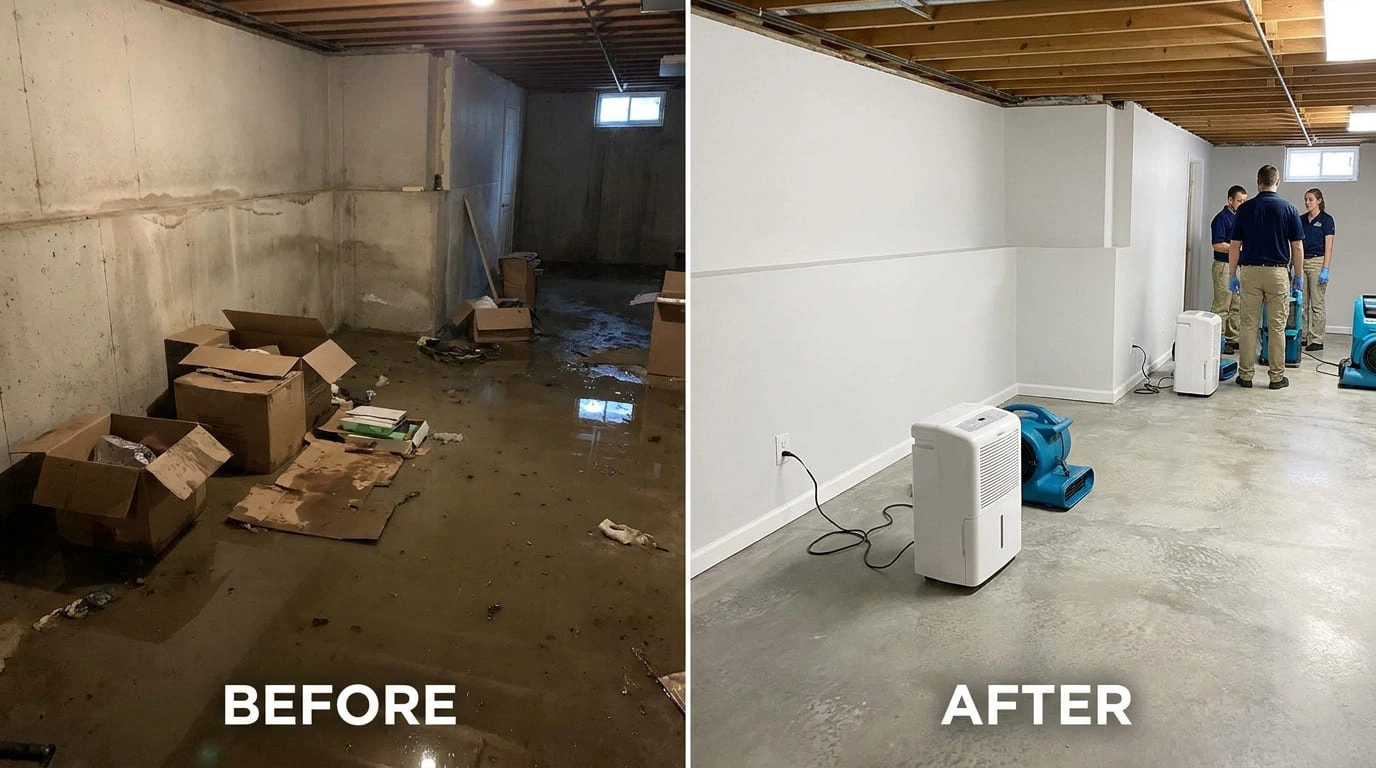
What changes once water is extracted, moisture is mapped, and the property has a documented drying plan?
Many property owners call when water is under carpet, a floor drain has backed up, drywall feels damp, or a storm has pushed water into a basement. Before mitigation, the path forward can feel unclear. After a professional assessment and drying plan, owners have a clearer understanding of what happened, what needs attention, and how recovery can proceed.
- Before: Standing water, wet carpet, damaged baseboards, uncertainty about hidden moisture. After: Water extraction, moisture readings, targeted drying, and documented next steps.
- Before: Concern about whether drywall, flooring, insulation, furniture, or contents can be saved. After: Material-specific recommendations based on saturation, water source, and drying response.
- Before: Confusion about insurance photos, plumbing responsibility, or commercial reopening needs. After: Organized documentation and a practical cleanup-to-repair plan.
How We Extract Water, Dry Structures & Assess Flood-Damaged Materials
Professional restoration requires more than visible-water removal.
Creek Auro Restoration uses a condition-based approach to flood mitigation. The goal is to remove water, identify retained moisture, promote controlled drying, and avoid closing or refinishing materials before they are actually dry.
The EPA advises against sealing flooded areas, including wall cavities, or applying paint or sealants until materials are completely dry inside.
- Water-extraction equipment for standing water in basements, rooms, crawl spaces, and commercial interiors
- Moisture meters and moisture mapping to assess walls, floors, cabinets, ceilings, and other affected materials
- Air movement and dehumidification equipment selected according to property conditions and drying needs
- Controlled removal recommendations when saturated or contaminated porous materials cannot be safely restored
- Cleaning methods and products selected for the water category, surface type, and manufacturer instructions
- Clear drying monitoring and documentation before repair or reconstruction decisions are made
Should You Dry, Repair, or Replace Flood-Damaged Materials?
The answer depends on the water source, contamination risk, saturation level, material type, and response time.
A wet material is not automatically unsalvageable, but surface dryness does not prove that carpet padding, drywall cavities, insulation, subflooring, or framing is dry. Creek Auro Restoration assesses affected materials and explains practical restoration options.
| Material or Condition | Drying / Repair May Be Considered | Removal / Replacement May Be Recommended |
|---|---|---|
| Clean-water affected carpet | When extraction is prompt, contamination is limited, and padding/subfloor conditions support drying | When padding is heavily saturated, odor persists, or contamination is involved |
| Drywall with limited clean-water exposure | When moisture is controlled and material integrity remains sound | When drywall is swollen, deteriorated, extensively saturated, or exposed to contaminated water |
| Insulation | In limited situations depending on material and exposure | Often when saturated, contaminated, compressed, or retaining moisture |
| Hardwood or engineered flooring | When response is rapid and materials can be stabilized and dried | When boards cup, buckle, delaminate, separate, or retain moisture underneath |
| Cabinets and built-ins | When materials are stable and moisture can be addressed | When swelling, delamination, contamination, or inaccessible moisture is present |
| Ceiling materials | When the source is controlled and damage is limited | When sagging, structurally compromised, mold-affected, or extensively wet |
When Replacement Is Often the Safer Option
- Porous materials were exposed to potentially contaminated sewer or outdoor floodwater
- Insulation, drywall, carpet padding, or cabinetry remains saturated or deteriorated
- Materials cannot be properly cleaned and dried
- Moisture is trapped behind finishes or beneath flooring
- The material no longer provides a safe, stable, or sanitary surface
Flood Damage Cleanup Costs in Aurora, CO
Transparent scopes and clear cost drivers help you understand what affects the restoration estimate.
The cost of flood cleanup depends on property conditions, not just the amount of visible water. Creek Auro Restoration provides scope-based recommendations so you can understand the work needed before authorizing the next phase.
| Cost Driver | Why It Affects the Estimate |
|---|---|
| Water source and category | Clean-water losses may require different handling than sewer, stormwater, or contaminated water |
| Amount and spread of water | A small contained leak differs from water that has spread under flooring or through multiple rooms |
| Material type | Carpet, padding, drywall, insulation, hardwood, cabinets, ceilings, and contents have different restoration needs |
| Hidden moisture | Moisture inside walls, below floors, or behind cabinets can affect drying time and scope |
| Accessibility | Crawl spaces, basements, occupied units, mechanical rooms, and commercial spaces may require specialized access planning |
| Emergency timing | After-hours or urgent response may affect mobilization and work sequencing |
| Reconstruction needs | Repairs after mitigation may involve drywall, flooring, trim, cabinetry, paint, or other rebuild work |
Cost Note
No responsible company can promise one flat price for every flooded basement or water-loss event. Creek Auro Restoration evaluates the loss, explains the recommended scope, and provides clear authorization options before work proceeds.
When Should Aurora Property Owners Call for Flood Damage Cleanup?
If water is spreading, the source is uncertain, or materials are saturated, professional assessment can help limit secondary damage.
Call for professional help when you are dealing with more than a small, contained, clean-water spill. A rapid response is especially important when water has reached building materials, contents, electrical areas, multiple rooms, or lower levels.
- Standing water in a basement, crawl space, living space, business, or common area
- Water coming up through a basement floor drain, toilet, shower, tub, or other low fixture
- Sewer water in the basement or any water that may be contaminated
- A burst pipe, water-heater failure, appliance hose leak, or fixture overflow that soaked floors or walls
- Basement flooding after heavy rain, snowmelt, foundation seepage, or sump-pump failure
- Wet carpet after a basement flood, soaked padding, swelling baseboards, bubbling paint, or damp drywall
- Ceiling staining, sagging, leaking, or water migration from an upper floor
- Musty smells after water damage, even after standing water has been removed
- Commercial water loss affecting operations, equipment, inventory, tenant spaces, records, or public areas
Flood Damage Cleanup for Commercial & Multi-Unit Properties
Protect operations, tenants, inventory, records, equipment, and occupied spaces across Aurora and the Denver Metro area.
Commercial water damage requires careful coordination. Property managers and facility teams may need to protect tenants, isolate affected areas, document contents, support reopening decisions, coordinate with building engineers, and schedule work around operations.
Creek Auro Restoration provides commercial flood damage cleanup for businesses and multi-unit properties throughout Aurora, Arapahoe County, and the Denver Metro region.
| Commercial Service | Description |
|---|---|
| Emergency water extraction | Remove standing water from offices, retail spaces, common areas, storage areas, and other affected interiors |
| Structural drying | Moisture assessment and drying support for walls, flooring, ceilings, cabinets, and building assemblies |
| Contents and inventory support | Document and protect affected furniture, files, equipment, and movable items where appropriate |
| Tenant and property-manager coordination | Support communication and work sequencing for occupied buildings |
| Repair and reconstruction planning | Develop next-step recommendations after mitigation and drying assessment |
Commercial Properties We Support
- Apartment communities, condominiums, and HOA-managed properties
- Shopping centers, offices, retail locations, and mixed-use developments
- Medical offices, clinics, dental practices, and professional facilities
- Restaurants, hotels, hospitality venues, and entertainment spaces
- Warehouses, industrial facilities, logistics operations, and storage spaces
- Schools, churches, recreation facilities, and community buildings
Benefits of Hiring Flood Damage Cleanup Professionals in Aurora
Extraction, drying, documentation, and material decisions work best as one coordinated process.
Professional flood cleanup helps property owners move beyond surface-level water removal. The goal is to identify the extent of water migration, establish proper drying conditions, and make informed decisions about materials and repairs.
- Faster water removal from affected areas when conditions allow
- Moisture mapping to identify water behind walls, beneath flooring, and inside structural assemblies
- Safer handling recommendations for sewage-related, stormwater-related, or uncertain contamination
- Better evaluation of carpet, padding, drywall, insulation, flooring, ceilings, cabinets, and contents
- Drying documentation that supports restoration planning and insurance communication
- Reduced risk of leaving wet materials concealed behind finishes or under flooring
- A clearer transition from emergency mitigation to repair and reconstruction
Why DIY Flood Cleanup Can Be Dangerous
Standing water, electrical risks, contaminated water, unstable materials, and improper chemical use can create additional hazards.
Do not assume a flooded area is safe simply because the water level looks low. Avoid entering standing water where electrical hazards may be present. Do not enter water to reach a breaker panel. If a flood involves a floor drain backup, toilet overflow, unknown water source, outdoor floodwater, or sewage odor, keep people and pets away until the situation is assessed.
The EPA warns that floodwater may contain bacteria, chemicals, or other hazards and advises against mixing cleaning products or adding bleach to other chemicals.
Critical Safety Warnings
- Water near electrical equipment, outlets, appliances, or damaged wiring can be dangerous
- Potentially contaminated water should not be treated as an ordinary household spill
- Wet ceilings, drywall, and flooring can become unstable or conceal hidden damage
- Fans may spread visible mold if used before appropriate cleaning steps are taken
- Fuel-powered generators must remain outdoors and at least 20 feet away from buildings to reduce carbon-monoxide risk
- Children, pregnant people, and individuals with certain respiratory or immune-health concerns should avoid flood-cleanup work, particularly in moldy or contaminated conditions
Answers to Common Flood Cleanup Questions in Aurora
Clear answers for the urgent questions Aurora property owners ask after water enters their home or business.
What should I do first if my basement floods in Aurora, CO?
If it is safe, stop the source of water if you can do so without entering standing water or approaching electrical hazards. Photograph or video the visible damage, move valuables above the water line, keep people and pets away from potentially contaminated water, and call for professional extraction and drying support. If the water may involve sewage, do not use the affected area until it has been assessed.
Why is water coming up through my basement floor drain?
A floor-drain backup can indicate a problem with the property's drainage system or main sewer lateral. Aurora Water explains that a sag, leak, rupture, or blockage in the main lateral may show up at low fixtures such as a floor drain, lower-level shower, tub, or toilet.
Is a basement floor-drain backup always sewage?
Not always, but it should be treated cautiously until the source is identified. Water from a floor drain can involve wastewater or other contaminants. Stop using sinks, toilets, showers, and laundry equipment that may add water to the system, keep people and pets out, and arrange a professional assessment.
Who is responsible for a sewer lateral in Aurora?
Aurora Water states that property owners are responsible for the sanitary sewer service line from the home or building to the city sewer main, including associated damage. Aurora Water maintains city main lines in public rights-of-way, streets, alleys, and easements.
Should I call Aurora Water for a sewer backup?
Aurora Water advises residents with a blockage or backup to call a plumber, report the issue to Aurora Water at 303-326-8645, and contact their insurance company for additional direction.
Can wet carpet be saved after a basement flood?
It depends on the water source, how long materials were wet, whether the padding and subfloor are affected, and whether contamination is present. Clean-water losses caught quickly may have more restoration options than sewage, stormwater, or visibly contaminated losses. A professional inspection helps determine whether carpet, padding, flooring, and adjacent materials can be safely dried or should be removed.
Do I need to remove wet drywall and insulation?
Not automatically. The decision depends on saturation, water category, contamination concerns, material condition, hidden moisture, and whether the assembly can be dried effectively. Swollen, deteriorated, contaminated, or heavily saturated materials may require removal and replacement.
How long does it take to dry a flooded basement?
Drying time varies with the amount of water, material type, humidity, airflow, hidden moisture, and the water source. The EPA states that drying can take several days to weeks, and materials should be dry inside before painting, sealing, or rebuilding.
Can I paint over water damage once it feels dry?
Not until the affected materials are confirmed dry. Surface dryness does not prove that wall cavities, insulation, subfloors, or framing are dry. The EPA advises against sealing or painting wet materials until they are dry on the inside.
Does homeowners insurance cover flood damage or sewer backup?
Coverage depends on the cause of loss, your policy language, deductibles, exclusions, endorsements, and insurer review. A sudden pipe failure may be handled differently from groundwater, surface flooding, sewer backup, or maintenance-related damage. Aurora advises property owners to discuss flood and sewer-backup coverage with their insurance professional.
Should I call insurance before flood cleanup begins?
Document the damage with photos and video when safe, notify your insurer promptly, and follow policy guidance. Do not unnecessarily delay reasonable mitigation that may limit further damage. Creek Auro Restoration can provide documentation of affected areas, moisture findings, work performed, and restoration recommendations; coverage decisions remain with the insurer.
How can I help prevent another basement flood?
The right prevention plan depends on the source. It may include maintaining gutters and downspout extensions, improving grading, testing sump-pump backup power, using water alarms, addressing private sewer-line issues, and keeping grease, oils, wipes, and debris out of drains. Aurora Water identifies tree roots, fats, oils, grease, wipes, and other paper products as common contributors to sewer blockages and backups.
Clear Communication from Emergency Response to Recovery Planning
Local restoration support, documented findings, and practical next steps for Aurora property owners.
Creek Auro Restoration approaches each flood-loss project with a commitment to clear scope communication, careful assessment, and responsible drying practices. We explain what we find, why it matters, what can be dried or restored, and what may require repair or reconstruction after mitigation.
If conditions change during drying or additional hidden moisture is discovered, we explain the updated findings and available corrective options before moving to the next stage of work.
Creek Auro Restoration
13901 E Quincy AveAurora, CO 80015
United States
Certifications That Support Flood Damage Cleanup
Restoration training matters when your property needs water extraction, drying, contamination-aware cleanup, and material assessment.
Flood cleanup requires practical knowledge of moisture movement, drying principles, water-damage categories, microbial risk, materials, and restoration documentation. Creek Auro Restoration's stated professional training and specializations support a structured approach to water-damage mitigation and recovery.
AMRT
Applied Microbial Remediation Technician
ASD
Applied Structural Drying Technician
MWR
Master Water Restorer
WRT
Water Damage Restoration Technician
WLS
Water Loss Specialist
Specialized Experience
Specialized experience in basement water extraction, sewage cleanup, content restoration, structural drying, and mold-related post-drying checks.
Emergency Flood Cleanup in Aurora, CO
Call when water is actively entering your property, standing water is spreading, or you need immediate drying support.
Water damage does not wait for regular business hours. A burst pipe can flood a basement overnight. A sump pump can fail during a thunderstorm. A toilet overflow can affect multiple rooms. A sewer backup may appear through a floor drain when you least expect it.
Creek Auro Restoration provides 24/7 emergency flood cleanup Aurora homeowners, landlords, HOAs, and commercial property managers can call for immediate water-damage response.
Emergency Response Process
- Immediate phone consultation to understand the source, affected area, visible hazards, and urgency
- Dispatch planning for water extraction, damage assessment, moisture inspection, and structural drying
- On-site evaluation of standing water, material saturation, contamination concerns, and equipment needs
- Documentation and next-step planning for property owners, managers, insurers, and source-repair professionals
Emergency Situations That Need Attention
- Burst pipe flooded basement
- Flooded basement from sump-pump failure
- Water coming up through basement floor drain
- Sewer backup cleanup Aurora CO property owners need after a lateral or drain problem
- Ceiling leaking after a storm or upper-floor plumbing failure
- Water heater leak, appliance leak, or toilet overflow causing water damage
- Stormwater or foundation seepage entering a basement after heavy rain
- Commercial water damage affecting inventory, tenant spaces, equipment, or operations
Insurance Claim Assistance for Flood Damage Incidents
Organized photos, moisture records, and scope documentation can help you communicate with your insurer.
Flood damage can involve homeowners insurance, commercial-property insurance, water-backup endorsements, separate flood coverage, or policy limitations depending on the source and policy terms. Creek Auro Restoration does not determine coverage or guarantee claim outcomes. We do help property owners gather accurate restoration information.
- Initial assessment notes and photos of affected rooms, materials, and visible water damage
- Moisture mapping and drying records when mitigation services are performed
- Documentation of water extraction, drying equipment, monitoring, and material recommendations
- Itemized restoration scopes and invoices for completed work
- Information that may help communicate the apparent source, affected materials, and corrective actions
- Coordination support for property managers, owners, and insurers as appropriate
Policy Note
Insurance coverage depends on the policy, cause of loss, exclusions, endorsements, deductibles, and insurer evaluation. Review your policy and contact your insurer or agent for property-specific guidance.
Flood Cleanup Documentation & Workmanship Support
Clear records and responsible restoration planning help support the next phase of property recovery.
Flood mitigation, drying, repair, and reconstruction may involve different phases, materials, and warranty terms. Creek Auro Restoration explains the scope of the work performed and provides documentation to support informed decisions about repairs and future maintenance.
| Coverage or Record Type | What It Supports |
|---|---|
| Workmanship scope | Clear description of extraction, drying, cleanup, or repair work performed |
| Materials and equipment records | Documentation of selected restoration equipment or installed materials where applicable |
| Drying documentation | Moisture readings, monitoring notes, and drying progress information |
| Repair planning records | Recommendations for reconstruction, material replacement, or additional trade work |
Important Note
Specific workmanship and material warranty terms may vary by project, repair type, product, manufacturer, and written agreement. Creek Auro Restoration outlines applicable terms before qualifying work begins.
10 Fully Equipped Service Vans Serving Aurora & the Denver Metro Area
The right response requires people, extraction equipment, drying tools, and the ability to mobilize when water damage occurs.
Creek Auro Restoration operates with 10 fully equipped service vans to support emergency water-damage response across Aurora and surrounding Denver Metro communities. Our fleet helps us mobilize restoration personnel and the equipment needed for assessment, extraction, drying, moisture mapping, and property recovery planning.
- Water-extraction and water-removal equipment for active flooding and standing water
- Moisture-measurement tools for walls, floors, ceilings, cabinets, and other materials
- Air-moving and dehumidification equipment for structural drying
- Equipment and supplies for contents protection, controlled cleanup, and affected-area assessment
- GPS-dispatched vehicles supporting Aurora and surrounding service areas
Flexible Project Planning for Flood Damage Recovery
Large water losses may require phased mitigation, repair, reconstruction, and coordination with insurers or property managers.
Not every flood-loss project ends with water extraction and drying. Some properties need drywall replacement, insulation removal, flooring work, cabinet repair, painting, rebuilding, or coordination with plumbers, roofers, electricians, or other specialists to correct the source.
Creek Auro Restoration helps property owners understand the project sequence so urgent mitigation is separated from longer-term restoration decisions.
- Clear explanation of emergency mitigation versus repair and reconstruction work
- Phased planning for multi-room, multi-unit, or commercial water-damage projects
- Coordination-friendly documentation for insurers, property managers, and facility teams
- Scope discussions before major repair or reconstruction decisions
- Information about available payment or project options when applicable to the confirmed service agreement
A Service Approach Built on Reliable Property Recovery
Professional preparation, responsive communication, and disciplined drying practices matter after a flood.
When water enters a property, owners need practical help—not exaggerated promises. Creek Auro Restoration focuses on the fundamentals that support successful flood recovery: emergency availability, trained professionals, moisture assessment, clear scope communication, structured drying, and practical repair planning.
Angi Super Service Award
BBB Torch Award for Ethics
City of Aurora Business Recognition Award
Expertise.com Best Water Damage Restoration
Yelp Top Rated / Yelper's Choice
Our Foundation
Serving Aurora and the Denver Metro region since 2010. Team of 40 skilled professionals supporting water-damage restoration needs. 10 equipped service vans available to support emergency response. Specialized restoration training in water damage, structural drying, and microbial remediation. Focus on documentation, communication, and recovery planning for residential and commercial properties.
Ask About Available Flood Cleanup Support Options
We help Aurora property owners understand available service, assessment, and project-planning options.
A flood can create unexpected decisions at an already stressful time. Creek Auro Restoration works to provide clear explanations of emergency cleanup, drying, documentation, and reconstruction options so customers can make informed decisions for their property.
Qualifying Assessments
Ask about qualifying assessment, inspection, or project-planning options
Bundled Services
Discuss bundled cleanup, drying, sanitization coordination, and repair planning
Deductible Assistance
Ask about deductible-assistance programs where applicable and subject to written terms
Clear Authorization
Request a clear explanation of scope, next steps, and authorization before work begins
Flood Damage Cleanup Hours in Aurora, CO
24/7 availability for water removal, flood cleanup, drying, and emergency damage assessment.
Flooding does not follow office hours. Creek Auro Restoration is available 24 hours a day, seven days a week for emergency water-damage situations across Aurora and the Denver Metro area.
| Day | Hours |
|---|---|
| Monday | 00:00–23:59 |
| Tuesday | 00:00–23:59 |
| Wednesday | 00:00–23:59 |
| Thursday | 00:00–23:59 |
| Friday | 00:00–23:59 |
| Saturday | 00:00–23:59 |
| Sunday | 00:00–23:59 |
Contact Information
Phone: +1 (719) 715-6006
Email: creekaurorestoration@gmail.com
Website: waterdamagerestorationaurora.com
What Should You Look for in a Flood Damage Cleanup Company in Aurora?
The right restoration partner should provide clear communication, appropriate drying methods, and documented findings—not vague promises.
Flood cleanup is an urgent service, but property owners should still know what they are authorizing. Ask any provider how they will assess water category, inspect hidden moisture, protect contents, document drying, explain material decisions, and coordinate with source-repair professionals or insurers.
| Feature to Evaluate | Creek Auro Restoration Approach | What to Ask Any Provider |
|---|---|---|
| Emergency availability | 24/7 support for urgent water-damage situations | Are you available when the loss occurs, including after hours? |
| Water removal and drying | Extraction, moisture mapping, structural drying, and monitoring | How will you confirm moisture is addressed beyond visible water? |
| Scope communication | Clear findings, recommended work, and next-step guidance | Will I receive a written explanation before major work proceeds? |
| Property types | Residential, multi-unit, HOA, and commercial support | Do you have experience with my building type and occupancy needs? |
| Documentation | Photos, moisture records, work documentation, and repair planning | What records can you provide for property management or insurance communication? |
| Local response | Aurora and Denver Metro service coverage | Do you understand local storm, sewer-backup, and basement-flood concerns? |
Contact Creek Auro Restoration for Flood Damage Cleanup in Aurora, CO
Talk with a water-damage restoration professional about active flooding, basement water, storm damage, sewer backups, or drying concerns.
If you are dealing with standing water, a flooded basement, water coming up through a floor drain, wet carpet, damaged drywall, a burst pipe, sump-pump failure, ceiling leak, or a commercial water loss, Creek Auro Restoration is ready to help you understand the next safe step.
Contact Creek Auro Restoration
(719) 715-6006
creekaurorestoration@gmail.com
13901 E Quincy Ave
Aurora, CO 80015
24/7 Emergency Service Available
Protect your home, business, tenants, belongings, and building materials with professional flood damage cleanup Aurora CO property owners can contact 24/7 from Creek Auro Restoration.