Ice Dam Water Damage Removal in Aurora, CO
Ice dam water damage restoration for Aurora properties affected by snowmelt, roof-edge ice, and ceiling leaks.
When snowmelt backs up beneath shingles and starts dripping through a ceiling, ice dam water damage restoration Aurora CO becomes an urgent interior-water problem—not simply a roof-ice problem. Creek Auro Restoration provides 24/7 emergency assessment, moisture inspection, water extraction when needed, structural drying, documentation, and repair planning for homes and commercial properties in Aurora and nearby Denver metro communities.
An ice dam can form when snow melts on the warmer portion of a roof, refreezes at colder eaves or gutters, and creates an ice ridge that prevents drainage. The trapped water may back up beneath shingles and reach attic insulation, drywall, wall cavities, flooring, and contents before the first ceiling drip becomes visible. Ice dams can cause damage to ceilings, walls, insulation, and other building areas when backed-up water enters the home.
- Emergency assessment for ceiling leaks, attic moisture, wet insulation, and snowmelt intrusion
- Moisture mapping and structural drying for affected interior materials
- Water extraction, containment, and cleanup where conditions require it
- Coordination guidance when a qualified roofer or ice-dam specialist is needed to address the exterior source
Call +1 (719) 715-6006 for 24/7 emergency water damage response.
Request Ice Dam Water Damage Help
Fill out the form and we'll contact you immediately!
Ice Dam Water Damage Restoration Backed by Local Emergency Capacity
Aurora, Colorado water damage professionals for active roof leaks, wet ceilings, and concealed snowmelt moisture.
Creek Auro Restoration has served Aurora and surrounding Denver metro communities since 2010. Our team of 40 skilled professionals and 10 equipped service vans supports emergency water-damage response for residential and commercial properties, including ceiling water damage after snow, roof leak drying, wet attic insulation cleanup, and structural drying after snowmelt intrusion.
An ice-dam event can be stressful because the visible drip is not always the full problem. Water can travel along framing, behind walls, or above ceiling finishes before appearing in a different room. Our role is to identify affected materials, establish a drying plan, monitor moisture conditions, and help property owners understand the next steps for cleanup and repair.
16 Years Experience
Serving Aurora, Arapahoe County, and the Denver Metro area since 2010.
40 Pros & 10 Service Vans
A full team equipped to handle water emergencies of any size.
24/7 Emergency Availability
Immediate response for active roof leaks and urgent water-damage situations.
Clear Communication
Guidance about interior mitigation, drying, documentation, and reconstruction options.
Ice Dam Water Damage Removal Near Aurora Neighborhoods and Business Areas
Serving properties throughout Aurora, CO, including homes and facilities near Southlands, Aurora Reservoir, and Cherry Creek State Park.
Ice dams and snowmelt roof leaks can affect a wide range of Aurora properties—from single-family homes in Saddle Rock or Tallyn’s Reach to multifamily communities, offices, retail spaces, and managed properties near the I-225 corridor, E-470, Southlands, and Aurora Reservoir.
Aurora’s Front Range weather can bring snow, bright Colorado sun, and sharp overnight refreezing. That pattern can create roof-edge ice at eaves and gutter lines, especially where heat loss, attic conditions, roof geometry, flashing vulnerabilities, or drainage conditions contribute to uneven roof temperatures. When water enters the building, fast interior assessment matters more than guessing where the moisture stopped.
Aurora Neighborhoods Served
Nearby Cities & Service Areas
Local Corridors & Destination Areas
Specialized Ice Dam Water Damage Restoration for Aurora Properties
Emergency mitigation for wet ceilings, attic insulation, walls, floors, and concealed moisture—not roof-side ice removal.
A bucket under a ceiling drip may catch water, but it does not reveal what has entered attic insulation, ceiling cavities, wall assemblies, flooring, or structural materials. Ice-dam water damage often moves beyond the visible stain, particularly when snowmelt repeatedly backs up beneath shingles during daytime melting and overnight refreezing.
Creek Auro Restoration focuses on the interior consequences of a winter roof leak. Our work may include moisture inspection, water extraction where applicable, drying equipment setup, monitoring, material evaluation, documentation, and reconstruction planning. We do not present interior water mitigation as a substitute for professional roof repair or ice-dam removal.
Our Specialized Focus Includes:
- Moisture assessment for visible and potentially concealed affected areas
- Drying plans based on building materials, access, and measured conditions
- Evaluation of wet insulation, drywall, flooring, contents, and other materials
- Documentation that can help you communicate with your insurer
- Clear distinction between roof-source repair and interior restoration work
What Happens When an Ice Dam Causes Water Damage in Aurora?
Roof-edge ice can force snowmelt beneath shingles and into areas you cannot fully see.
An ice dam is a ridge of ice that forms near the edge of a roof and blocks melting snow from draining normally. When the upper roof surface is warm enough to melt snow while lower roof areas near the eaves remain below freezing, meltwater can collect behind the ice ridge. That water may move under shingles and enter the structure.
In Aurora, this may happen after a sunny winter day when the roof appears to be melting, followed by a colder night that refreezes runoff along the gutter line. Homeowners may notice that the roof leaks only in the afternoon, after a snowstorm, or when the sun hits a particular roof slope.
Potential Water-Damage Concerns:
- Ceiling drips, water stains, bubbling paint, or sagging drywall
- Wet attic insulation that may lose performance or hold moisture
- Moisture moving into wall cavities, framing, or ceiling assemblies
- Damp carpet, hardwood, trim, cabinetry, or personal belongings
- Water near recessed lights, outlets, appliances, or other electrical components
- Musty odors or prolonged damp conditions that may increase the risk of secondary moisture-related problems
- Repeated leaks if the roof-side source is not addressed
If a ceiling is sagging, water is near electrical fixtures, or a leak is actively spreading, stay out of the affected area and seek immediate professional guidance. If there is a fire, electrical, structural-collapse, gas, or medical emergency, call 911 first.
Prevent Escalating Damage with Prompt Ice Dam Water Mitigation
What your Aurora property may need after snowmelt enters through the roof.
Ice dams are not an annual certified system like a regulated device inspection. However, when an ice dam causes a roof leak, timely water-damage mitigation can help limit the spread of moisture and provide a documented baseline for cleanup and repair decisions.
Creek Auro Restoration can assess the interior damage, identify wet materials, begin appropriate drying measures, and document observed conditions. A qualified roofing or ice-dam specialist may be needed separately to address roof ice, drainage, flashing, shingles, ventilation, insulation, or other conditions contributing to the source.
| Task | Description | Typical Timing | Impact |
|---|---|---|---|
| Safety review | Identify visible hazards such as sagging ceilings or water near electrical areas | At first contact or arrival | Helps protect occupants and property |
| Moisture inspection | Check visible and suspected affected materials | Initial visit and monitoring | Helps determine the drying scope |
| Water extraction | Remove standing or collectable water when present | As soon as conditions allow | Reduces continued absorption |
| Structural drying | Use appropriate drying methods for wet building materials | After source control or temporary mitigation | Helps address retained moisture |
| Documentation | Record conditions, affected materials, readings, and work performed | During the process | Supports owner records and claims communication |
| Repair planning | Identify materials that may need repair or replacement after drying assessment | After evaluation | Supports informed next-step decisions |
Practical Timing Guidance:
- Call promptly if snowmelt is dripping through a ceiling or wetting insulation, walls, or floors.
- Do not wait for visible staining to grow before arranging an assessment.
- Photograph visible leaks and water damage if it is safe to do so.
- Keep access clear to the affected room, attic hatch, mechanical space, or ceiling area where safe.
- Coordinate roof-source work with a qualified roofer or ice-dam specialist.
Cost Note
Ice dam water damage restoration costs vary based on the affected materials, moisture extent, source control, accessibility, drying duration, extraction needs, demolition needs, and reconstruction scope. Creek Auro Restoration can explain the work required after an on-site evaluation.
Who Needs Ice Dam Water Damage Restoration in Aurora, CO?
From single-family homes to commercial facilities and multi-unit communities across the Denver metro area.
A roof leak after snow can affect any property with snow accumulation, roof-edge freezing, attic heat loss, vulnerable flashing, or drainage conditions. Creek Auro Restoration helps property owners and managers respond when snowmelt affects interior building materials.
Homeowners dealing with ceiling drips, water stains, wet insulation, or damaged belongings
Condo owners and homeowner associations managing shared roofs and common-area damage
Apartment communities and property managers handling unit, hallway, attic, or lobby water intrusion
Retail stores and shopping centers seeking to limit downtime and protect inventory
Offices and professional buildings affected by wet ceilings, flooring, or electrical-area concerns
Schools, churches, community facilities, and nonprofit organizations
Medical offices, clinics, dental practices, and healthcare-adjacent facilities
Hotels, hospitality properties, restaurants, and event venues
Warehouses, industrial facilities, and commercial properties with roof leak exposure
How Aurora Freeze–Thaw Cycles Can Lead to Ice Dam Water Damage
Colorado sun, overnight refreezing, cold eaves, and heat loss can create the conditions for snowmelt backup.
Aurora’s winter weather is not always defined by continuous deep snow. Instead, a common local pattern is snow followed by bright sun, daytime roof melting, and overnight temperature drops. Snow can melt from warmer upper roof sections, then refreeze at colder roof edges, eaves, gutters, valleys, and overhangs. This is why homeowners may say, “It melted all day, then froze again overnight.”
Ice dams form through the interaction of heat loss from the home, snow cover, and outdoor temperatures. The upper roof surface can be above freezing while lower roof areas remain below freezing, allowing meltwater to refreeze at the roof edge.
Seasonal & Site-Specific Contributors May Include:
- Winter sun warming part of the roof while shaded eaves remain cold
- Overnight refreeze along gutters and roof overhangs
- Attic air leakage or heat loss that warms snow on the upper roof
- Uneven insulation or ventilation conditions
- Ice-packed gutters and blocked drainage paths
- Roof valleys, penetrations, flashing details, or roof geometry that concentrate runoff
- Existing weather exposure from wind, hail, UV, or prior wear that may create vulnerable areas
A recurring ice dam often needs a roof-and-attic evaluation for long-term prevention. Emergency restoration addresses the water that entered the building; it does not replace the need to correct the underlying roof-side cause.
Common Areas Affected by Ice Dam Water Damage in Aurora Homes and Buildings
A ceiling stain may be the first sign, but moisture can travel away from the roof entry point.
Water does not always appear directly beneath the exterior leak. It may follow roof decking, framing, electrical penetrations, insulation, or ceiling surfaces before becoming visible in another part of the room. Only an on-site inspection can determine the full extent of moisture.
| Affected Area | What May Occur | Restoration Focus |
|---|---|---|
| Attic insulation | Saturation, compression, hidden moisture retention | Inspection, drying assessment, and replacement recommendations if needed |
| Roof decking and framing | Moisture exposure near the roof entry point | Assessment and drying coordination after source control |
| Ceiling drywall | Stains, softened material, bubbling paint, sagging | Safety evaluation, moisture inspection, drying, removal, or repair planning |
| Wall cavities | Moisture can move behind finishes | Moisture mapping and targeted drying strategy |
| Hardwood, carpet, or subfloor | Swelling, staining, trapped moisture, material movement | Extraction, drying, and material condition assessment |
| Cabinets, trim, and contents | Absorption, staining, warping, or odor concerns | Evaluation, drying, and content-restoration planning where appropriate |
| Electrical areas | Potential shock or fire hazard when water reaches fixtures or wiring | Keep clear and coordinate with a qualified electrician when needed |
Our 6-Step Ice Dam Water Damage Restoration Process
What to expect when Creek Auro Restoration responds to a roof leak after snow in Aurora.
Emergency Call & Initial Situation Review
We discuss the visible symptoms, including ceiling drips, water stains, wet insulation, roof leak timing, affected rooms, and any immediate safety concerns.
Safety & Source-Control Coordination
We identify immediate precautions and explain when a qualified roofer or ice-dam specialist may be needed to address the exterior ice, shingles, flashing, gutters, or roof source.
On-Site Inspection & Moisture Mapping
Our team evaluates visible damage and checks accessible materials for moisture. Water may have moved beyond the first stain, so the inspection focuses on the actual affected area rather than appearance alone.
Water Extraction & Targeted Mitigation
If standing water, wet flooring, or saturated materials are present, we perform appropriate extraction and stabilization measures based on site conditions.
Structural Drying & Monitoring
We set up drying measures suited to the affected materials and monitor progress. Drying needs vary based on water extent, access, temperature, humidity, construction type, and source control.
Documentation & Repair Planning
We document observed conditions, affected materials, moisture readings, and work performed. After drying assessment, we explain repair, reconstruction, or material-replacement options when applicable.
What's Included in Our Ice Dam Water Damage Removal Service
Clear deliverables for Aurora homeowners, property managers, and commercial facility teams.
Every ice-dam water-damage situation is different. The scope depends on the leak source, affected materials, access conditions, water migration, and whether exterior source control has been completed or temporarily stabilized. Creek Auro Restoration explains the proposed work before moving forward.
Your Service May Include:
- Initial emergency discussion and visible-damage review
- On-site visual inspection of affected ceilings, walls, insulation, flooring, and contents
- Moisture inspection and mapping of accessible materials
- Water extraction from affected areas when applicable
- Setup of structural drying and dehumidification equipment when appropriate
- Monitoring of drying progress and material conditions
- Documentation of moisture readings, visible damage, and mitigation activity
- Identification of materials that may require removal, repair, or replacement
- Recommendations for reconstruction or coordination with a qualified roofing professional when needed
Roof leak drying Aurora CO support for interior materials affected by snowmelt intrusion.
Key Advantages of Calling Creek Auro Restoration
Emergency capacity, clear communication, and a restoration-first approach to winter roof leaks.
Creek Auro Restoration is prepared to help Aurora property owners address the interior water damage that follows an ice-dam roof leak. We focus on prompt assessment, measured drying decisions, clear documentation, and practical next-step guidance.
24/7 Availability
Emergency response for active water-damage situations.
Extensive Fleet
40 skilled professionals and 10 equipped service vans.
All Property Types
Residential, commercial, HOA, and property-management support.
Complete Mitigation
Moisture inspection, emergency water mitigation, extraction, and structural drying.
Documentation
Support for owner records and insurance communications.
Clear Scope
Clear distinction between roof-source repair and interior restoration.
Ice Dam Water Damage Recovery for Aurora Properties
What changes after affected materials are assessed, documented, and addressed.
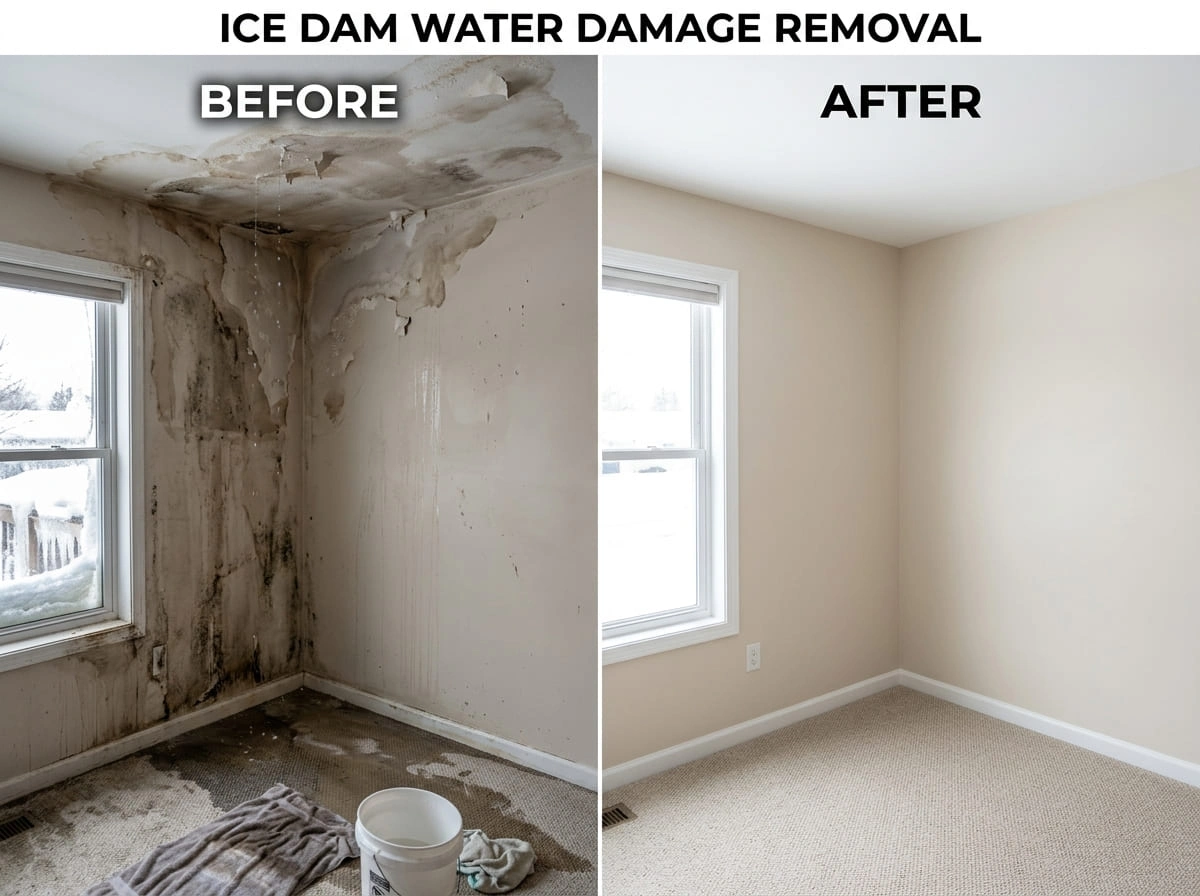
When an ice dam causes indoor water intrusion, property owners often begin with uncertainty: Is the ceiling safe? Did water reach the insulation? Is the stain getting larger? Do we need a roofer, a restoration company, or both?
A professional response replaces guesswork with a documented plan based on the conditions present at the property.
Ceiling drips, water stains, bubbling paint, wet insulation, or uncertain hidden moisture.
A documented inspection, moisture assessment, and appropriate drying or material-removal plan.
The visible stain is treated as the entire problem.
Accessible surrounding materials are evaluated because water may have travelled from the roof entry point.
Uncertainty about what to provide to an insurer.
Photos, moisture readings, affected-material records, and work documentation are available for property records and claim communication.
Roof-source and interior-damage responsibilities are unclear.
The owner understands when a roofing specialist, electrician, restoration provider, or reconstruction team may be needed.
How We Address Ice Dam Water Damage Inside Aurora Properties
Targeted inspection, moisture evaluation, extraction, drying, and repair planning based on affected materials.
Ice-dam water damage cannot be evaluated accurately by looking only at a ceiling stain. Building materials absorb and release moisture differently, and water can migrate through insulation, drywall, framing, flooring, trim, and cavities. Creek Auro Restoration uses a measured restoration approach designed around accessible conditions and material response.
Our Process May Involve:
- Moisture inspection tools to assess accessible building materials
- Water extraction equipment for standing water or saturated flooring where applicable
- Air movement and dehumidification equipment for structural drying
- Targeted drying strategies based on the material, access, temperature, and moisture conditions
- Containment or controlled material removal when damaged materials cannot be safely or effectively dried
- Documentation of drying progress and observed material conditions
- Coordination recommendations for roofing, electrical, or other qualified trade professionals when needed
The goal is not to assume that every material must be removed. The goal is to evaluate the conditions, dry salvageable materials where appropriate, and identify materials that need repair or replacement.
Should You Repair or Replace Materials Damaged by an Ice Dam?
The right decision depends on moisture extent, material condition, source control, and drying results.
A ceiling stain or wet area does not automatically mean full reconstruction is necessary. Some materials may be dried and preserved when addressed promptly, while others may require removal or replacement because of saturation, structural damage, deterioration, or inability to dry effectively.
| Scenario | Drying or Repair May Be Appropriate | Replacement May Be Appropriate |
|---|---|---|
| Minor surface staining with dry underlying materials | Yes, after inspection confirms no retained moisture | Not usually needed |
| Wet but structurally sound drywall or trim | Sometimes, depending on moisture level and drying response | May be needed if material softens, deteriorates, or cannot dry |
| Saturated attic insulation | Assessment required; some material may be evaluated for drying | Often considered for replacement if saturated, compressed, contaminated, or unable to dry |
| Sagging ceiling drywall | No; treat as a safety concern | Often requires controlled removal and repair |
| Swollen hardwood, damaged carpet, or wet subfloor | Extraction and drying may help depending on duration and material condition | May be needed when warping, delamination, or irreversible damage occurs |
| Repeated water intrusion from an unresolved source | Temporary mitigation may be possible | Permanent repair may be needed after source correction |
Replacement May Be More Likely When:
- Drywall is sagging, crumbling, or structurally compromised
- Insulation is heavily saturated, compressed, or unable to dry properly
- Flooring has warped, delaminated, or developed irreversible damage
- Water exposure is recurring because the roof-side source has not been corrected
- An on-site evaluation finds that materials cannot be restored to an acceptable condition
What Does Ice Dam Water Damage Removal Cost in Aurora, CO?
Clear explanations of the factors that affect emergency roof-leak restoration pricing.
The cost of ice-dam water damage restoration depends on the actual interior impact, not simply the size of the ice ridge outside. A small ceiling stain may have limited moisture, while a recurring snowmelt leak may affect insulation, drywall, wall cavities, flooring, and contents.
Primary Cost Drivers Include:
- Size and location of the affected area
- Whether the leak is active and whether temporary source control is in place
- Amount of water requiring extraction
- Materials affected, including drywall, insulation, flooring, trim, cabinetry, and contents
- Accessibility of attics, roof-adjacent cavities, ceilings, and wall areas
- Drying equipment requirements and monitoring duration
- Need for controlled demolition, repair, or reconstruction
- After-hours emergency conditions
- Commercial-property access, safety, and operational requirements
| Service Need | Typical Pricing Consideration |
|---|---|
| Emergency inspection | Scope, urgency, access, and observed conditions |
| Moisture mapping | Number of affected rooms, materials, and concealed areas requiring evaluation |
| Water extraction | Amount of standing water, flooring type, and access |
| Structural drying | Equipment needs, moisture extent, material type, and drying duration |
| Material removal | Type and quantity of unsalvageable drywall, insulation, flooring, or contents |
| Reconstruction | Repair scope, finishes, materials, and property requirements |
Creek Auro Restoration can provide a clear scope and pricing explanation after evaluating the property. Insurance coverage, deductibles, exclusions, and claim approval depend on the terms of your individual policy.
When Should Aurora Property Owners Call for Ice Dam Water Damage Restoration?
Call promptly when snowmelt is entering the building, materials are wet, or safety conditions are changing.
You do not need to wait for major flooding to request professional help. Interior water from an ice dam can move behind finishes and through insulation before the damage looks severe from inside the room.
Call Creek Auro Restoration if You Notice:
- Water dripping from a ceiling after snow or daytime roof melting
- A growing water stain, bubbling paint, or peeling ceiling texture
- Sagging drywall or a ceiling that feels soft or bowed
- Water near recessed lights, electrical fixtures, outlets, or appliances
- Wet attic insulation, damp framing, or a musty attic odor
- Ice at eaves or gutters combined with indoor water damage
- Wet carpet, hardwood, trim, cabinetry, or belongings below a roof leak
- A roof that leaks during snowmelt but not necessarily during rain
- Repeated leaks in the same room during freeze–thaw conditions
- A need for emergency water mitigation roof leak Aurora property owners can document for records or insurance communication
If an area appears unsafe, do not enter it to investigate. Keep occupants away from sagging ceilings and water near electrical components.
Ice Dam Water Damage Restoration for Aurora Commercial and Multi-Unit Properties
Protecting facilities, tenants, inventory, operations, and building materials after winter roof leaks.
Commercial properties can face complex ice-dam water damage because a single roof leak may affect tenant spaces, common areas, ceiling systems, electrical equipment, inventory, or operations. Creek Auro Restoration works with property owners, facility managers, HOAs, and operations teams to assess affected areas, create a practical mitigation plan, and document restoration activity.
| Commercial Service | Description |
|---|---|
| Emergency water assessment | Review active leaks, visible damage, safety issues, and affected spaces |
| Moisture inspection | Evaluate accessible ceiling, wall, floor, insulation, and contents exposure |
| Water extraction and cleanup | Address standing water or wet materials where applicable |
| Structural drying | Deploy appropriate drying measures and monitor conditions |
| Documentation support | Provide records, photos, readings, and work documentation for property files |
| Repair and reconstruction planning | Outline next steps after drying assessment and source control |
Commercial Properties We Assist Include:
Office buildings and business campuses
Retail spaces, shopping centers, and mixed-use developments
Apartments, condominium communities, and HOAs
Restaurants, hotels, and hospitality properties
Schools, churches, and community facilities
Medical offices, clinics, and professional practices
Warehouses, industrial facilities, and commercial properties with roof leak exposure
Why Facility Teams Call Creek Auro Restoration:
- 24/7 emergency availability for urgent water-damage conditions
- Coordination with managers, occupants, and maintenance teams
- Clear distinction between roof-source work and interior restoration
- Documentation to support operational, insurance, and repair decisions
- Capacity to support multi-room and multi-unit water-damage situations
Benefits of Hiring Ice Dam Water Damage Professionals in Aurora
Measured drying, clear documentation, and informed repair decisions after a winter roof leak.
When snowmelt enters a building, visible water is only part of the concern. Professional water-damage restoration focuses on identifying accessible moisture, reducing retained water in affected materials, documenting conditions, and helping property owners make sound repair decisions.
Identify moisture beyond the obvious ceiling stain or floor puddle
Reduce the chance that wet materials remain hidden for an extended period
Protect salvageable materials when conditions allow
Address wet insulation, drywall, flooring, trim, contents, and cavities with a defined drying plan
Create documentation for property records and insurer communications
Separate immediate interior mitigation from roof repair or ice-dam removal work
Plan repairs after materials are assessed and drying results are known
Reduce disruption for households, tenants, employees, customers, or facility operations
University guidance on ice dams emphasizes prompt action to address the water source and dry wet or damp parts of the home to help prevent mold and mildew growth.
Why DIY Ice Dam and Roof Leak Work Can Be Dangerous
Protect yourself before attempting to inspect, chip, melt, or clean up roof-edge ice.
An active ice-dam roof leak can involve slippery surfaces, falling ice, structural stress from wet materials, and electrical hazards. Do not assume a leak is safe simply because the drip appears small.
Avoid These Actions:
- Do not climb onto an icy roof without appropriate professional training and safety equipment.
- Do not strike roof ice with hammers, axes, shovels, or sharp tools that can damage shingles, flashing, gutters, or the roof deck.
- Do not use open flames, unsafe heating equipment, or improvised electrical devices near roof ice or wet building materials.
- Do not stand beneath sagging drywall or attempt to puncture a bowed ceiling unless advised by a qualified professional.
- Do not touch water around electrical fixtures, ceiling lights, outlets, electrical panels, or appliances.
- Do not assume a visible stain shows the full area affected by water.
- Do not delay source-control coordination when snowmelt is actively entering the property.
If a leak is near electrical equipment, a ceiling is sagging, or occupants may be at risk, move away from the area and seek emergency assistance. For immediate life-safety hazards involving fire, electrical danger, structural collapse, gas, or medical emergencies, call 911.
Answers to Common Ice Dam Water Damage Questions in Aurora, CO
Quick, practical answers for homeowners, property managers, and commercial facility teams.
What is an ice dam, and why does it cause water damage?
An ice dam is a ridge of ice that forms near a roof edge and blocks melting snow from draining. Water can collect behind the ice ridge, back up beneath shingles, and enter the attic or interior of the building. The resulting moisture may affect insulation, ceilings, walls, floors, and contents.
Why is water dripping from my ceiling after snow in Aurora?
A roof may leak after snow when meltwater refreezes at colder eaves or gutters and backs up under shingles. In Aurora, bright daytime sun followed by overnight refreezing can create this pattern. A ceiling drip may appear some distance from the original roof entry point because water can travel along framing or above ceiling finishes.
Is a ceiling leak from an ice dam an emergency?
It can be. Prompt action is especially important if water is actively dripping, drywall is sagging, insulation is wet, flooring is affected, or water is near a light fixture, outlet, appliance, or electrical panel. Keep people out of unsafe areas and arrange professional assessment.
Should I call a roofer or a water damage restoration company first?
You may need both. A qualified roofer or ice-dam specialist addresses the roof-side source, such as roof ice, shingles, flashing, drainage, or other exterior conditions. Creek Auro Restoration addresses water that has entered the property by assessing moisture, extracting water where applicable, drying affected materials, and documenting conditions.
Can an ice dam cause hidden water damage?
Yes. Water can enter attic insulation, wall cavities, ceiling assemblies, framing, and flooring before it becomes visible indoors. A stain or drip may not show the full moisture path. An on-site moisture inspection helps identify accessible affected areas.
Can wet attic insulation be dried after an ice dam leak?
It depends on the insulation type, amount and duration of moisture exposure, contamination concerns, access, and drying response. Some material may be evaluated for drying, while heavily saturated, compressed, deteriorated, or otherwise compromised insulation may need replacement. Only an inspection can determine the appropriate approach.
Can ice dams cause mold?
Prolonged moisture can create conditions that support mold or mildew growth. Promptly addressing the water source and drying wet or damp building materials helps reduce that risk. Creek Auro Restoration does not assume mold is present solely because of an ice dam; conditions must be evaluated.
Does homeowners insurance cover water damage from an ice dam?
Coverage depends on your individual policy, exclusions, deductible, maintenance history, cause of loss, and the insurer’s claim determination. Creek Auro Restoration can document observed damage, moisture readings, work performed, and affected materials, but cannot guarantee coverage or claim approval.
Can I remove an ice dam myself with salt, calcium chloride, a heat gun, or a hammer?
Roof work on ice is hazardous, and aggressive methods can damage shingles, gutters, flashing, landscaping, or building materials. Do not climb onto an icy roof or use sharp tools, open flames, or unsafe heating methods. Contact a qualified ice-dam or roofing professional for roof-side guidance.
Will the interior leak stop as soon as the ice dam melts or is removed?
It may stop, but interior materials can remain wet after the visible drip ends. Water may have entered insulation, drywall, wall cavities, floors, or contents. A moisture assessment helps determine whether drying or repair is still needed.
How long does ice dam water damage take to dry?
Drying time depends on the source being controlled, the materials affected, water amount, access, temperature, humidity, drying setup, and the extent of hidden moisture. Creek Auro Restoration monitors drying progress rather than promising a fixed timeline before inspection.
Why does my roof leak when snow melts but not when it rains?
This pattern can indicate snowmelt backup caused by roof-edge ice. Rain generally drains differently than meltwater trapped behind an ice ridge. A roofing professional can evaluate the exterior cause, while a restoration provider can assess and dry any interior water damage.
How can I reduce the chance of another ice dam next winter?
Long-term prevention often involves evaluating attic air leakage, insulation, ventilation, roof drainage, flashing, roof geometry, and safe snow-management practices. Ice dams are commonly associated with heat loss, snow cover, and temperature differences across the roof surface.
Emergency Help From First Assessment Through Drying and Repair Planning
Clear communication, documented work, and practical next steps for Aurora property owners.
Creek Auro Restoration is committed to providing a professional, restoration-focused response when snowmelt or ice dams cause interior water damage. We explain what we observe, outline the recommended mitigation work, document conditions and drying activity, and help you understand when roof-source repair, electrical evaluation, material replacement, or reconstruction may also be needed.
We do not promise a one-size-fits-all outcome. Every property, water path, material type, and roof-leak event is different. Instead, we provide a defined scope based on on-site conditions and communicate clearly throughout the response.
13901 E Quincy Ave
Aurora, CO 80015
United States
Professional Credentials Supporting Ice Dam Water Damage Restoration
Specialized restoration knowledge matters when water reaches insulation, drywall, flooring, and structural materials.
Ice dam water damage requires more than surface cleanup. Appropriate inspection, moisture management, drying, material evaluation, and documentation help property owners make informed decisions after a snowmelt roof leak.
Creek Auro Restoration’s supplied professional specializations and certifications include:
AMRT
Applied Microbial Remediation Technician
ASD
Applied Structural Drying Technician
MWR
Master Water Restorer
WRT
Water Damage Restoration Technician
WLS
Water Loss Specialist
Restoration Specialties
Credentials and service capabilities should be confirmed as current for the team member and service being performed. A roofing contractor or qualified ice-dam specialist may be separately required for exterior roof work.
Emergency Ice Dam Water Damage Help in Aurora, CO
Rapid water-damage assessment when snowmelt enters ceilings, attics, walls, floors, or business spaces.
When an ice dam leads to an active roof leak, the exterior source and the interior damage may need attention at the same time. Creek Auro Restoration is available 24/7 to discuss emergency water-damage conditions and arrange appropriate response for Aurora and nearby communities.
Our Emergency Response Process Includes:
- Immediate phone discussion to identify visible damage and urgent safety concerns
- Guidance on keeping occupants away from sagging ceilings and electrical hazards
- On-site inspection of accessible affected areas
- Moisture mapping, extraction, containment, and structural drying when appropriate
- Documentation of observed conditions and restoration work
- Coordination guidance when a roofer, ice-dam professional, electrician, or other qualified provider is needed
Emergency Scenarios Include:
- Water dripping through a ceiling after snow or daytime melting
- Wet attic insulation, wall materials, flooring, or contents
- Growing stains, bubbling paint, or ceiling damage
- Water near lights, outlets, appliances, or electrical equipment
- A recurring roof leak during Aurora freeze–thaw conditions
- Commercial or multi-unit building water intrusion affecting occupants or operations
Insurance Claim Assistance for Ice Dam Water Damage in Aurora
Organized records that can help you communicate clearly with your insurance carrier.
After an ice-dam roof leak, property owners often ask whether the insurer will cover cleanup, drying, insulation replacement, ceiling repair, roof work, or related damage. The answer depends on the policy language, deductible, cause of loss, exclusions, maintenance considerations, and the insurer’s own claim review.
Creek Auro Restoration can help by documenting observed conditions and the mitigation process. We do not determine coverage, interpret policy terms, or guarantee claim approval.
Documentation May Include:
- Initial photographs of visible water damage and affected areas
- Moisture readings and inspection notes for accessible materials
- Records of extraction, drying, monitoring, and mitigation work
- Identification of visibly affected materials
- Itemized invoices and scope documentation
- Repair or reconstruction planning records when applicable
If it is safe, take photographs of visible ceiling stains, water drips, wet materials, and affected belongings before cleanup begins. Do not delay emergency mitigation solely while waiting for an insurance adjuster if water is actively affecting the property; communicate with your insurer and follow its claim instructions.
Warranty Coverage for Ice Dam Water Damage Work
Clear terms for eligible repair, reconstruction, and installed-material work.
Water mitigation, drying, repair, and reconstruction are different parts of a water-damage response. Warranty coverage, if applicable, depends on the specific work performed, installed materials, manufacturer terms, and written service agreement.
| Coverage Type | What It May Address |
|---|---|
| Workmanship | Eligible repair or reconstruction labor performed under the agreed scope |
| Parts and materials | Manufacturer warranties for qualifying installed products or materials |
| Documentation | Records of the mitigation, repair, and reconstruction work performed |
Important Warranty Points:
- Warranty terms should be provided in writing for the specific repair or installation.
- Manufacturer warranties may have their own maintenance, registration, exclusion, and claim requirements.
- Water-damage mitigation does not guarantee that an unresolved roof, flashing, insulation, ventilation, or drainage issue will not cause a future leak.
- Exterior roof repairs and ice-dam removal may fall under separate providers and separate warranty terms.
10 Equipped Service Vans Supporting Ice Dam Water Damage Response
People, moisture-assessment tools, drying equipment, and water-removal capability for urgent winter leaks.
Creek Auro Restoration operates with 10 fully equipped service vans and a team of 40 skilled professionals supporting emergency water damage response in Aurora and the surrounding Denver metro area. Our operational capacity helps us respond to active roof-leak conditions with the equipment and personnel needed for assessment, extraction, drying, and documentation.
Moisture Assessment
Inspection tools for ceilings, walls, and insulation.
Water Extraction
Equipment for affected floors or materials.
Structural Drying
Air movement and dehumidification equipment.
Containment
Cleanup materials where conditions require them.
Documentation Tools
For photos, work records, and drying progress.
GPS Dispatched
Vehicles supporting local emergency response in Aurora.
Equipment use depends on the property conditions, affected materials, available access, and safety requirements identified during assessment.
Payment Planning for Significant Water Damage Repair Projects
Clear scope discussions when drying, repairs, or reconstruction extend beyond emergency mitigation.
Ice-dam water damage can range from a contained ceiling leak to a larger project involving insulation, drywall, flooring, contents, and reconstruction. When significant repair work is needed after emergency mitigation, Creek Auro Restoration can explain the proposed scope, sequencing, and payment expectations before work begins.
Potential Planning Considerations Include:
- Separation of emergency mitigation from reconstruction scope
- Insurance claim communication and deductible responsibilities
- Phased repair planning for occupied homes or operating commercial properties
- Prioritization of safety-related or weather-exposed repairs
- Written estimates for approved repair and reconstruction work
Ask the Creek Auro Restoration team about current payment options available for your specific project. Financing availability, terms, eligibility, and approvals should not be assumed unless confirmed in writing.
Creek Auro Restoration’s Commitment to Aurora Property Owners
A restoration response built around emergency availability, clear documentation, and practical water-damage solutions.
Creek Auro Restoration’s focus is to provide organized, responsive support when water enters a home, commercial building, or multi-unit property. Rather than relying on generic award language, we encourage property owners to evaluate the factors that matter during an emergency: availability, communication, scope clarity, drying capability, documentation, and the ability to coordinate next steps.
When Evaluating a Provider for an Ice-Dam Roof Leak, Look For:
- Clear explanation of the provider’s actual scope of work
- 24/7 emergency contact availability
- Moisture inspection and documented drying capability
- Communication about roof-source versus interior-damage responsibilities
- Written estimates and work documentation
- Transparent insurance-support practices without coverage guarantees
Discuss your Aurora ice-dam water damage situation:
Call +1 (719) 715-6006Ask About Available Ice Dam Water Damage Service Offers
Support options may be available for eligible Aurora homeowners and property owners.
Emergency water damage should be addressed based on safety and urgency, not delayed because you are unsure about the cost. Creek Auro Restoration can explain the current service options, inspection scope, emergency response process, and any available qualifying offers before approved work begins.
Potential Questions to Ask When Calling Include:
- Is an emergency inspection or visual assessment available for my situation?
- What is included in the proposed mitigation scope?
- Can you document the damage for my insurance claim?
- Are there any current qualifying discounts, bundles, or project-specific offers?
- What work needs to happen immediately, and what can be planned after drying?
Discount eligibility, availability, exclusions, and terms should be confirmed directly with Creek Auro Restoration before scheduling or authorizing work.
Ice Dam Water Damage Service Hours in Aurora, CO
24/7 emergency availability for snowmelt roof leaks, wet ceilings, and structural drying needs.
Ice dams and roof leaks do not wait for standard business hours. Creek Auro Restoration is available 24 hours a day, seven days a week for emergency water damage situations in Aurora and nearby Denver metro communities.
| Day | Emergency Availability |
|---|---|
| Monday | 00:00 – 23:59 (24 Hours) |
| Tuesday | 00:00 – 23:59 (24 Hours) |
| Wednesday | 00:00 – 23:59 (24 Hours) |
| Thursday | 00:00 – 23:59 (24 Hours) |
| Friday | 00:00 – 23:59 (24 Hours) |
| Saturday | 00:00 – 23:59 (24 Hours) |
| Sunday | 00:00 – 23:59 (24 Hours) |
Creek Auro Restoration vs. a General Roof-Leak Cleanup Approach
Focused interior water mitigation for Aurora properties affected by snowmelt and roof-edge ice.
Not every provider handles the same part of an ice-dam event. A roofer may focus on exterior conditions such as shingles, flashing, gutters, or roof ice. An ice-dam specialist may focus on safe roof-side removal. Creek Auro Restoration focuses on the water damage inside the property.
| Feature | Creek Auro Restoration | A Limited-Scope Cleanup Approach |
|---|---|---|
| Primary focus | Interior water assessment, extraction, drying, documentation, and repair planning | May address only visible water or one part of the problem |
| Moisture evaluation | Assessment of accessible affected materials beyond the visible stain | May rely mainly on surface appearance |
| Emergency availability | 24/7 emergency water-damage support | Availability varies by provider |
| Roof-source distinction | Clearly explains when a roofer or ice-dam professional is needed | Responsibilities may be unclear |
| Documentation | Records of observed conditions, readings, and mitigation work | Documentation practices vary |
| Property types | Residential, commercial, multi-unit, and managed properties | Service scope may vary |
The right response can involve more than one qualified provider. Creek Auro Restoration helps Aurora property owners address the indoor water damage while supporting a clear handoff to the appropriate exterior specialist.
Contact Creek Auro Restoration for Ice Dam Water Damage Help in Aurora, CO
Speak with an emergency water-damage professional about ceiling leaks, wet insulation, snowmelt intrusion, and structural drying.
If water is dripping from your ceiling after snow, roof-edge ice is building near the gutters, attic insulation is wet, or a roof leak is affecting your Aurora home or business, call Creek Auro Restoration now. We can discuss immediate safety concerns, assess the water-damage situation, and explain the next steps for inspection, drying, documentation, and repair planning.
Contact Details
Creek Auro Restoration
+1 (719) 715-6006
waterdamagerestorationaurora.com
Ice Dam Water Damage Removal
13901 E Quincy Ave
Aurora, CO 80015
United States
For 24/7 ice dam water damage restoration Aurora CO, contact Creek Auro Restoration when snowmelt, roof-edge ice, or a ceiling leak is affecting your property.