Crawl Space Water Damage & Drying in Aurora, CO — Fast, Thorough & Available 24/7
Aurora crawl space water damage help to protect your home, limit moisture-related damage, and help prevent costly repairs.
When you find water in your crawl space in Aurora, you need more than someone to place a fan under the house. You need a water-damage restoration team that can assess the source, remove standing water, evaluate wet materials, map hidden moisture, and set up a controlled drying plan. Creek Auro Restoration provides crawl space water damage and drying for homeowners, landlords, HOAs, property managers, and commercial properties across Aurora and the Denver Metro area.
Whether water entered after a summer storm, snowmelt, frozen pipe, leaking supply line, failed sump pump, sewer/drain backup, appliance leak, or exterior drainage problem, our team is available 24/7 to help. With 16 years of local experience, 40 skilled professionals, and 10 fully equipped service vans, Creek Auro Restoration responds with practical water mitigation, structural drying, moisture monitoring, and clear documentation.
- Fast crawl space water extraction and pumping for standing water beneath the home
- Moisture mapping, structural drying, dehumidification, and material-condition assessment
- Wet crawl-space insulation, vapor-barrier, floor-joist, and subfloor evaluation
- 24/7 emergency service for Aurora, Arapahoe County, and the Denver-Aurora area
Call +1 (719) 715-6006
Request Emergency Crawl Space Drying
Fill out the form and we'll contact you immediately!
Crawl Space Drying Backed by 16+ Years of Water-Damage Experience
Work with an Aurora restoration team focused on safe water removal, verified drying, and clear next steps.
Crawl-space water is easy to ignore because it is hidden below the home—but moisture can remain in insulation, subflooring, framing, soil, vapor barriers, HVAC components, and low-lying materials long after visible puddles disappear. Creek Auro Restoration approaches every water-loss situation by identifying the likely source, addressing immediate safety concerns, extracting water, and monitoring affected materials throughout the drying process.
We do not treat crawl-space drying as a one-size-fits-all dehumidifier or fan installation. Stormwater, plumbing leaks, sewer backups, groundwater, condensation, and sump-pump problems require different safety measures, drying methods, material decisions, and prevention recommendations.
16+ Years Local Experience
Serving Aurora, Arapahoe County, and surrounding Denver Metro communities.
40 Pros & 10 Service Vans
40 skilled restoration professionals and 10 fully equipped service vans.
24/7 Emergency Response
Immediate response for active water intrusion and urgent water-damage situations.
Certified Professionals
AMRT, ASD, MWR, WRT, and WLS credentials supplied for water-damage and drying work.
Crawl Space Water Damage Help Near Aurora Neighborhoods, Landmarks & Business Areas
Serving homes and properties near Southlands, Aurora Reservoir, Quincy Reservoir, and communities throughout East Metro Denver.
Crawl-space water problems can affect older homes, new construction, townhomes, rental properties, HOA communities, multifamily buildings, and commercial spaces throughout Aurora. Creek Auro Restoration provides water extraction, crawl-space drying, and moisture inspections for properties near major Aurora destinations, business corridors, parks, healthcare facilities, and residential communities.
Aurora’s semi-arid climate does not eliminate water-intrusion risk. Heavy summer rain, fast runoff from paved areas, hail-blocked drainage, spring snowmelt, freeze-thaw conditions, leaking water lines, and drain or sewer problems can all leave water under a property. Aurora notes that heavy summer rain is a typical cause of local flooding and that hail can worsen surface-drainage issues by obstructing storm inlets.
Aurora Neighborhoods
Nearby Communities
Local Hubs and Destinations
Specialized Water Extraction, Moisture Mapping & Structural Drying
Aurora water-damage specialists focused on what is happening beneath your property—not just what is visible upstairs.
A wet crawl space can involve electrical risk, contaminated water, hidden moisture, insulation damage, damp framing, plumbing leaks, floor-system concerns, and conditions that may contribute to odors or microbial growth. Simply removing visible water or spreading household fans around the access opening may not address the affected materials or the source of intrusion.
Creek Auro Restoration focuses on water mitigation and structural drying. Our crawl-space work is built around safe access, extraction, moisture measurement, equipment placement, drying monitoring, and documented recommendations. If the source involves plumbing, sewer service, exterior drainage, a sump system, or foundation conditions, we explain what type of repair or specialist may be needed after emergency mitigation.
The Professional Difference
- Technicians trained to inspect wet insulation, vapor barriers, subfloors, floor joists, and accessible building materials
- Experience responding to active plumbing leaks, stormwater intrusion, sump-pump failures, and drain or sewer backup conditions
- Water-extraction, drying, dehumidification, moisture-measurement, and documentation equipment
- Clear explanations for homeowners, landlords, HOAs, property managers, and commercial decision-makers
What Happens When a Crawl Space Stays Wet in Aurora?
Standing water, damp soil, wet insulation, and hidden humidity can create problems long after a visible puddle is gone.
Water beneath a home can migrate into porous materials and enclosed cavities. Depending on the source, amount of water, length of exposure, access conditions, and materials affected, a damp crawl space may contribute to musty odors, wet insulation, elevated humidity, floor-system damage, pest activity, corrosion, microbial growth, or deterioration of exposed materials.
A homeowner may notice water under the house after a storm, but the true source could be roof runoff, downspout discharge, poor grading, a broken sprinkler line, plumbing failure, drain leak, sewer lateral issue, condensation, sump-pump failure, or groundwater movement. Identifying that source matters before recommending a long-term solution such as a vapor barrier, dehumidifier, French drain, sump system, drainage correction, or encapsulation.
Hidden Risks of Crawl Space Water
- Wet crawl-space insulation can hold moisture and lose thermal performance
- Damp subfloors and floor joists may contribute to soft, uneven, or bouncy flooring concerns
- Persistent moisture can create musty odors that move into occupied spaces
- Water near wiring, HVAC equipment, or water-heating equipment requires added caution
- Drain or sewer-affected water may require a different cleanup approach than clean plumbing water
- Repeated water intrusion can lead to recurring damage when the underlying path is not corrected
Prevent Repeat Crawl Space Water Damage with Timely Inspections
Aurora property owners benefit from checking moisture conditions before minor problems become a larger water-damage event.
Crawl spaces do not generally require a city "annual certification" in the way certain regulated mechanical systems do. However, a property with a history of dampness, stormwater intrusion, plumbing leaks, sump-pump issues, or musty odors may benefit from periodic moisture checks and source-focused maintenance.
After a crawl-space water loss, Creek Auro Restoration can document moisture conditions, explain the drying process, and identify whether wet insulation, vapor barriers, subflooring, or framing needs further attention. Long-term prevention may involve plumbing repair, drainage improvements, downspout extensions, gutter maintenance, sump-pump service, or a crawl-space moisture-control strategy depending on the confirmed cause.
| Follow-Up Task | Description | Typical Timing | Why It Matters |
|---|---|---|---|
| Visual moisture inspection | Check for standing water, wet soil, damaged vapor barrier, odor, or visible leaks | After a leak, storm, or recurring odor | Identifies obvious water-intrusion conditions |
| Moisture mapping | Measure accessible materials for hidden moisture | During mitigation and drying | Helps guide drying decisions and monitoring |
| Wet insulation assessment | Evaluate saturation, contamination, compression, and material condition | Early in the cleanup process | Helps determine whether removal or replacement is appropriate |
| Drying progress checks | Monitor humidity, temperature, and material moisture | During active drying | Confirms drying equipment is working as intended |
| Source-correction review | Identify likely plumbing, drainage, sewer, or exterior water-path issues | Before closeout or after drying | Reduces the chance of the same problem returning |
| Documentation | Provide photos, moisture records, estimates, invoices, and scope details | Throughout the project | Supports owner records and insurance communication where applicable |
Best Practices for Crawl Space Health
- Schedule a crawl-space check after a known plumbing leak, sewer backup, sump-pump failure, or significant water intrusion.
- Inspect gutters, downspouts, exterior grade, and drainage before Aurora's storm season and after severe weather.
- Address water pooling near the foundation before it reaches the crawl space.
- Keep prior restoration records, invoices, photos, and moisture documentation for your property file.
Who Needs Crawl Space Water Removal in Aurora, CO?
From single-family homes to HOAs, rentals, and commercial properties across the Denver Metro area.
A crawl-space water problem is not limited to one type of building. Older homes may have aging plumbing, exposed soil, changing drainage, or older vapor barriers. Newer homes can also experience water intrusion from construction drainage changes, irrigation leaks, plumbing failures, sump-pump problems, or severe weather.
Creek Auro Restoration assists property owners and decision-makers who need a clear water-mitigation plan, drying documentation, and practical next steps.
Homeowners with standing water, wet insulation, musty odors, or water under the house
Landlords and tenants reporting damp crawl spaces or active plumbing leaks
Townhome communities, apartment properties, and HOA-managed buildings
Property managers coordinating emergency water removal and insurance documentation
Retail, office, hospitality, storage, and mixed-use properties with crawl or utility areas
Facilities needing water-damage support after a pipe failure, flood event, or drain backup
How Aurora Weather, Runoff & Freeze-Thaw Cycles Affect Crawl Spaces
Summer storms, hail, snowmelt, and plumbing stress can all create water-under-the-house problems.
Aurora has a semi-arid climate, but low average precipitation does not mean properties are immune from crawl-space water damage. Local water events often come from short, intense storms, rapid runoff, hail-related drainage blockage, snow accumulation and melt, or plumbing problems during freezing conditions. The City of Aurora notes that its snow and rain levels are lower than the national average, while also recognizing that every property has some level of flood risk.
Heavy rain can overwhelm surface drainage, especially when downspouts discharge too close to the foundation, soil slopes toward the home, gutters overflow, or storm inlets are obstructed. In winter, frozen or burst pipes, ice buildup, and freeze-thaw movement can add other water-intrusion pathways. A damp crawl space during dry weather may also point to a plumbing leak, irrigation issue, drain failure, condensation, or groundwater movement rather than rain alone.
Summer
Fast thunderstorms, roof runoff, hail-blocked drains, and pooling near foundations can lead to stormwater entering the crawl space.
Winter
Frozen or burst pipes, ice-related roof drainage, and snow against the foundation can create hidden water damage.
Spring
Snowmelt and saturated ground conditions may reveal poor grading, clogged downspouts, or drainage weaknesses.
Fall
Seasonal maintenance is a useful time to inspect gutters, drainage paths, sump-pump function, and vulnerable plumbing components.
Common Causes of Crawl Space Water Damage in Aurora & the Denver Metro Area
Finding the source is the first step toward a drying plan that makes sense.
A flooded crawl space can look similar regardless of the cause, but the cleanup and prevention plan can be very different. Before recommending drying equipment, a vapor barrier, sump pump, drainage work, or encapsulation, Creek Auro Restoration evaluates the likely source and whether the water may be clean, dirty, or sewage-affected.
| Water Source or Condition | Typical Signs | Primary Concern | Common Next Step |
|---|---|---|---|
| Plumbing supply-line leak | Active dripping, clean water, rising water use, wet soil near pipes | Ongoing water loss and structural moisture | Stop the leak, extract water, dry affected materials |
| Drain-line leak | Persistent dampness, odor, staining, water near drain piping | Repeated moisture and possible contamination | Plumbing evaluation and restoration drying |
| Stormwater runoff | Water after heavy rain, wet perimeter, pooling by foundation | Exterior drainage pathway | Extract water and assess grading, gutters, and downspouts |
| Snowmelt intrusion | Water after thaw, damp perimeter, seasonal recurrence | Meltwater near foundation | Dry affected area and evaluate exterior conditions |
| Sump-pump failure | Water collects in low area, pump alarm/failure, recurring groundwater | Loss of water-control system | Pump evaluation, extraction, drying, and discharge review |
| Sewer or drain backup | Sewage odor, dark water, toilet/floor-drain problems | Contamination and health-related cleanup concerns | Avoid entry, contact appropriate plumbing and restoration support |
| Condensation or humidity | Damp ducts, wet walls, no clear standing water | Moisture imbalance or HVAC-related issue | Moisture assessment and source investigation |
| Irrigation or sprinkler leak | Localized wet soil, recurring moisture near exterior plumbing | Hidden water-source issue | Repair the leak and dry the crawl space |
Our 6-Step Crawl Space Extraction & Drying Process
Know what to expect when Creek Auro Restoration arrives at your Aurora property.
Emergency Call & Initial Assessment
We ask what you are seeing: standing water, a plumbing leak, stormwater, a musty smell, wet insulation, sewage odor, sump-pump failure, or water near electrical or HVAC equipment. This helps us assess urgency and prepare for the site conditions.
On-Site Safety Check & Source Review
Our team evaluates crawl-space access, visible hazards, water depth, electrical concerns, possible contamination, accessible plumbing, insulation, vapor barriers, and nearby structural materials. If water is actively entering, controlling the source is the first priority when it can be done safely.
Water Extraction & Pumping
We remove standing water using appropriate extraction or pumping equipment. The goal is to remove bulk water promptly while protecting the property and preparing the space for drying.
Moisture Mapping & Material Assessment
We inspect accessible materials for moisture, including insulation, subflooring, floor joists, framing, vapor barriers, and nearby affected areas. This helps determine what can be dried, what may need removal, and how drying equipment should be placed.
Structural Drying & Dehumidification
We install controlled drying equipment based on the crawl-space layout, water source, temperature, humidity, materials, and airflow needs. Drying is monitored rather than assumed complete when the floor simply looks dry.
Documentation & Next-Step Recommendations
We document conditions, drying progress, and affected materials. Once conditions are stable, we explain any recommended follow-up, such as plumbing repair, drainage correction, sump-pump service, insulation replacement, odor treatment, reconstruction, or a long-term moisture-control solution.
What's Included in Our Crawl Space Water Removal & Drying Service
Clear deliverables for Aurora property owners, managers, and insurance conversations.
Every crawl-space water-damage project is different. The final scope depends on the water source, safety conditions, contamination level, size and accessibility of the crawl space, materials affected, duration of exposure, and whether water is still entering the property.
Creek Auro Restoration explains the proposed work before beginning and documents the conditions we observe. If the loss involves an insurance claim, we can provide records and coordinate billing communication as appropriate; coverage decisions remain with the insurer and depend on the policy.
Service Deliverables May Include:
- Initial water-damage assessment and crawl-space access review
- Identification of visible water sources and affected accessible materials
- Standing-water extraction or pumping where needed
- Moisture mapping of accessible crawl-space materials
- Wet-insulation, vapor-barrier, and material-condition evaluation
- Structural drying and dehumidification equipment setup when appropriate
- Drying-progress monitoring and condition documentation
- Recommendations for restoration, repair, plumbing, drainage, sewer, sump, or moisture-control follow-up
- Photos, estimates, invoices, and insurance-support documentation where applicable
Key Advantages of Working with Creek Auro Restoration
Professional equipment, moisture data, and practical communication for Aurora water-damage emergencies.
Crawl-space water damage can be stressful because the affected area is difficult to see and inspect. Our approach is designed to give property owners clear information instead of vague assurances. We explain the visible condition, the likely source category, what the drying plan addresses, what it does not address, and what further correction may be required.
24/7 Availability
Emergency crawl space water extraction in Aurora and nearby communities.
Moisture Mapping
Monitoring to help identify hidden damp materials beneath the surface.
Structural Drying
Professional drying and dehumidification methods tailored to crawl spaces.
Material Assessment
Wet-insulation, subfloor, framing, and vapor-barrier condition evaluation.
Clear Documentation
Photographic and written records for property files and insurance communication.
Stakeholder Coordination
Communication with homeowners, landlords, HOAs, property managers, and commercial contacts.
Complimentary post-drying mold checks are provided as part of applicable service offerings.
Crawl Space Water Damage Transformations for Aurora Properties
The goal is not to make a crawl space merely look dry—it is to address moisture conditions and explain the next repair or prevention step.
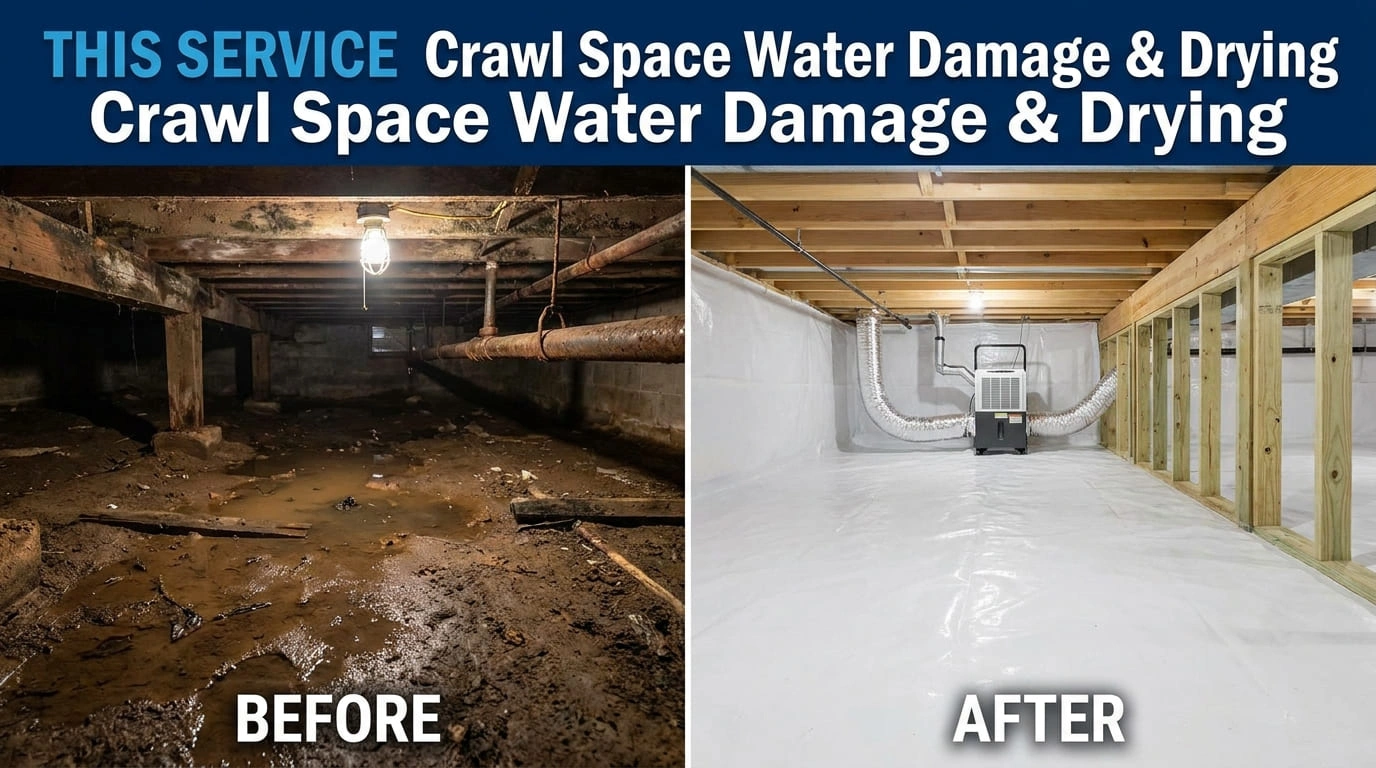
Many property owners call after they notice a musty smell, wet insulation, water pooling in one area, a damp floor above the crawl space, or an issue that keeps returning after storms. After water extraction and controlled drying, they have a clearer picture of what was affected, what was removed or dried, and what needs to change to reduce repeat intrusion.
Standing water, damp soil, wet insulation, damaged vapor barrier, or unknown moisture below the home.
Water removed, accessible materials evaluated, drying equipment installed when needed, and moisture conditions documented.
A homeowner assumes a crawl space is dry because puddles are gone.
Moisture readings and monitoring help confirm whether accessible structural materials are progressing toward dry goals.
Recurring water after storms, snowmelt, or plumbing trouble with no clear source.
A documented mitigation plan and practical recommendations for plumbing, drainage, sump, gutter, or other source correction.
How We Extract Water and Dry Crawl Spaces
The right method depends on the water source, affected materials, access conditions, and moisture readings.
Crawl-space drying is not just about running fans. Effective water mitigation begins with stopping or isolating the source where possible, extracting bulk water, evaluating what became wet, and creating controlled conditions for drying. Equipment and methods are selected according to the specific space and loss conditions.
Creek Auro Restoration uses professional water-mitigation methods to help remove water and manage moisture beneath a home or building. When contamination is possible, the scope may require additional safety procedures, removal of affected porous materials, or coordination with the appropriate repair professional.
Equipment & Techniques May Include:
- Water-extraction and pumping equipment for standing crawl-space water
- Moisture meters and moisture-mapping tools for accessible materials
- Commercial drying and dehumidification equipment selected for the space
- Air-movement strategies designed around crawl-space layout and drying needs
- Wet-insulation and vapor-barrier evaluation
- Containment, sanitation, or antimicrobial measures when conditions warrant them
- Documented monitoring rather than relying on appearance alone
Should Wet Crawl Space Materials Be Dried, Repaired, or Replaced?
The right decision depends on material type, water source, contamination, duration of exposure, and structural condition.
Not every material exposed to crawl-space water needs replacement, and not every wet material can be reliably dried or safely retained. Creek Auro Restoration evaluates accessible conditions and explains the practical options. For active plumbing, sewer, drainage, sump-pump, or foundation-related issues, the underlying source must also be corrected to reduce recurrence.
| Condition | Dry or Repair May Be Appropriate | Removal or Replacement May Be Recommended |
|---|---|---|
| Light moisture on accessible framing | When materials respond to controlled drying and show no significant deterioration | When decay, severe damage, or persistent moisture is found |
| Wet fiberglass insulation | In limited situations depending on water category and condition | When saturated, contaminated, compressed, mold-affected, or unable to dry properly |
| Vapor barrier damage | Minor repositioning or repair may be possible | When heavily damaged, contaminated, or trapping water and debris |
| Subfloor or floor-joist moisture | Drying and monitoring may be appropriate when material integrity remains sound | When structural deterioration, rot, or persistent moisture damage is confirmed |
| Sewage-affected porous materials | Not typically suitable for simple drying and reuse | Removal may be needed due to contamination concerns |
| Repeated water intrusion | Temporary mitigation may reduce immediate damage | Source correction and targeted replacement may be needed for lasting protection |
Consider Further Action When:
- Consider replacement when insulation is saturated, sewage-affected, deteriorated, or unable to dry effectively.
- Consider source correction when water repeatedly returns after rain, snowmelt, plumbing use, or sump-pump operation.
- Consider a drainage, plumbing, sewer, or foundation evaluation when drying alone does not address the origin of moisture.
What Affects Crawl Space Water Removal & Drying Costs in Aurora?
Clear scope, practical explanations, and no guessing before the area is assessed.
The cost of crawl-space water damage cleanup varies because no two water losses are identical. A small plumbing leak in an accessible crawl space may require a very different scope from a large stormwater intrusion, a sump-pump failure, or sewage-affected water beneath a multifamily building.
Creek Auro Restoration provides an assessment and explains the work recommended before proceeding. When a claim is involved, we can provide documentation and direct insurance-billing coordination where applicable, but insurance coverage is determined by the policy and insurer.
| Cost Driver | Why It Can Affect the Scope |
|---|---|
| Amount of water | More standing water can require additional extraction or pumping time |
| Crawl-space size and access | Low-clearance, tight, obstructed, or difficult-access spaces can require more labor |
| Water source | Clean plumbing water, stormwater, drain water, and sewage-affected water require different procedures |
| Wet materials | Insulation, vapor barriers, subflooring, framing, ductwork, and contents can change the scope |
| Drying needs | Equipment type, placement, monitoring, and drying duration vary by conditions |
| Emergency timing | After-hours, active-loss, or urgent dispatch needs can affect project logistics |
| Required repairs | Plumbing, drainage, sump, sewer, structural, or reconstruction work may be separate from mitigation |
When Should You Call for Crawl Space Water Removal in Aurora?
Call when water, odor, moisture, or damage beneath the home is active, recurring, or difficult to explain.
You do not need to wait until the crawl space is fully flooded to request professional help. A damp smell, wet insulation, recurring puddle, moisture under a vapor barrier, water near a utility line, or a soft floor above the crawl space can justify an inspection. Early assessment can help identify the source before secondary damage expands.
Call for an Assessment if You Notice:
- Standing water or muddy soil under the home
- Water after a heavy storm, hail event, snowmelt, or rapid thaw
- An active or suspected plumbing leak in the crawl space
- Wet fiberglass insulation, dripping ductwork, or a damaged vapor barrier
- Musty odors, damp flooring, or persistent indoor humidity concerns
- Water near electrical components, HVAC equipment, or water-heating equipment
- Water that smells like sewage or follows a toilet, drain, or floor-drain backup
- Sump-pump failure, alarm, overflow, or discharge problem
- Recurring water in the same corner or middle section of the crawl space
- Water intrusion before listing, buying, selling, renting, or managing a property
Crawl Space Water Damage Restoration for Commercial & Multi-Unit Properties
Protect occupied buildings, shared systems, operations, and property records across Aurora and the Denver Metro area.
Commercial, multifamily, HOA, and property-management teams need water-damage response that considers residents, tenants, maintenance schedules, access conditions, documentation, and business continuity. Creek Auro Restoration coordinates with responsible parties to assess crawl-space water intrusion, remove standing water, establish drying, and document the condition.
| Commercial Service | Description |
|---|---|
| Emergency crawl-space extraction | Standing-water removal and initial mitigation for active water losses |
| Moisture assessment and drying | Moisture mapping, equipment placement, and monitored structural drying |
| Wet-material evaluation | Assessment of insulation, vapor barriers, framing, subflooring, and accessible utilities |
| Documentation support | Photos, moisture records, estimates, invoices, and scope information for property files |
| Multi-unit coordination | Communication with property managers, HOAs, owners, and maintenance teams |
| Follow-up planning | Recommendations for plumbing, drainage, sump, sewer, or repair follow-up as needed |
Apartment communities, townhome associations, and HOA-managed properties
Retail centers, office buildings, mixed-use developments, and business parks
Hotels, hospitality facilities, restaurants, and commercial kitchens
Warehouses, storage facilities, industrial sites, and utility-adjacent spaces
Schools, churches, community facilities, clinics, and occupied campuses
Benefits of Hiring Crawl Space Water Damage Professionals in Aurora
Proper extraction, moisture checks, documentation, and source-focused recommendations can reduce uncertainty after water gets under your home.
A crawl space is difficult to access and easy to overlook. Professional mitigation helps property owners understand whether they are dealing with a small isolated issue or a broader moisture condition affecting insulation, framing, subflooring, utilities, or indoor air quality.
Faster removal of standing water when conditions are safe to address
Moisture mapping that looks beyond visible puddles
Clear evaluation of wet insulation, vapor barriers, and accessible building materials
Controlled drying and dehumidification based on actual conditions
Practical separation of clean-water, stormwater, and sewage-affected cleanup needs
Documentation that can support property records and insurance communication
Guidance on when plumbing, drainage, sump, sewer, foundation, or reconstruction follow-up may be needed
Why DIY Crawl Space Water Cleanup Can Be Risky
Standing water, low clearance, electrical hazards, unstable ground, and sewage concerns require caution.
Do not enter a flooded crawl space simply to check the water level. Water may be near exposed wiring, damaged electrical components, HVAC equipment, sharp debris, unstable soil, pests, or contaminated sewage. If you smell sewage, see dark or dirty water, notice toilet or floor-drain backup, or suspect a sewer issue, avoid contact and seek appropriate professional support.
If you can do so safely from outside the crawl space, stop the active water source, such as shutting off a fixture supply or the home's main water valve when a pipe has burst. Do not enter standing water until electrical and contamination risks have been assessed.
Risks of DIY Cleanup
- Incorrect DIY cleanup can leave wet insulation, framing, and hidden materials untreated
- Household fans may not remove enough moisture from a confined crawl space
- Sewer-affected water can require a more controlled cleanup approach
- Closing the crawl space or installing a vapor barrier before drying and source correction can trap problems instead of solving them
Answers to Common Crawl Space Water Damage Questions in Aurora
Fast answers for property owners who find water, odor, damp insulation, or moisture under the home.
Is water in a crawl space an emergency?
It can be. Treat the situation as urgent when there is standing water, an active plumbing leak, wet electrical components, saturated insulation, water near HVAC equipment, a sewage odor, drain backup, or rapid spread after a storm. Avoid entering standing water until hazards have been assessed.
Why is there water in my crawl space after heavy rain?
Stormwater can enter because of poor grading, overflowing gutters, downspouts that discharge near the foundation, surface drainage problems, foundation openings, or water pooling in low areas. Aurora's heavy summer rain and hail-related drainage issues can create rapid runoff conditions.
Why is my crawl space wet when it has not rained?
Possible causes include a plumbing supply-line leak, drain-line leak, irrigation leak, groundwater movement, sump-pump issue, condensation, or moisture beneath a damaged vapor barrier. A moisture assessment helps narrow down the source.
Can a restoration company dry water under my house?
Yes. A water-damage restoration team can assess accessible conditions, extract standing water, measure moisture, evaluate wet materials, set up drying equipment, and document progress. Plumbing, drainage, sewer, or structural repairs may require additional specialists depending on the source.
How long does it take to dry a flooded crawl space?
Drying time depends on water depth, crawl-space size, access, temperature, humidity, material types, the source of water, and whether wet insulation or contaminated materials must be removed. Drying should be monitored with moisture readings rather than estimated from appearance alone.
Should I run fans in a wet crawl space?
Fans may be part of a controlled drying plan after the source is stopped and standing water is removed, but fans alone are not a complete solution. The crawl space may need extraction, dehumidification, wet-material evaluation, moisture monitoring, and source correction.
Do wet crawl-space insulation and vapor barriers need to be replaced?
Not always, but saturated, contaminated, compressed, deteriorated, or mold-affected insulation may require removal. Vapor barriers may need repair or replacement if they are heavily damaged, contaminated, or trapping moisture and debris.
Can a sewer line cause water under my house?
Yes. A damaged, blocked, sagging, or leaking sewer lateral or drain line can contribute to water or sewage conditions beneath or around a property. Aurora Water states that homeowners are responsible for maintaining their private sanitary sewer service line to the city main connection; for blockages or backups, it advises contacting a plumber, Aurora Water, and an insurer as appropriate.
Will crawl-space encapsulation fix every moisture problem?
No. A vapor barrier or encapsulation may help manage ground moisture after the crawl space is dry and the water source has been corrected. It does not repair a plumbing leak, sewer problem, failed sump pump, poor grading, clogged gutters, or stormwater pathway.
Does homeowners insurance cover crawl-space water damage?
Coverage depends on the policy, cause of loss, deductibles, exclusions, endorsements, and insurer decision. Sudden accidental plumbing discharge, sewer backup with an applicable endorsement, surface flooding, and long-term seepage can be treated differently. Creek Auro Restoration can provide documentation to support your claim process but cannot guarantee coverage.
Support From Emergency Water Removal Through Drying Documentation
Local response, clear communication, and a practical plan for what comes next.
Creek Auro Restoration is committed to providing professional water mitigation, accurate condition documentation, and straightforward communication throughout the crawl-space drying process. We explain what we observe, why specific extraction or drying work is recommended, and what additional repairs or specialists may be required to address the source.
If drying conditions, material findings, or repair requirements change during the project, we communicate the updated scope and available options. Long-term results depend on correcting the underlying water pathway, maintaining drainage and plumbing systems, and following appropriate repair recommendations.
13901 E Quincy Ave
Aurora, CO 80015
United States
Certifications Supporting Crawl Space Water Removal & Structural Drying
Training and restoration knowledge matter when water affects hidden areas beneath a property.
Crawl-space water mitigation can involve moisture measurement, structural drying, microbial concerns, water-category decisions, material evaluation, documentation, and communication with owners and insurers. Creek Auro Restoration’s supplied credentials support a restoration-focused approach to water-damage response and drying.
AMRT
Applied Microbial Remediation Technician
ASD
Applied Structural Drying Technician
MWR
Master Water Restorer
WRT
Water Damage Restoration Technician
WLS
Water Loss Specialist
Emergency Crawl Space Water Damage Response in Aurora, CO
Rapid help when water is actively entering or standing under your home or property.
Water under a structure can worsen quickly when a pipe is still leaking, a sump pump has failed, stormwater is continuing to enter, or sewage-related water is present. Creek Auro Restoration offers 24/7 emergency water-damage response across Aurora and the Denver Metro area.
Call immediately if you have an active burst pipe, rapidly rising crawl-space water, a failed sump pump, a sewage odor, water near electrical systems, or stormwater entering the structure.
Our Emergency Response Includes:
- Immediate phone consultation to understand the water source and urgency
- Dispatch planning for water extraction, crawl-space inspection, and drying setup
- On-site safety review, extraction, moisture assessment, and material evaluation
- Documentation for owners, property managers, insurers, and follow-up repair coordination
- Practical recommendations for plumbing, drainage, sump, sewer, or reconstruction needs
Emergency Crawl Space Water Removal:
Call +1 (719) 715-6006Insurance Documentation for Crawl Space Water Damage
Clear records can help you communicate the loss to your insurer.
A crawl-space water-damage claim may require proof of the water source, affected materials, mitigation work, drying records, photographs, and itemized charges. Creek Auro Restoration helps property owners gather and organize documentation related to the emergency response and restoration scope.
Insurance coverage is not automatic. It depends on your policy language, endorsements, exclusions, deductible, cause of loss, insurer review, and adjuster decision. For example, sudden plumbing discharge, sewer backup, surface flooding, long-term seepage, and mold-related conditions may have different coverage treatment.
| Documentation Provided May Include |
|---|
| Initial condition notes and photos of accessible damage |
| Water-extraction, drying, and moisture-monitoring documentation |
| Wet-insulation, vapor-barrier, and material-condition records |
| Detailed estimates, invoices, and mitigation scope information |
| Communication support and direct insurance-billing coordination where applicable |
| Documentation for plumbing, drainage, sewer, or repair follow-up discussions |
Warranty Information for Crawl Space Water Damage Services
Clear scope and written terms matter after a water-damage event.
Warranty availability and terms depend on the specific service provided, the materials installed, the condition of the crawl space, and whether the underlying water source has been corrected. Creek Auro Restoration explains applicable workmanship or product information in writing for the approved scope of work.
Water extraction and structural drying address the existing water-damage event. They do not guarantee that future plumbing leaks, sewer backups, stormwater intrusion, sump-pump failures, gutter overflows, drainage problems, or foundation-related water entry will not occur.
| Coverage Area | Typical Documentation |
|---|---|
| Workmanship | Written scope and any applicable labor terms for approved repair or restoration work |
| Materials or installed products | Manufacturer information and applicable product warranty details |
| Drying documentation | Moisture records, project notes, and completion information when included in the scope |
| Future water prevention | Recommendations for source correction, maintenance, drainage, plumbing, or other follow-up work |
10 Fully Equipped Service Vans Serving Aurora & the Denver Metro Area
Extraction equipment, drying systems, moisture tools, and trained responders ready for urgent water losses.
Creek Auro Restoration operates 10 fully equipped service vans to support emergency water removal, water-damage mitigation, structural drying, and moisture-inspection needs throughout Aurora and nearby communities. Dispatch capacity helps us respond to active water losses with the equipment required for the conditions found on-site.
Extraction
Water-extraction and pumping equipment for standing water.
Drying & Dehumidification
Professional equipment for moisture control.
Moisture Mapping
Diagnostic tools for accessible structural materials.
Safety & Protection
Safety equipment and supplies for water-damage conditions.
GPS Dispatched
Vehicles for coordinated response across Aurora and surrounding areas.
Cost Planning for Crawl Space Repairs & Moisture-Control Upgrades
Understand the full project before approving major repairs or long-term moisture solutions.
A crawl-space water emergency may reveal a repair need beyond immediate extraction and drying. Depending on the source, a property owner may need plumbing repair, sewer service, sump-pump replacement, drainage correction, insulation replacement, reconstruction, or a longer-term moisture-control solution.
Creek Auro Restoration explains the restoration scope separately from recommended follow-up repairs or upgrades, so you can understand what is needed now to mitigate damage and what may be needed later to reduce recurrence. Ask our team about available payment, estimate, and insurance-billing coordination options for your specific project.
Cost Planning Considerations
- Separate water mitigation from permanent source-correction decisions
- Review restoration estimates before approving additional work
- Coordinate documentation for eligible insurance claims where applicable
- Understand material, access, drying, and repair factors affecting the overall project
Service Excellence and Community-Focused Restoration Support
Recognition reflects the importance of responsive service, clear communication, and reliable support when properties face water damage.
Creek Auro Restoration’s supplied business information includes recognition associated with service quality, ethics, local business participation, and water-damage restoration visibility. Where applicable, awards and recognitions should be displayed with current, verifiable supporting information and accurate issuing-organization details.
Angi Super Service Award
BBB Torch Award for Ethics
City of Aurora Business Recognition
Expertise.com Best Water Damage Restoration
Yelp Top Rated / Yelper's Choice
Ask About Available Crawl Space Water Damage Service Offers
Support for qualifying customers and property owners dealing with unexpected water damage.
Unexpected water under a home can create an unplanned expense. Creek Auro Restoration may offer qualifying promotions, bundled sanitation options, deductible-assistance programs, and service-specific offers depending on the approved scope, timing, and property conditions.
Ask during your assessment about current options that may apply to crawl-space water extraction, structural drying, specialized sanitization, or post-drying moisture and mold-related checks.
Bundle Discounts
On specialized sanitization where applicable.
Post-Drying Mold Checks
Complimentary checks as part of applicable service offerings.
Deductible Assistance
Programs subject to terms and project eligibility.
Free Emergency Assessments
Complimentary visual inspections available.
Senior Discounts
For eligible senior citizens.
Military & Veterans
Discounts for active-duty personnel and veterans.
Crawl Space Water Damage Service Hours in Aurora, CO
24/7 availability for emergency water removal, extraction, and drying response.
Crawl-space water problems do not wait for normal business hours. Creek Auro Restoration provides 24/7 emergency availability throughout Aurora, Arapahoe County, and the Denver Metro area for standing water, plumbing leaks, stormwater intrusion, sump-pump failures, and other urgent water-damage situations.
| Day | Hours |
|---|---|
| Monday | 00:00 – 23:59 (24 Hours) |
| Tuesday | 00:00 – 23:59 (24 Hours) |
| Wednesday | 00:00 – 23:59 (24 Hours) |
| Thursday | 00:00 – 23:59 (24 Hours) |
| Friday | 00:00 – 23:59 (24 Hours) |
| Saturday | 00:00 – 23:59 (24 Hours) |
| Sunday | 00:00 – 23:59 (24 Hours) |
What to Look for in an Aurora Crawl Space Drying Company
The right provider should explain the source, the drying plan, and the limits of the work.
A crawl-space contractor, plumber, drainage specialist, foundation company, and water-damage restoration company may each have a role depending on why water entered the space. When choosing a restoration provider, look for clear emergency communication, water-extraction capability, moisture assessment, drying documentation, and practical guidance about what must happen after mitigation.
| Feature to Evaluate | Creek Auro Restoration Approach | Why It Matters |
|---|---|---|
| Emergency availability | 24/7 water-damage response | Active leaks and standing water can worsen outside standard business hours |
| Water extraction | Extraction and pumping for applicable crawl-space conditions | Removing bulk water is the first drying step |
| Moisture assessment | Accessible moisture mapping and material evaluation | A crawl space can look dry while materials remain damp |
| Structural drying | Controlled drying and dehumidification based on conditions | Helps address moisture beyond visible puddles |
| Documentation | Photos, moisture records, estimates, and project information | Supports owners, managers, and insurance communication |
| Source-focused guidance | Recommendations for plumbing, drainage, sump, sewer, or repair follow-up | Drying alone does not stop the next water intrusion |
Contact Creek Auro Restoration for Crawl Space Water Damage & Drying in Aurora, CO
Talk with an emergency water-damage professional about standing water, wet insulation, musty odors, plumbing leaks, stormwater, sump-pump failure, or crawl-space moisture.
If you are unsure why your crawl space is wet, do not wait for the issue to become easier to see from inside the home. Creek Auro Restoration can assess the immediate condition, remove standing water where needed, set up drying and moisture monitoring, and explain what type of source correction or repair may be required next.
Contact Details
Creek Auro Restoration
+1 (719) 715-6006
waterdamagerestorationaurora.com
Crawl Space Water Damage & Drying
13901 E Quincy Ave
Aurora, CO 80015
United States
Protect your home, structure, and property records today with professional water in your crawl space in Aurora extraction, structural drying, moisture mapping, and documentation from Creek Auro Restoration.